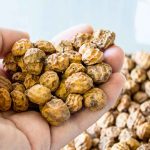
Last time we tempehed the untraditional it was Lotus Seeds. The result reminded me of potatoes. Then one of you asked about trying the process on actual potatoes. Great question! Will Potatoes Tempeh?
The Potato Tempeh Experiment
First step: quickly google if anyone has made potato tempeh. I got nothing but recipes for cooking tempeh alongside potatoes. So with no guidance at all, I went back to the basics.
Prepping for Potential Potato Problems
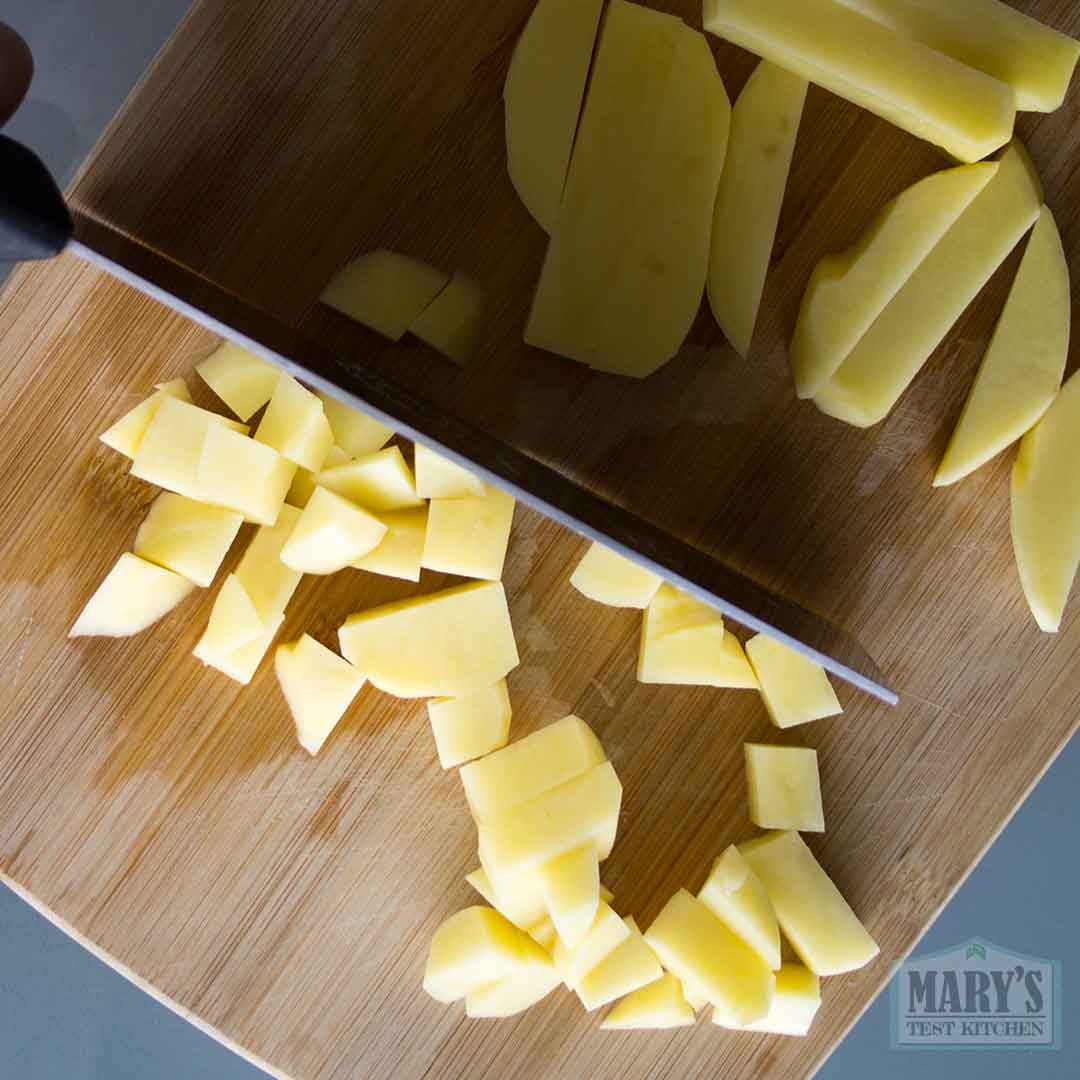
Potatoes are a different beast from soybeans. Fully cooked, they turn fluffy and fall apart. That’s basically everything you don’t want in a tempeh base: mush, blocked airflow, trapped water. To stack the odds in my favour, I picked waxy yellow potatoes over a fluffier Russet, and cut them into bean-sized cubes. Or that was the intention. What my knife skills actually produced was closer to 1 cm pieces.
Prepping Potatoes for Inoculation
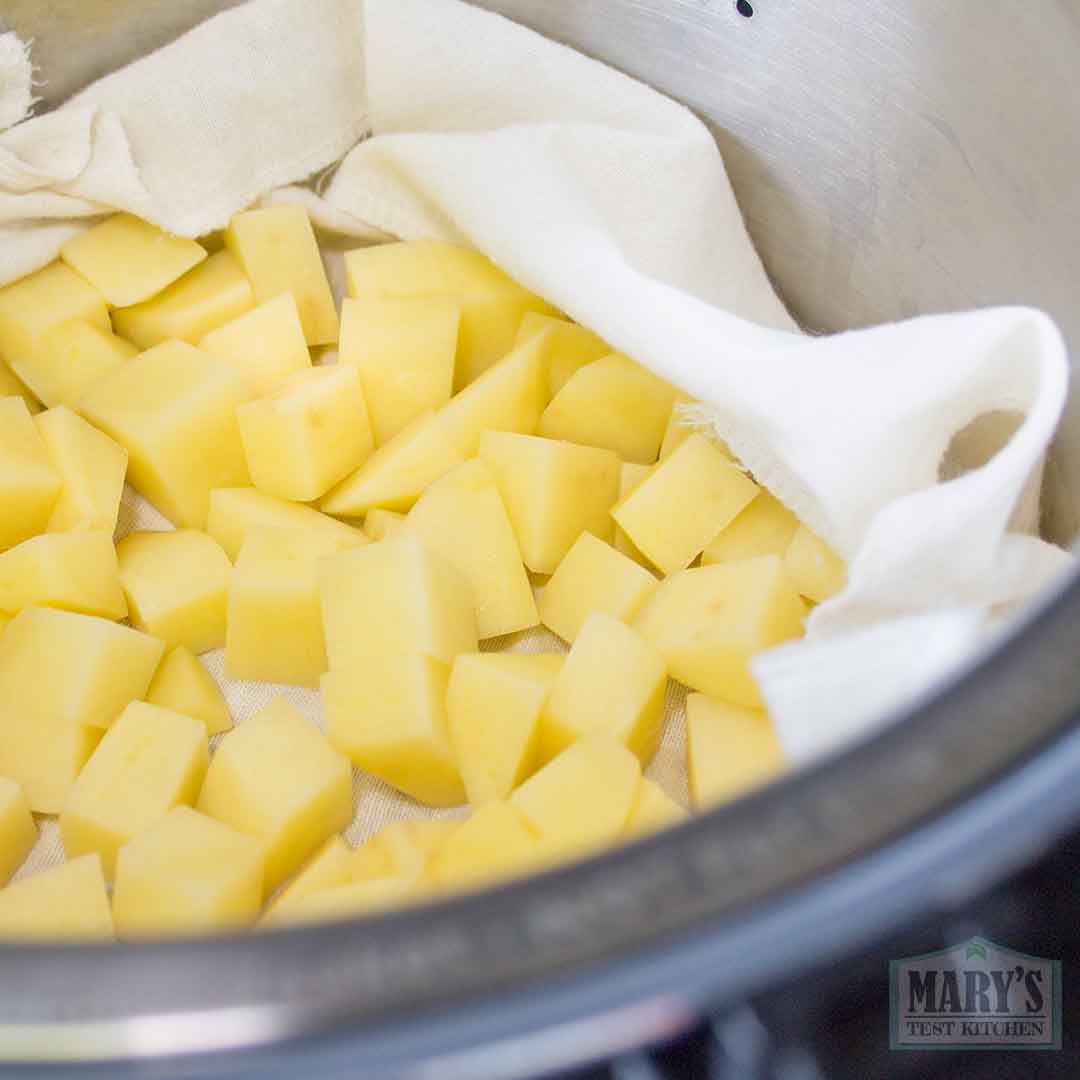
I steamed them to cook through in my rice cooker; it took 15 minutes for them to become totally cooked through but not falling apart.
Then, they needed vinegar. To prevent the pieces from breaking down, I used a spray bottle for even coverage.
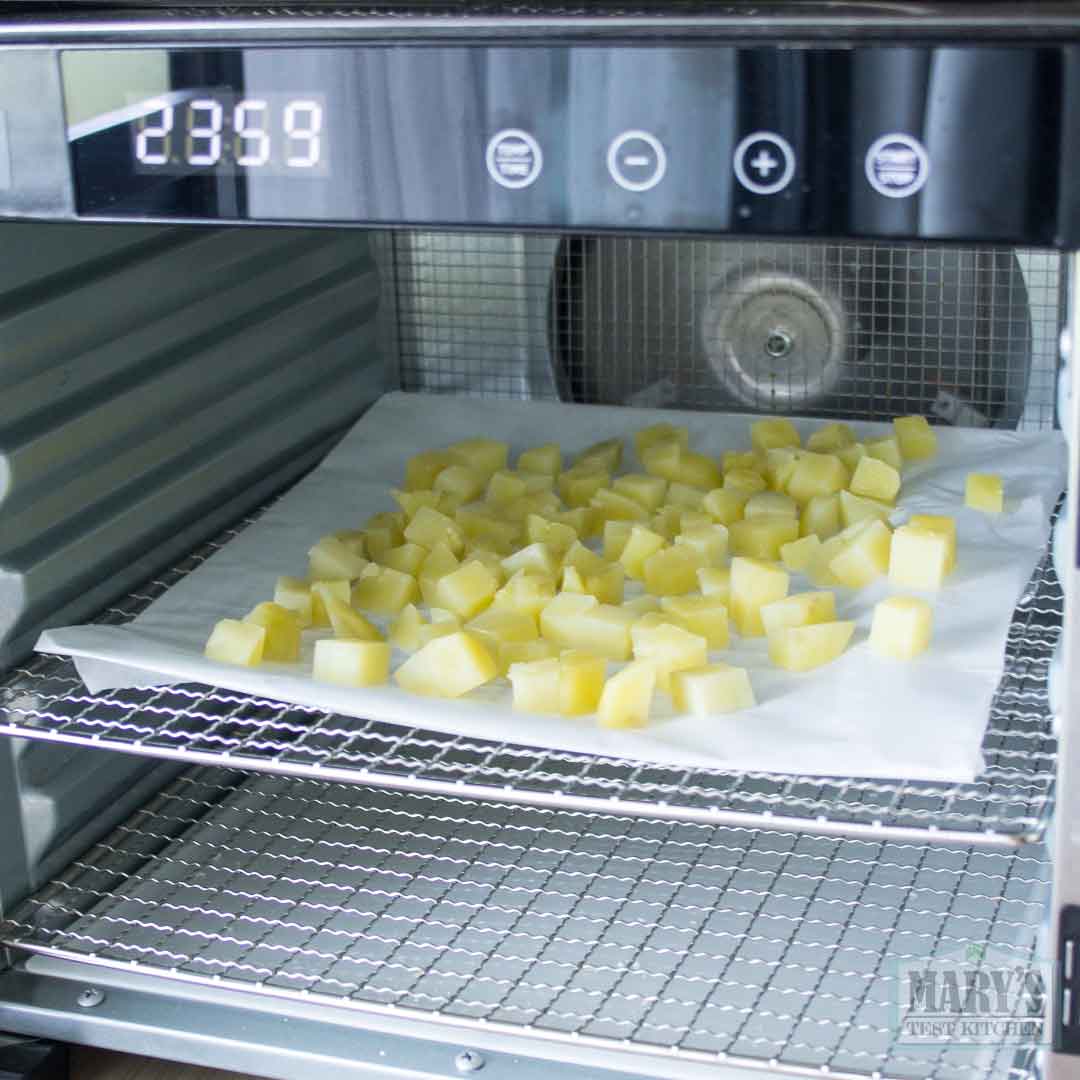
Finally, to ensure they weren’t too wet before inoculation, I put them into my dehydrator until the surfaces didn’t show moisture anymore. However, they were still a bit clammy to the touch.
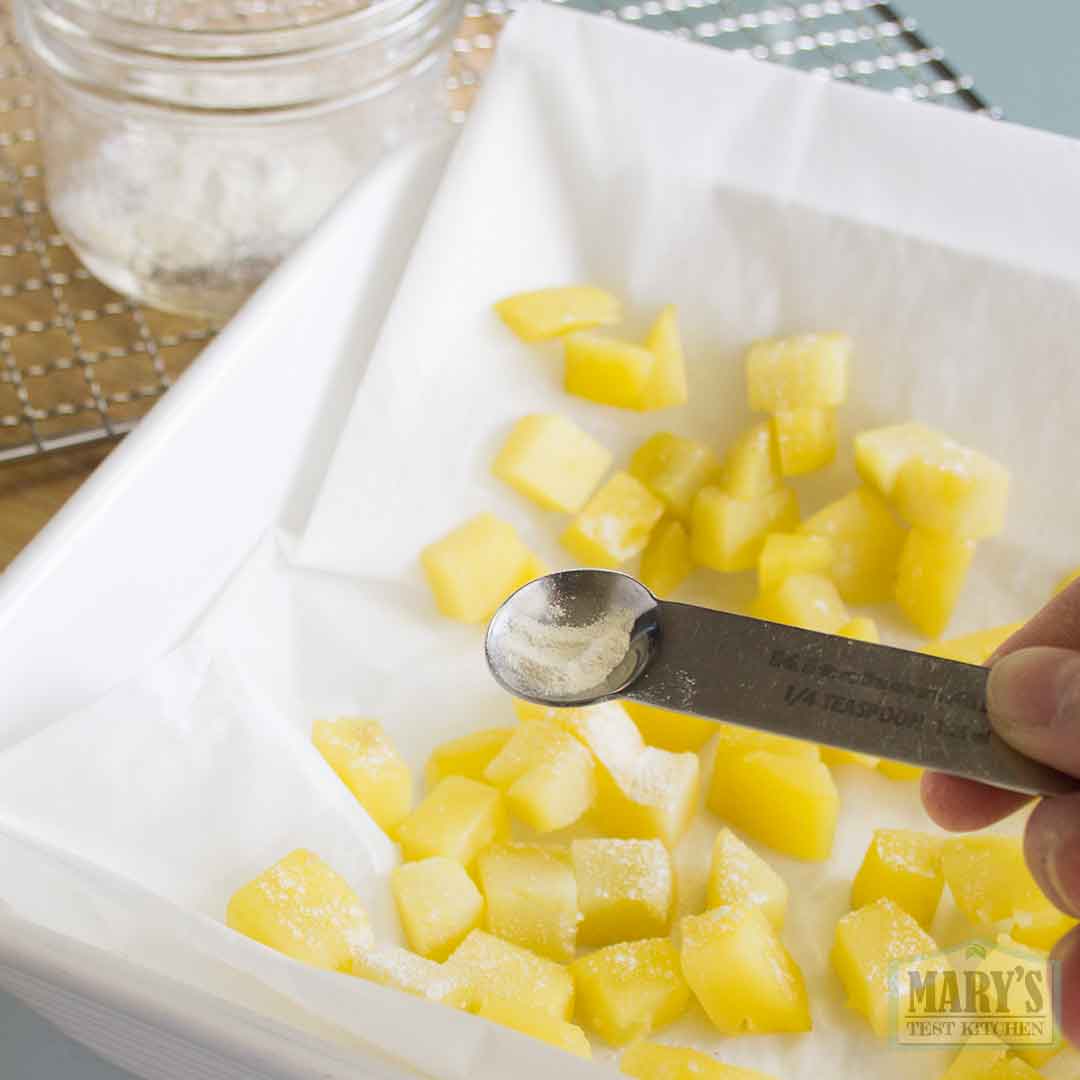
Then I sprinkled the tempeh starter over the potatoes before using the parchment paper to wrap them into a little packet and poked some air holes.
Incubation
Even though the dehydrator was running at 95°F. the cubes were quite cool to the touch. This is where I wasn’t sure about what temperature to incubate at.
Plus, potatoes are higher in starch and lower in protein compared to the traditional soybean. I worried that this composition would cause the fermentation to go faster. Last time, Lotus Seeds fermented quickly and went to the grey spore stage in less than 24 hours.
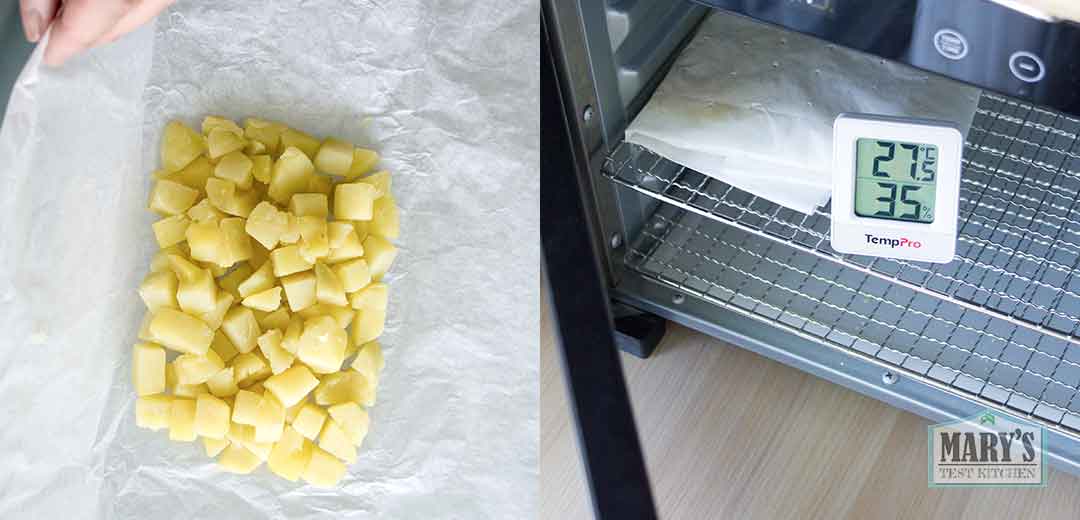
In the end, I went with using the dehydrator box but with the power off. Then for warmth, I used a seeding mat on the bottom while I placed the packet of inoculated potatoes a few inches above. I kept the door of the dehydrator open a couple inches for air flow and the temperature stayed about 33-34°C (about 92°F).
Then came the waiting game. Wrapped in parchment and tucked into a warm incubator, the potatoes sat for hours while I watched, prodded, and second-guessed every signal. Was it too cool? Too warm? Why was it turning yellow? Would the mycelium take hold at all, or would I be left with a very sad bowl of old potatoes? The suspense was real and so was my food-safety training screaming in the back of my head.
I won’t spoil what happened next. You’ll have to watch to find out whether this experiment ended in triumph or tragedy.