Will Sesame Cheese? I mean make sesame milk use cheese-making techniques on it?
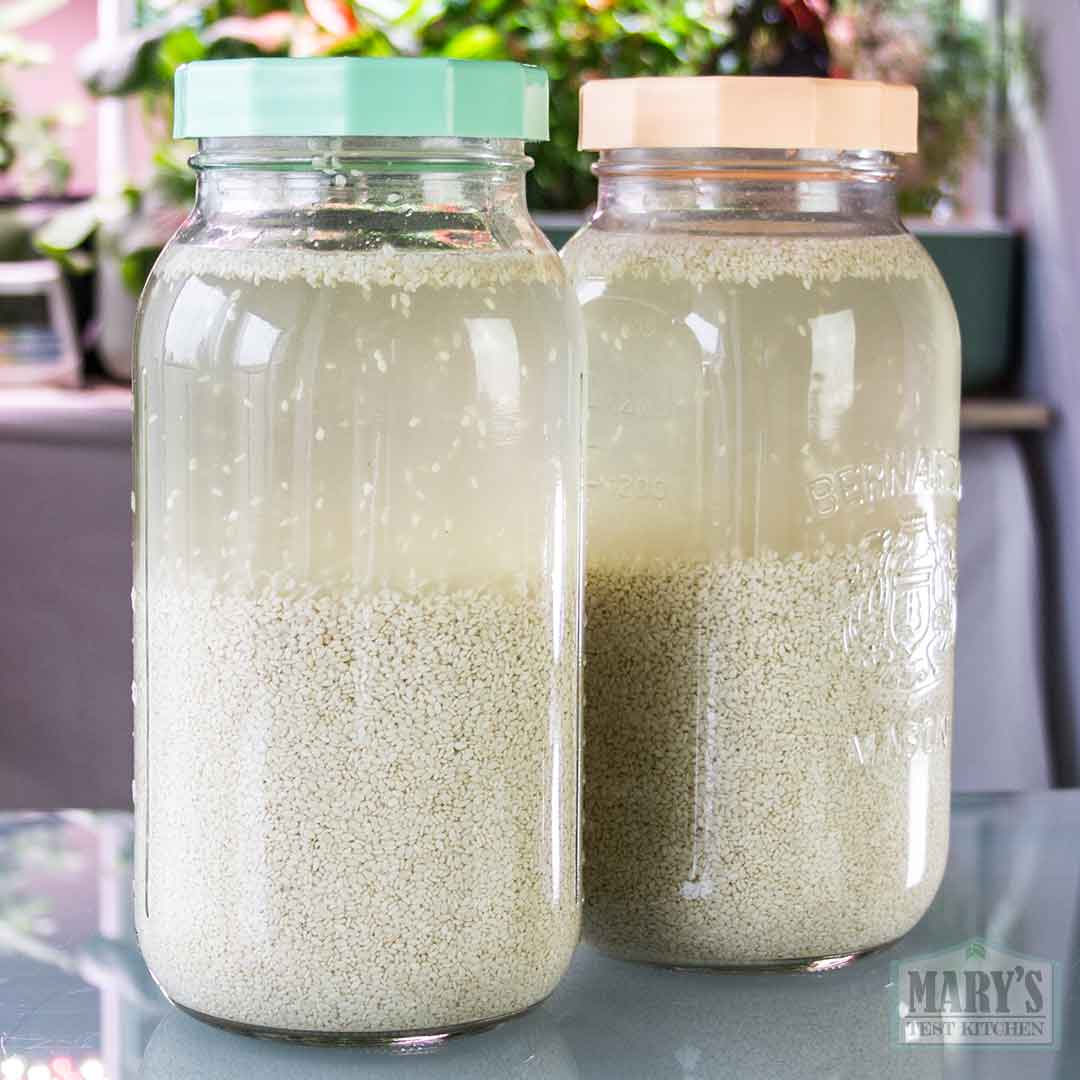 That was the question after my last white sesame experiment, where creamy sesame milk turned into delicious, fresh, bouncy, bocconcini-style bites (see below).
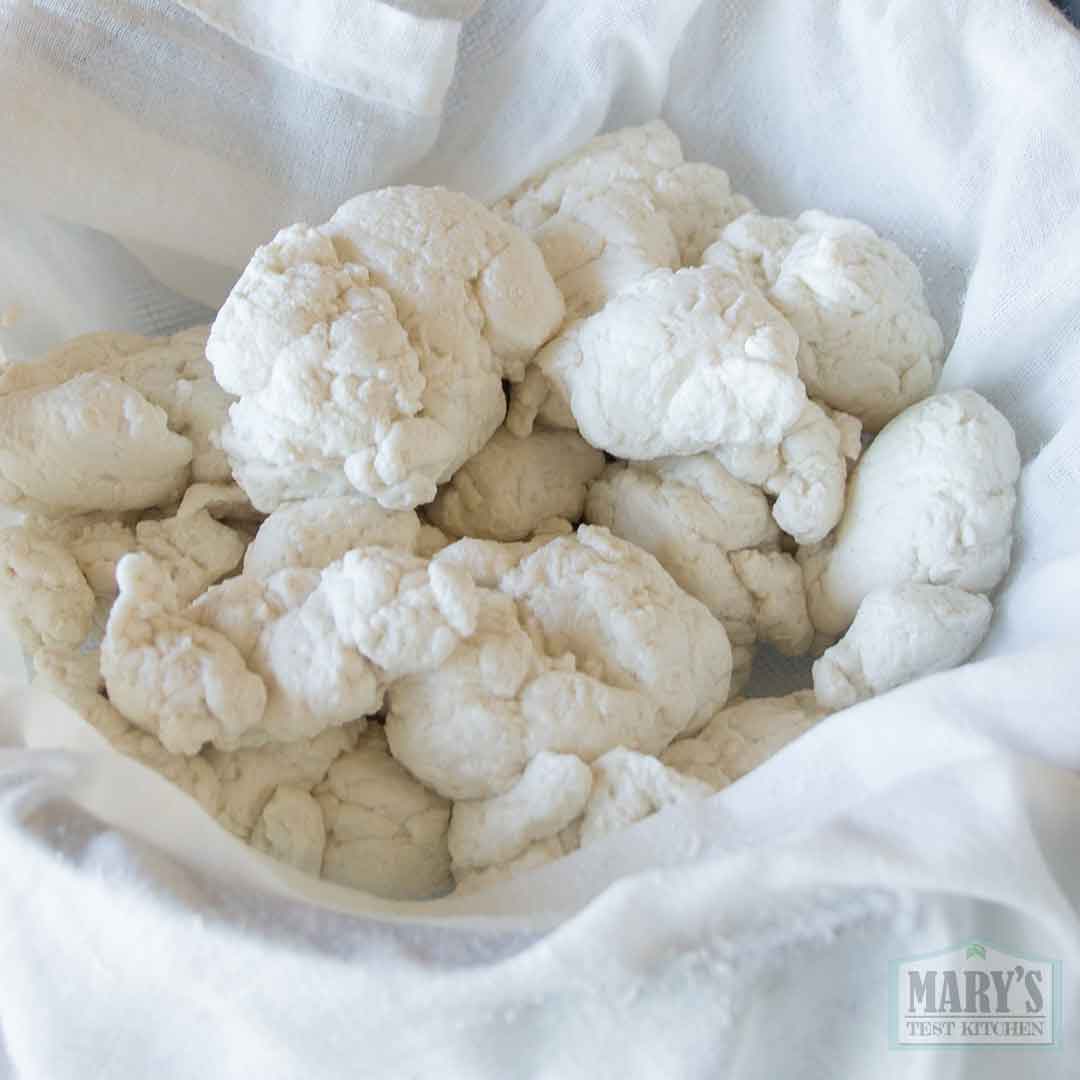 But what will happen if I followed your suggestions: add probiotics, age it properly, and see how the flavor evolves. Would it get cheesier? More complex? Or just… weird?
Watch the video experiment
Soaking and Blending the Sesame Milk
To keep things consistent, I used the same brand of raw hulled sesame seeds as before. But right away, there was a problem: bitterness. These seeds were noticeably more bitter than that previous batch. Not ideal but I decided to push forward anyway, using a full kilogram to improve yield.
After soaking the sesame seeds for about 20 hours in the fridge, they were plumped and ready to go. A quick taste test showed the bitterness had mellowed slightly, but it was still there, lingering at the end behind that signature nutty sesame flavor.
 Blending and straining produced about 3 liters of sesame milk. Compared to other plant milks, sesame is relatively easy to strain thanks to its low starch content and fluffy fiber. The leftover pulp was light, fibrous, and still slightly oily; perfect for repurposing later into flour or breadcrumb-like crumbles for baking.
Heating and Natural Coagulation
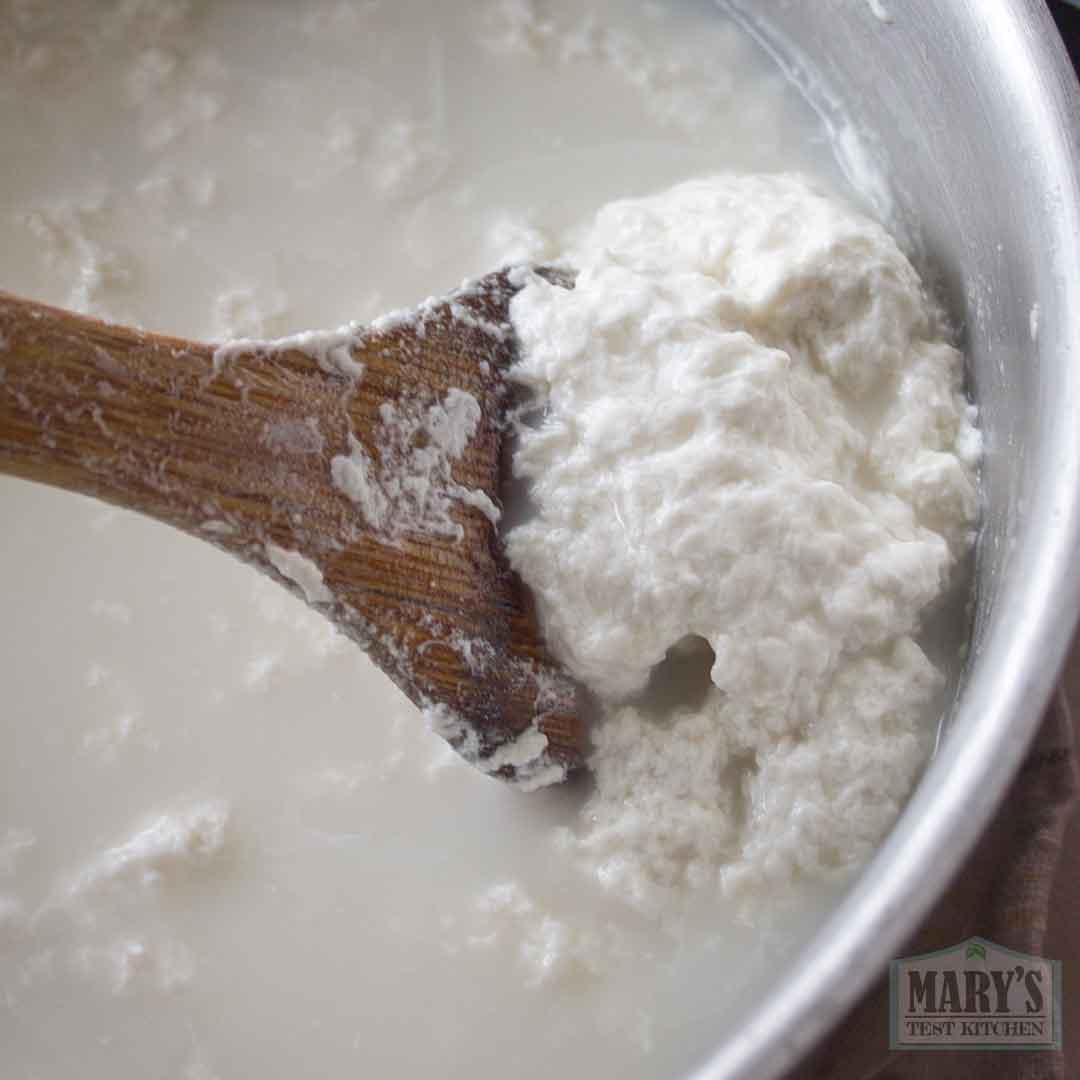
As the sesame milk heated, it began to self-coagulate—something we’ve seen before in this series. Sesame is naturally high in calcium, which likely contributes to this effect. This batch formed soft, fluffy curds that clumped together like delicate egg whites.
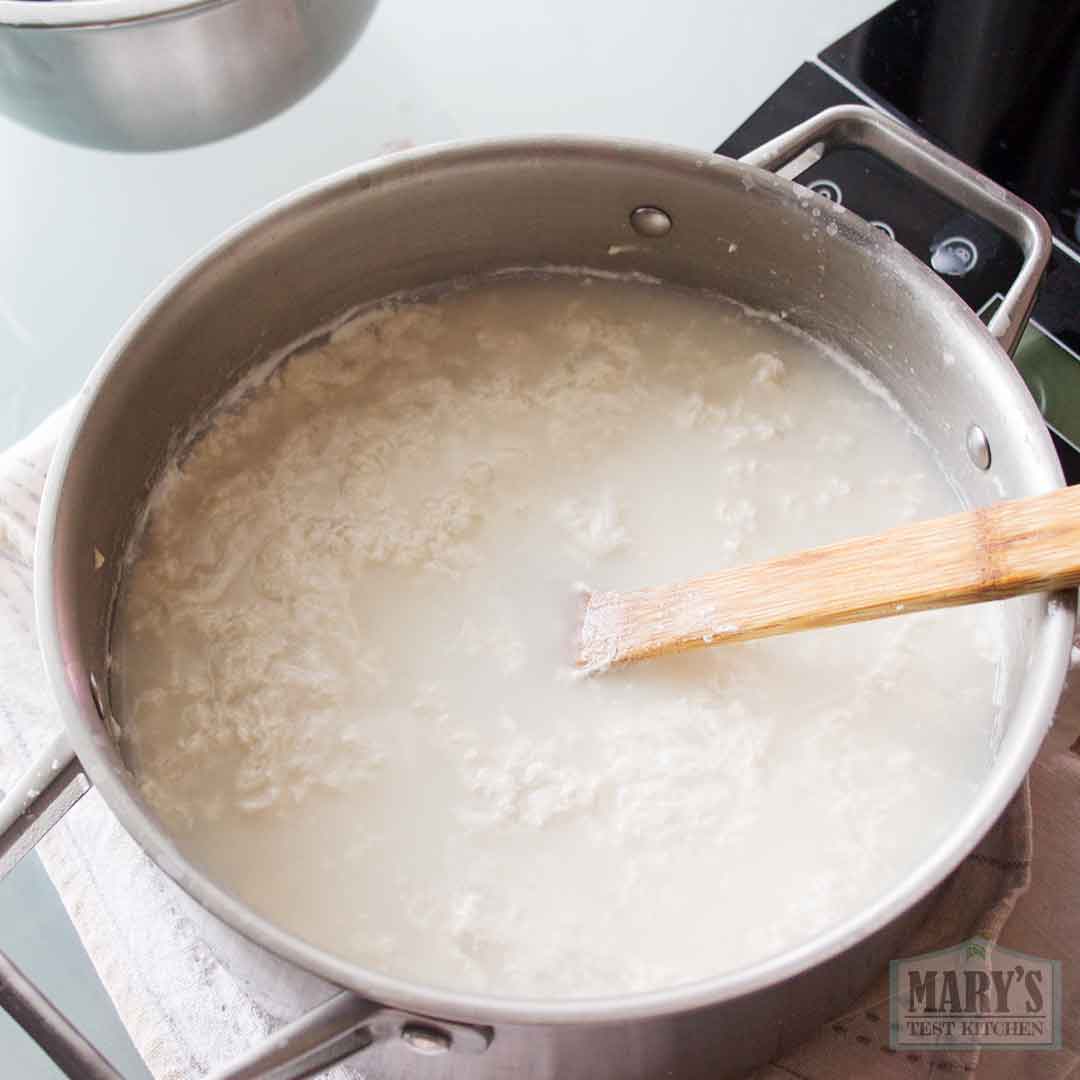 Interestingly, the texture wasn’t very stretchy this time. Across multiple experiments, I’ve noticed that sesame curds can range from creamy and billowy to stringy and elastic. This batch leaned toward soft and creamy, with only minimal stretch. It raises an interesting question: does bitterness correlate with reduced stretch? More testing is definitely needed.
 Adding Probiotics and Fermentation
Once cooled to a probiotic-friendly temperature, I added three capsules of Lactobacillus cultures (about 45 billion CFUs total). The curds were incubated at around body temperature (35–40°C / 98–104°F).
After 24 hours… nothing. No noticeable tang. Since sesame contains almost no sugar or starch, the bacteria didn’t have much to feed on. So I extended the fermentation to a total of 67 hours.
The result? A mild tang with a subtle cheesy aroma. The flavor was still very close to fresh curds, but with a slightly deeper, more musky undertone.
Pressing the Sesame Cheese
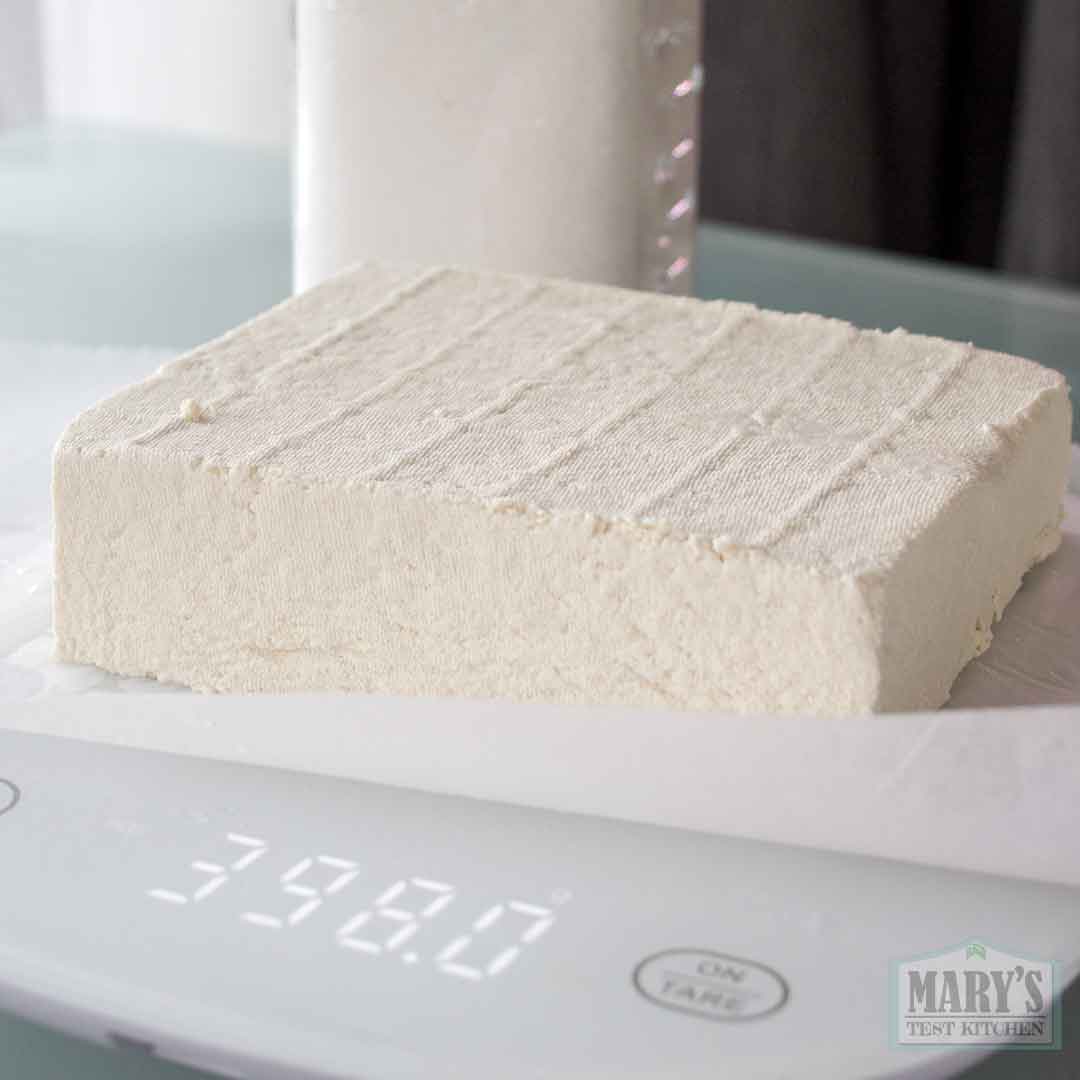 The cultured curds were transferred into a tofu press to remove excess whey and form a solid block. Pressing continued in the fridge, allowing the cheese to firm up while fermentation slowly progressed.
After unmolding, the texture was soft but dense, similar to fresh peanut cheese from earlier in the series. The flavor was creamy and nutty, with a hint of bitterness and a subtle cheesy note.
Salting and Dehydrator Aging
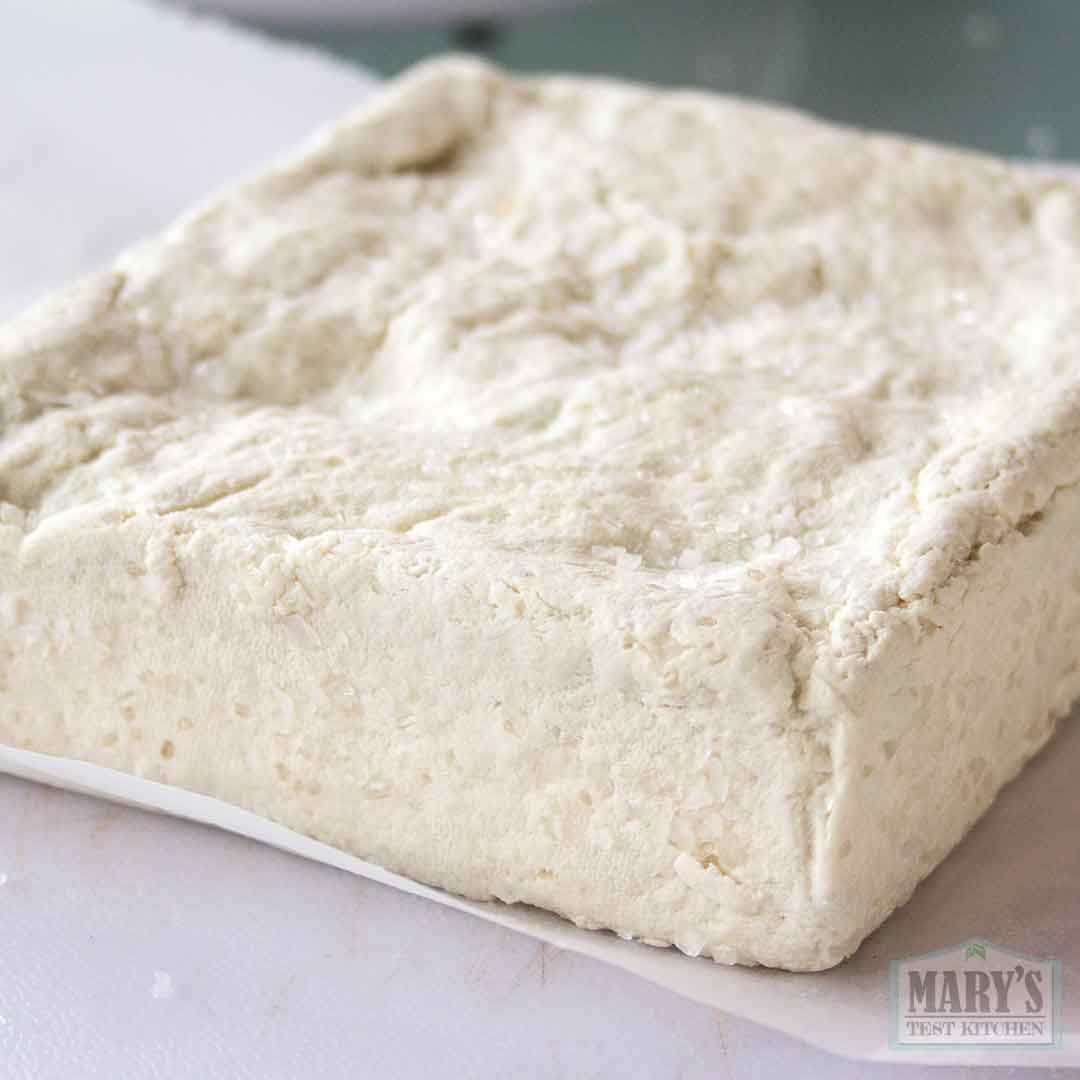 I salted the cheese at about 2% by weight and placed it in a dehydrator at 98°F to age. This step encourages further fermentation while drying and firming the cheese.
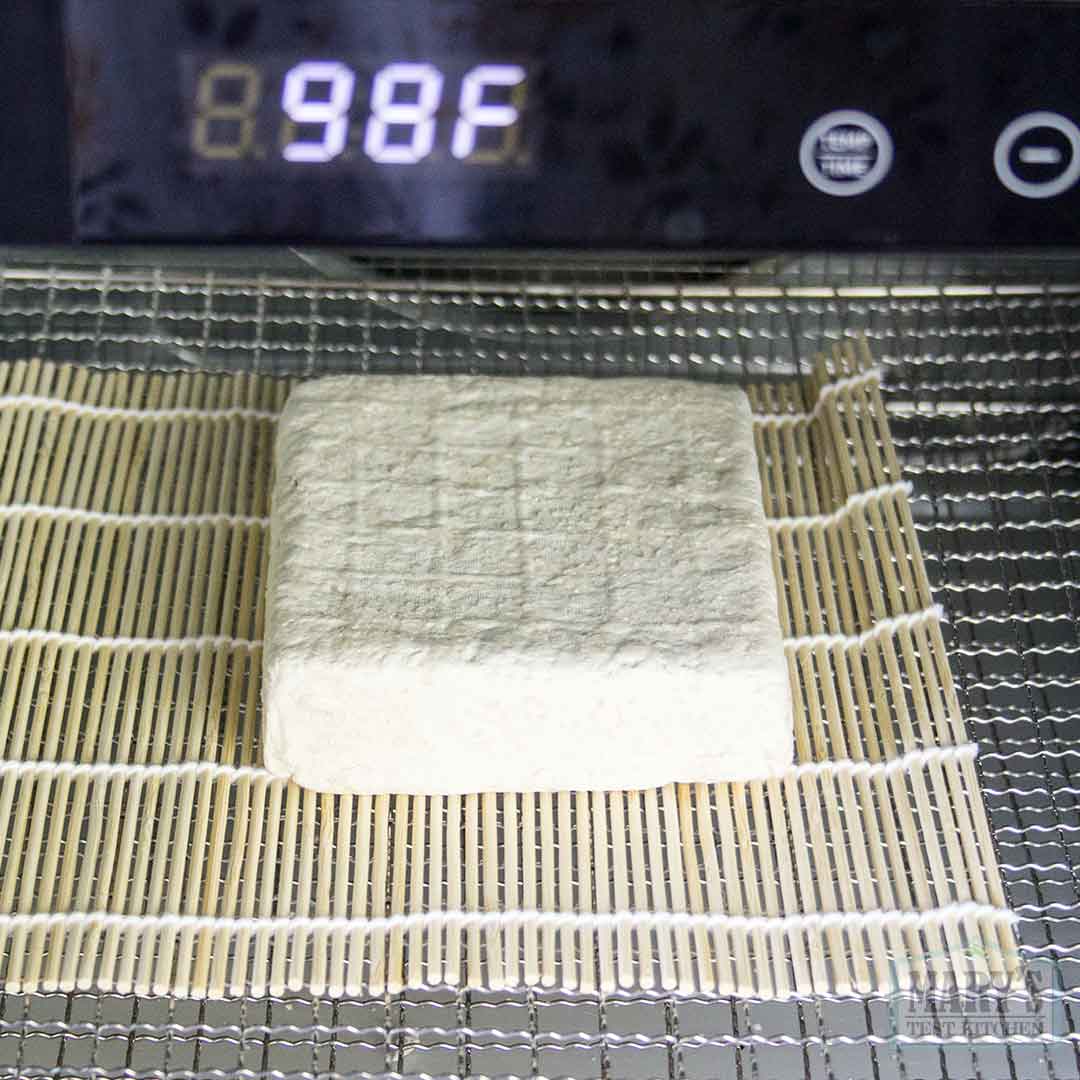 After 24 hours, the exterior had developed a warm tan color and an incredible aroma—nutty sesame mixed with something unexpectedly savory… almost like deli meat.
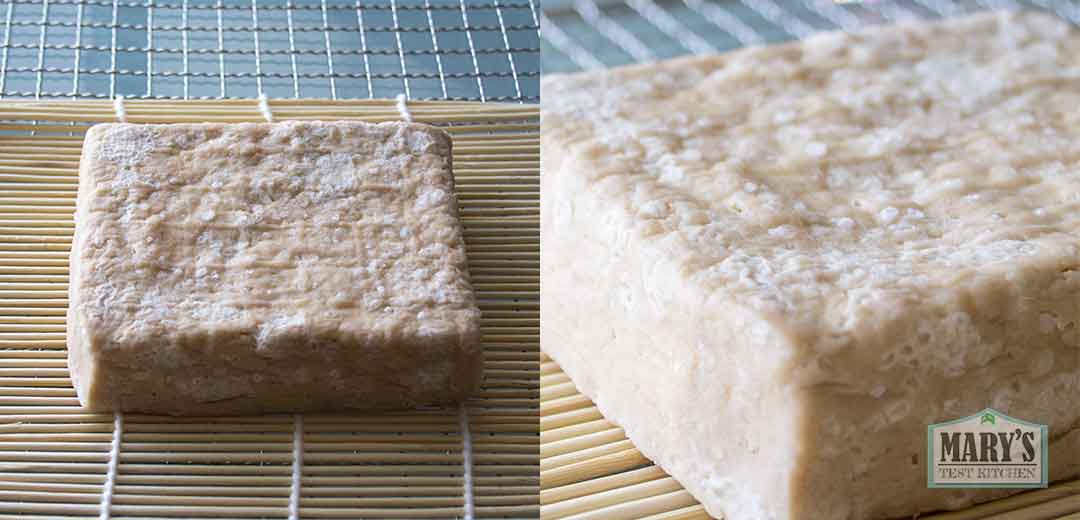 The next day, it didn’t change a whole lot from the outside.
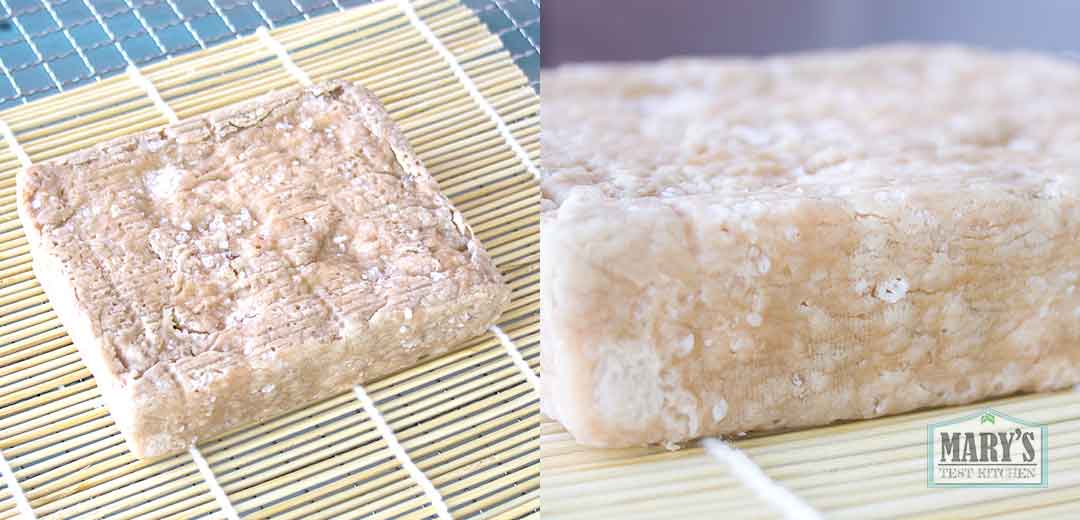 After 3 days, it was time to try it! The texture became soft, bouncy, and sliceable. The interior resembled smoked tofu, and the aroma leaned even more toward “ham-like,” which was both confusing and fascinating.
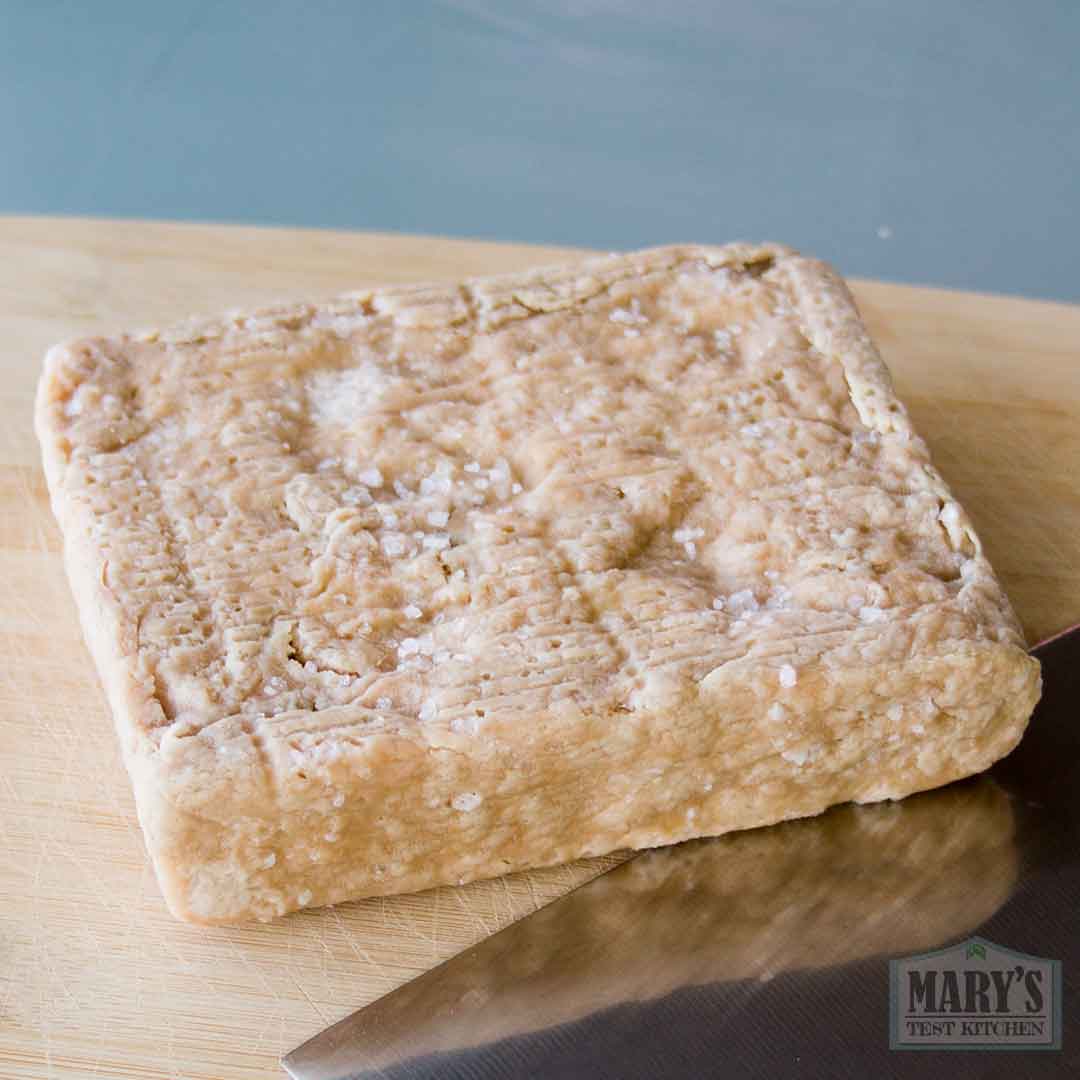 Flavor-wise, it was creamy, lightly nutty, and distinctly cheesy, with a cheddar-like aftertaste. At this stage, it was already delicious.
Cold Fermentation: 10-Day Aging Test
Of course, I couldn’t stop there. The cheese went into the fridge for an additional 10 days of cold fermentation.
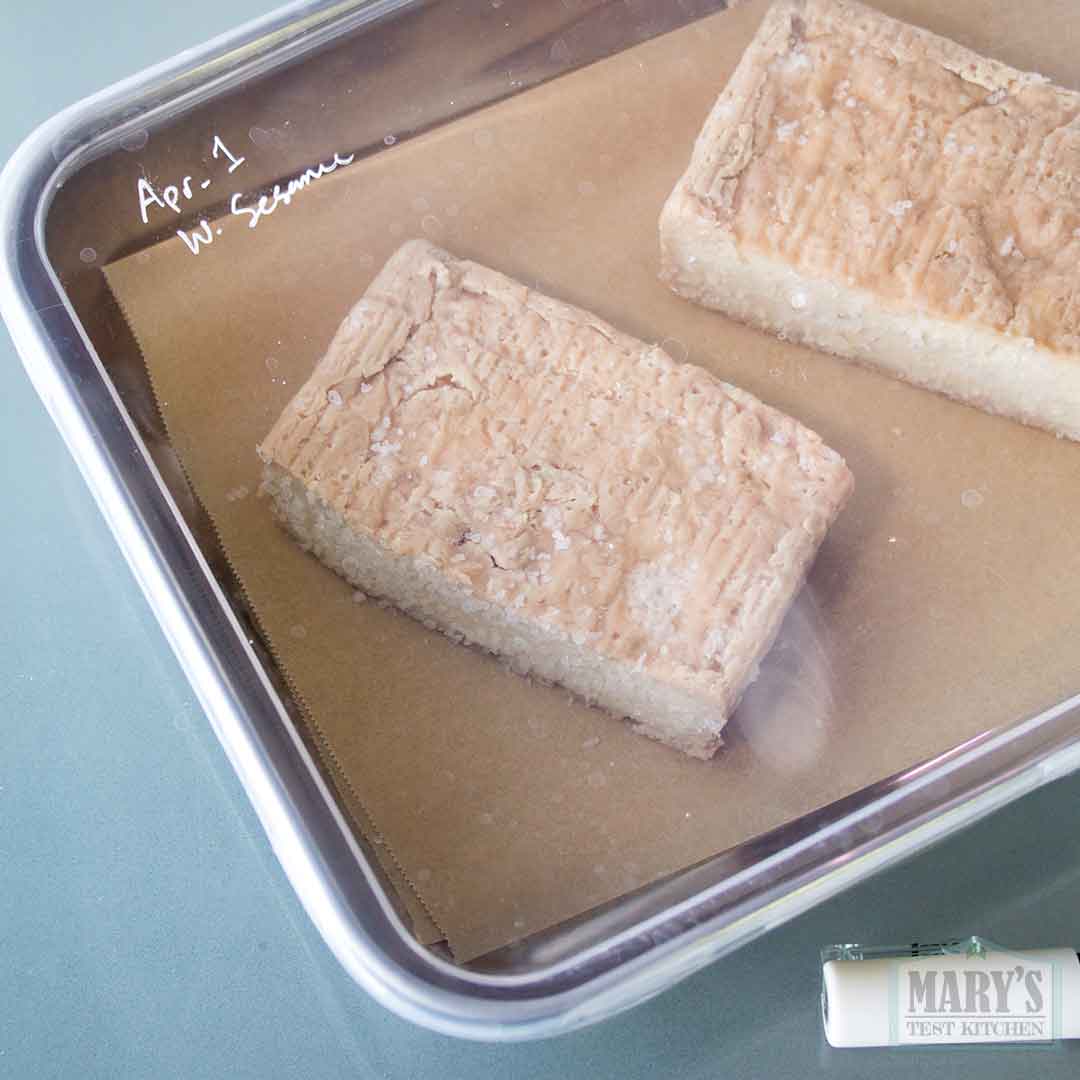 After aging, the texture became firmer but slightly crumbly and a bit chalky. The flavor had mellowed significantly; less sesame-forward and more generally nutty and savory. The salt had fully diffused, creating a balanced, well-seasoned bite.
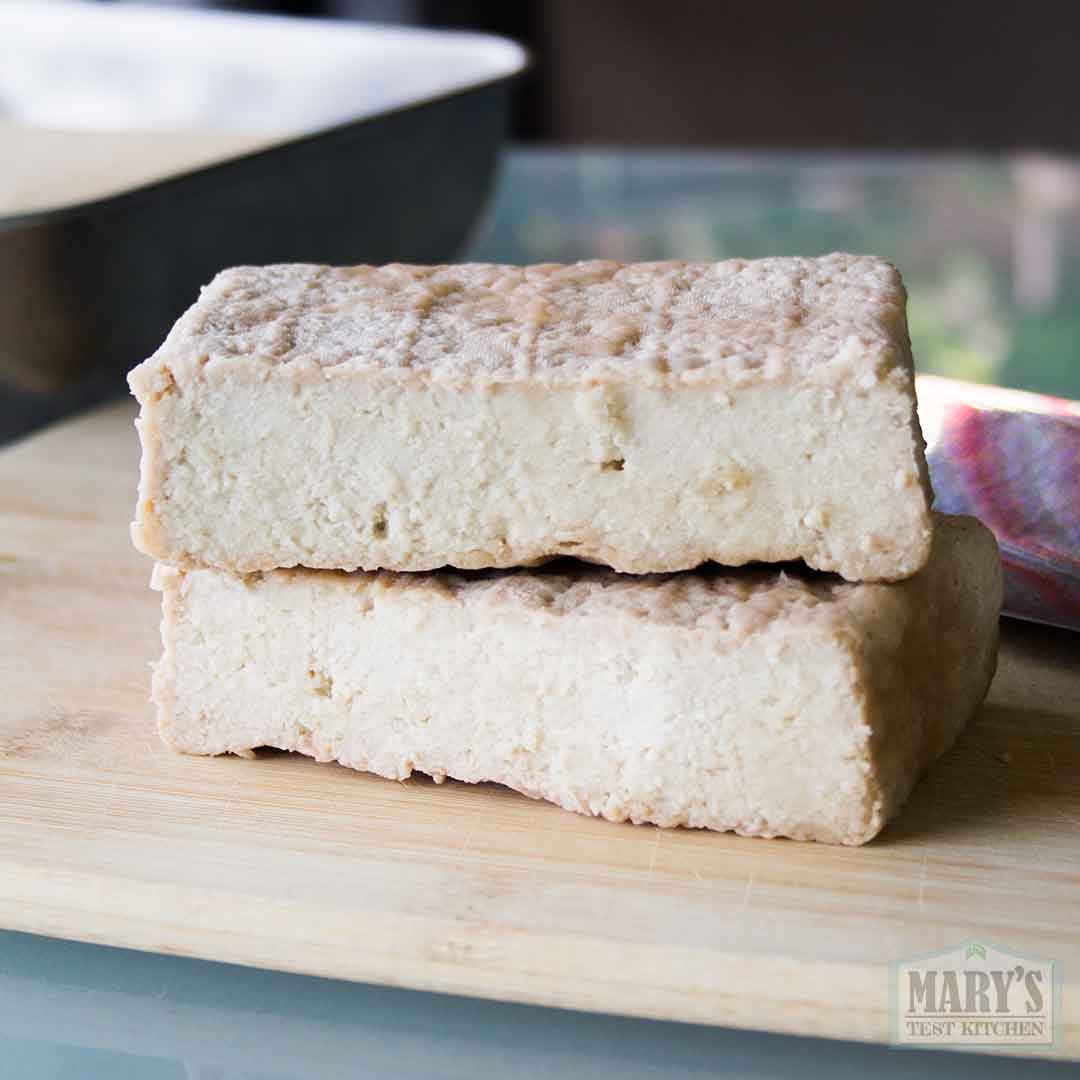 While the aroma still hinted at sesame, the taste had shifted into something surprisingly familiar: mild Swiss-style cheese territory. It was nutty, slightly sweet, and savory; reminding me of Emmental or Gruyère, but on the milder side.
Is Aged Sesame Cheese Worth It?
The final yield was about 280 grams from 1 kilogram of sesame seeds. With ingredient costs totaling around $16, that comes out to approximately $5.71 per 100 grams which is comparable to imported Swiss cheeses at the grocery store.
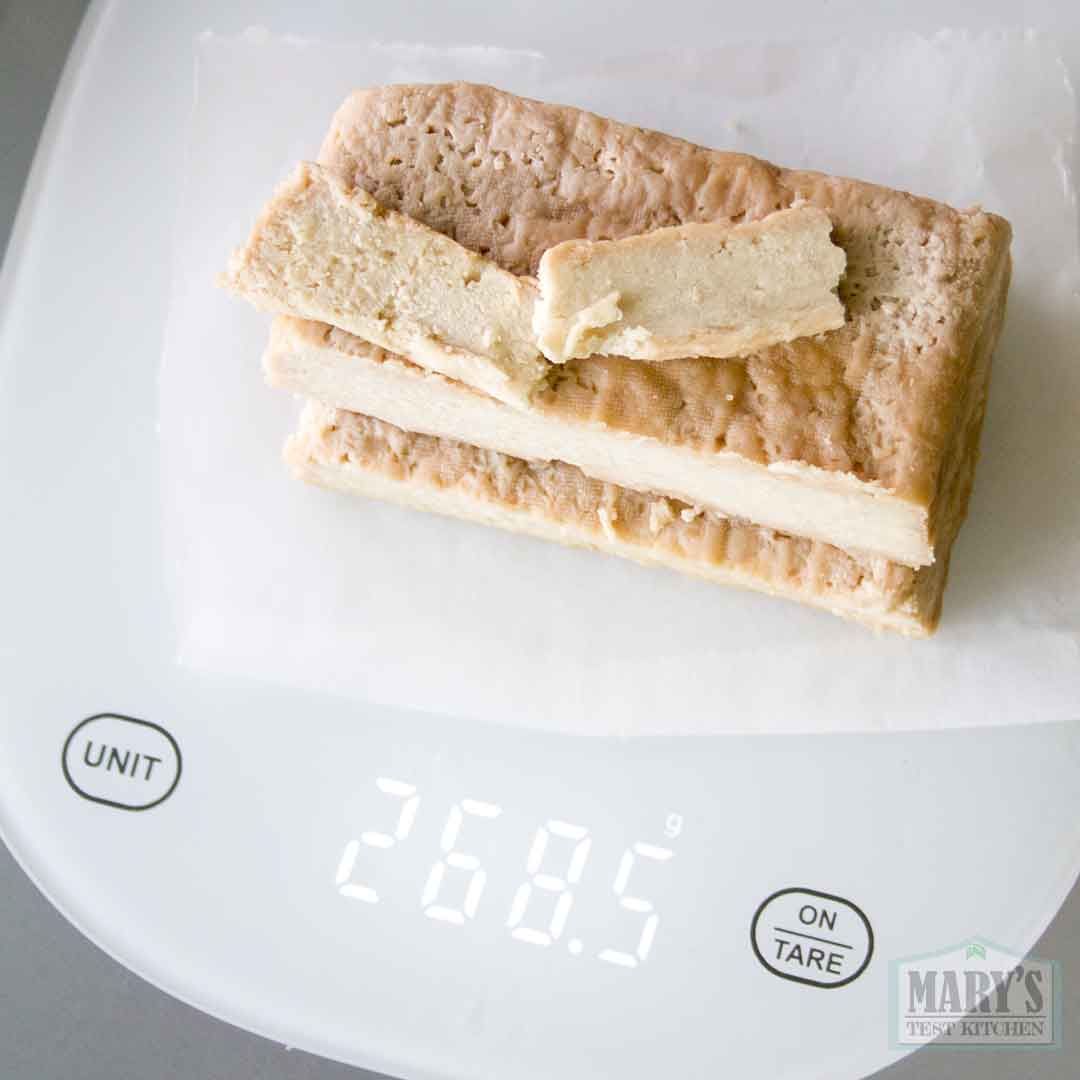 So, is it worth it? If you enjoy nutty, mild, Swiss-style cheeses, absolutely. The transformation is surprisingly successful, especially considering sesame’s low sugar content and the challenges that brings to fermentation.
That said, the aging process didn’t dramatically deepen the flavor beyond what was achieved in the dehydrator stage. Most of the magic seems to happen early on.
Final Thoughts
This experiment proved that sesame cheese can be aged with cultures and the result can be deliciously complex and interesting!
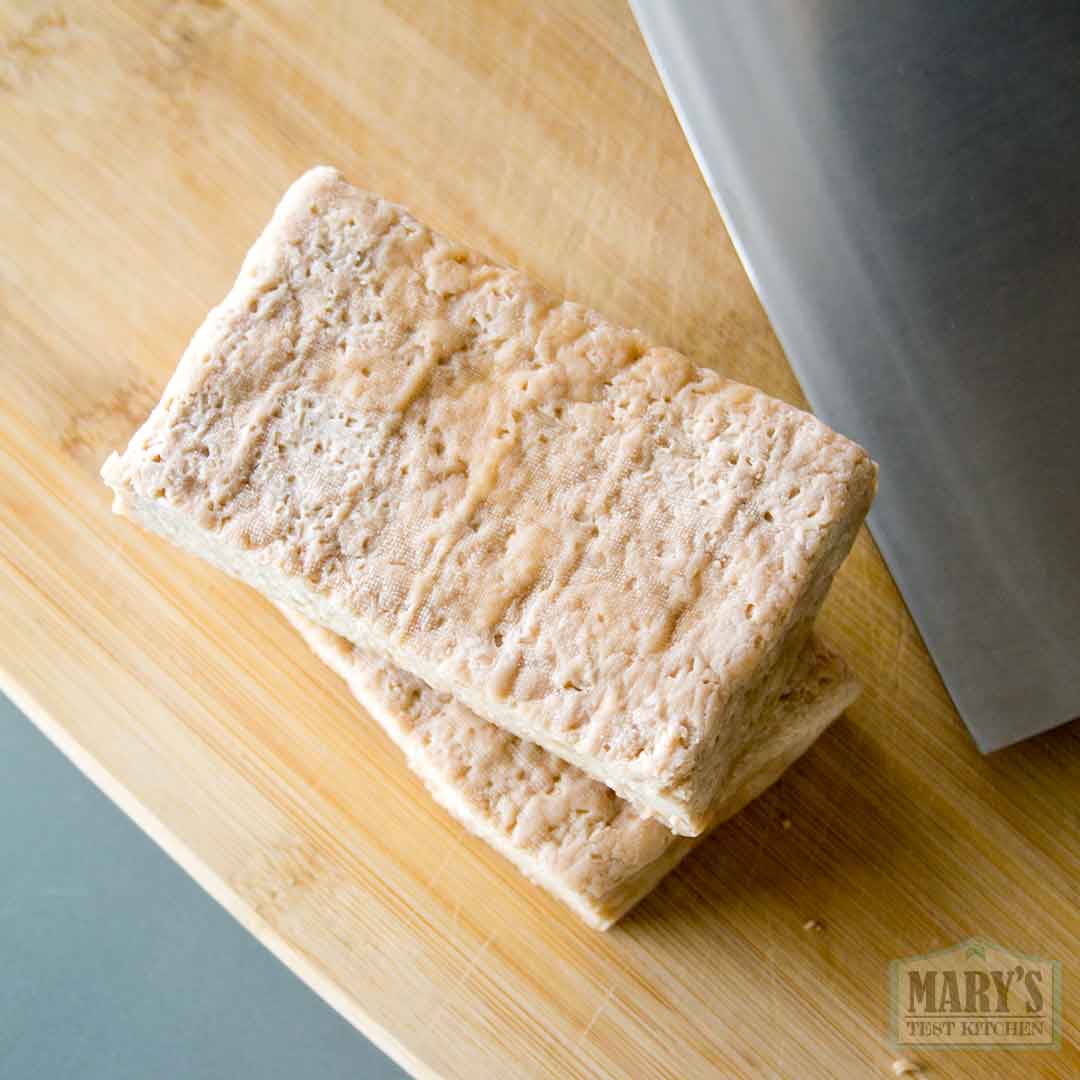 There are still plenty of variables to explore, from reducing bitterness to improving texture and melt. But one thing’s clear: sesame has serious cheese potential.
Next up, I might try another type of seed… but if you have suggestions, let me know. Your ideas often inspire the next experiment!
Recreate the experiment
Aged White Sesame Cheese (experiment)
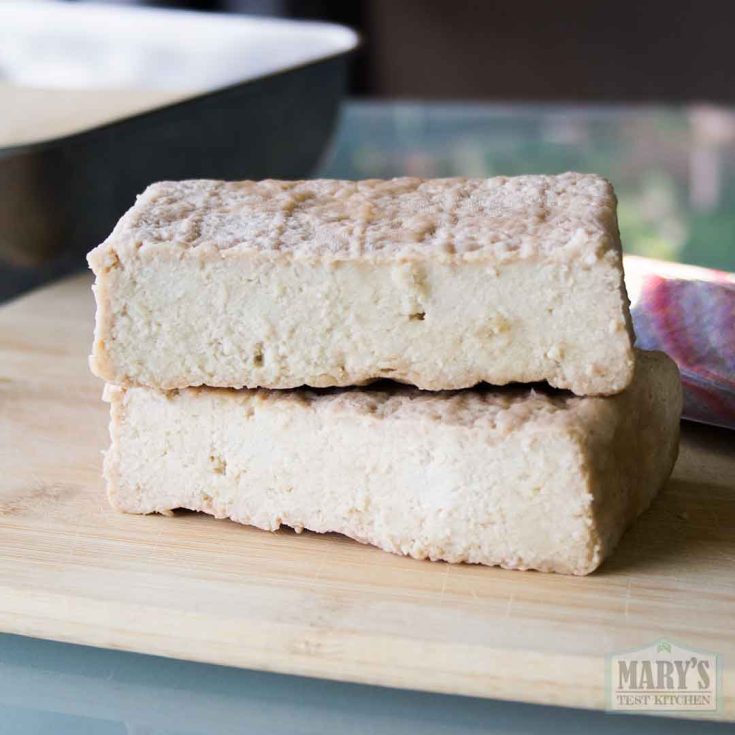
Recreate my aged white sesame cheese experiment and let me know how it goes!
Use sterilized utensils and taste at every stage; the sesame cheese will have a different flavor and texture each time.
Ingredients
- 1 kg white sesame seeds (hulled)
- 4 probiotic capsules (with 15 billion CFU's each)
- kosher salt
Equipment
- large containers for soaking sesame
- high speed blender
- nut milk bag
- large cooking pot
Instructions
- Soak 1 kg of hulled sesame seeds in about 2200 ml of water. Refrigerate overnight.
- The next day, drain the seeds. Blend with about 3 L of water in batches to accommodate your blender size. Blend for 30 seconds on maximum speed in Vitamix or other high speed blender. If using a lower powered blender, look for a fine pulp.
- Strain puree through a nut milk bag to remove the pulp.
- Cook raw sesame milk over high heat until the curds form. Let the mixture simmer for 5 minutes.
- Remove curds and whey from heat and let it cool to just under 100°F or 38°C,
- Sprinkle over the contents of 4 probiotic capsules (15 million CFU's each) and stir to distribute
- Incubate 98°F - 104F or 35°C - 40°C for 67 hours until the whey tastes tangy. I used my oven with just the oven light on; switching it on and off manually to maintain the temperature range.
- Prepare a sterilized bowl with strainer and cheesecloth on top. Drain the curds into the cheesecloth. Then transfer to a tofu press (my favorite one).
- Twist the knob on the tofu press to maximize pressure and drain away the excess whey. Refrigerate overnight.
- Take the block out of the mold and unwrap. If you tastes test, weight it afterwards. Calculate 2% of the weight and measure that amount of kosher salt. Sprinkle this salt all over the exterior of the cheese block for even coverage.
- Place the salted block on a bamboo sushi mat, then on your dehydrator tray. Dehydrate at 98°F or 37°C for 72 hours.
- Slice the block in half and taste test! For further aging, place on parchment paper, then it a food container. I used a stainless steel container with plastic lid that is not air tight. Then place in the fridge for 10 days.
- Finally, give it a final taste! Remember to take photos and let me know what you think! You can wrap up this cheese or keep it in an air tight container for storage in the fridge.
Notes
Sterilize anything that's going to be touching the cooked sesame milk, curds and cheese as you go.
I used Genuine Health advanced gut health probiotic with 15 billion CFU's per capsule.