Tempeh made from Tofu. Can it be done? And would you want to? After I made tempeh out of potatoes last week, I feel like I can tempeh anything! With this newfound (over?) confidence, I had to try making tofu tempeh. Watch below:
Why tempeh tofu?
Tempeh is traditionally made from soy and so is Tofu. In foodie conversations we’re often pitting tempeh against tofu; which is better? To which I say, why not both?
The prep
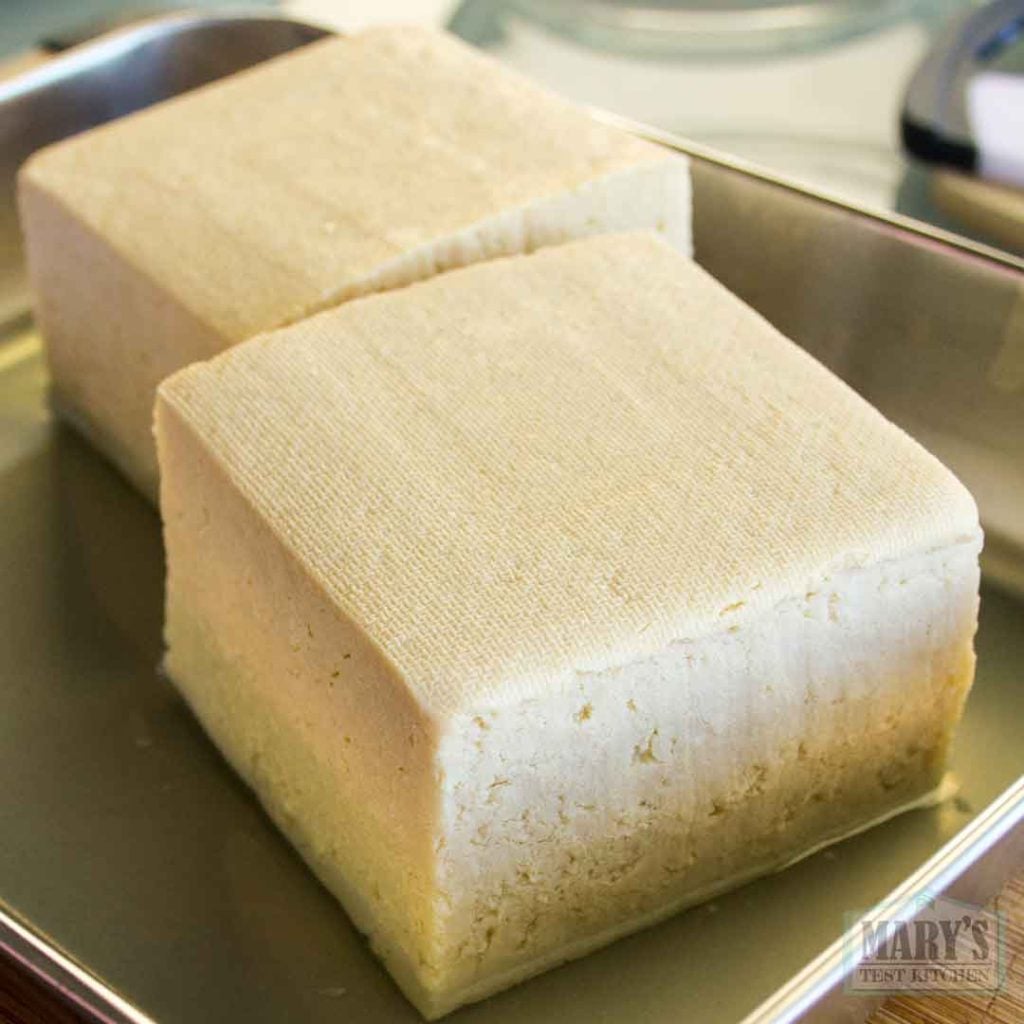
I started with two blocks of medium-firm tofu (about 700 g total) that I’d previously frozen and thawed.
The Reason? Tofu is full of water that will start leeching out as soon as you take it out of the package. But too much moisture is a main reason for DIY tempeh fermentation failure. My logic is that since we know freezing separates the protein network from the water inside, it will be easier to remove that excess moisture to give the tempeh a fighting chance.
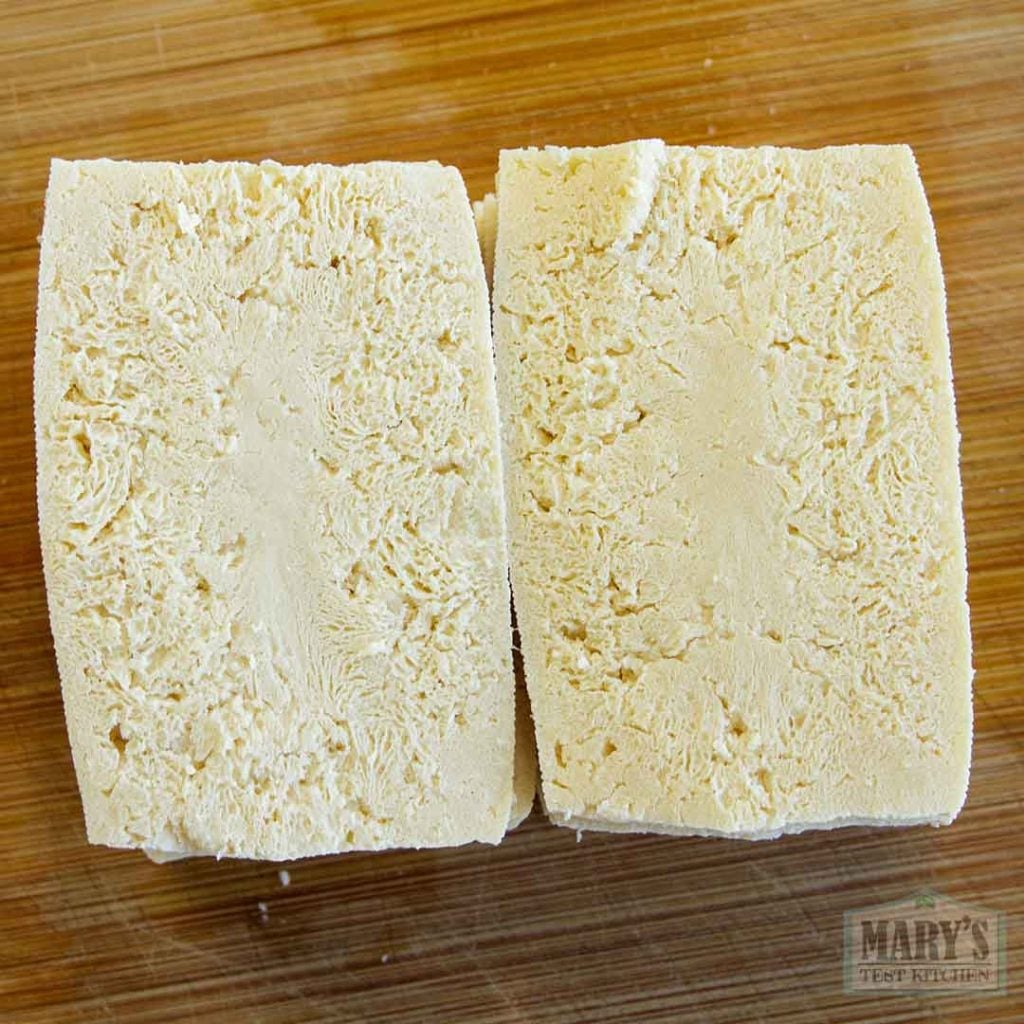
After wringing out as much water as I could, I cut the blocks into soybean-sized pieces for maximum surface area. Plus this exposed more post-freeze nooks and crannies for mycelium to grow into; or so I hoped.
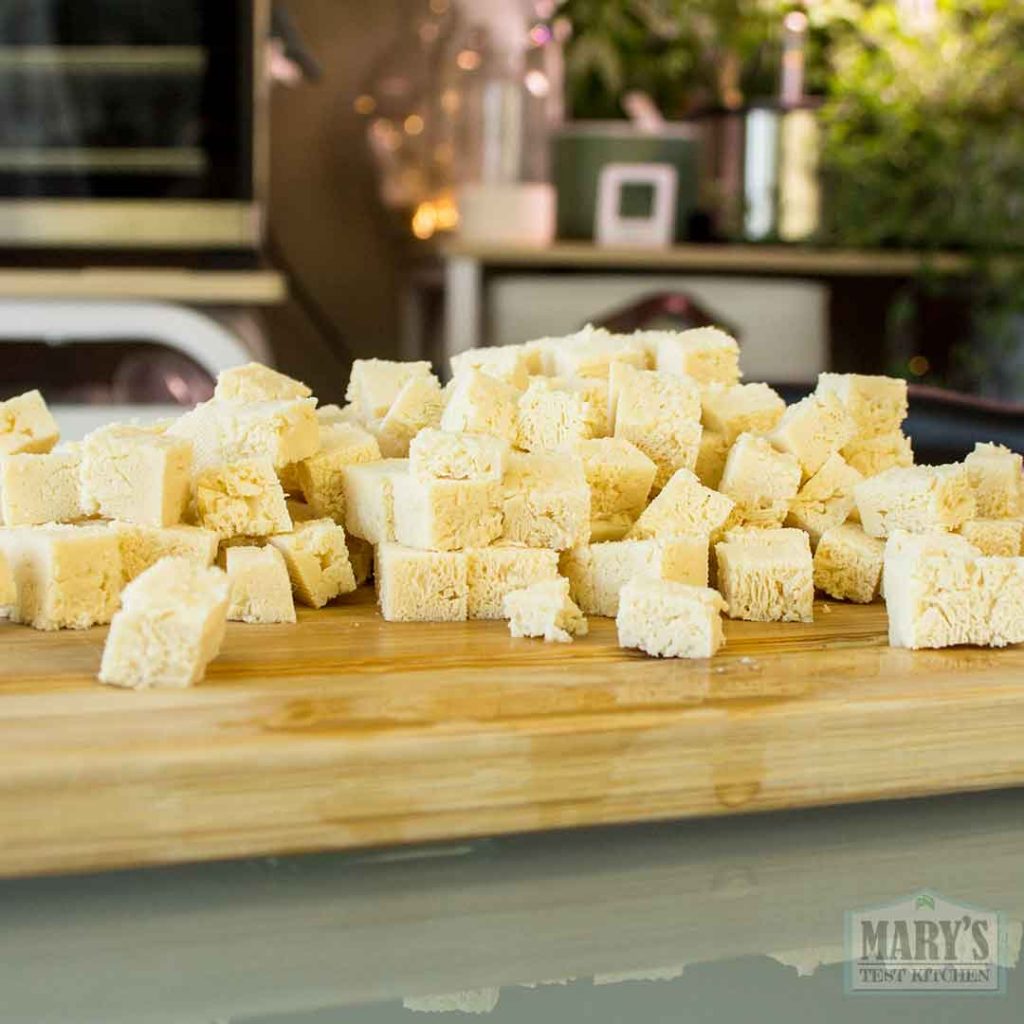
Then came a splash of vinegar to create the acidic environment tempeh development loves.
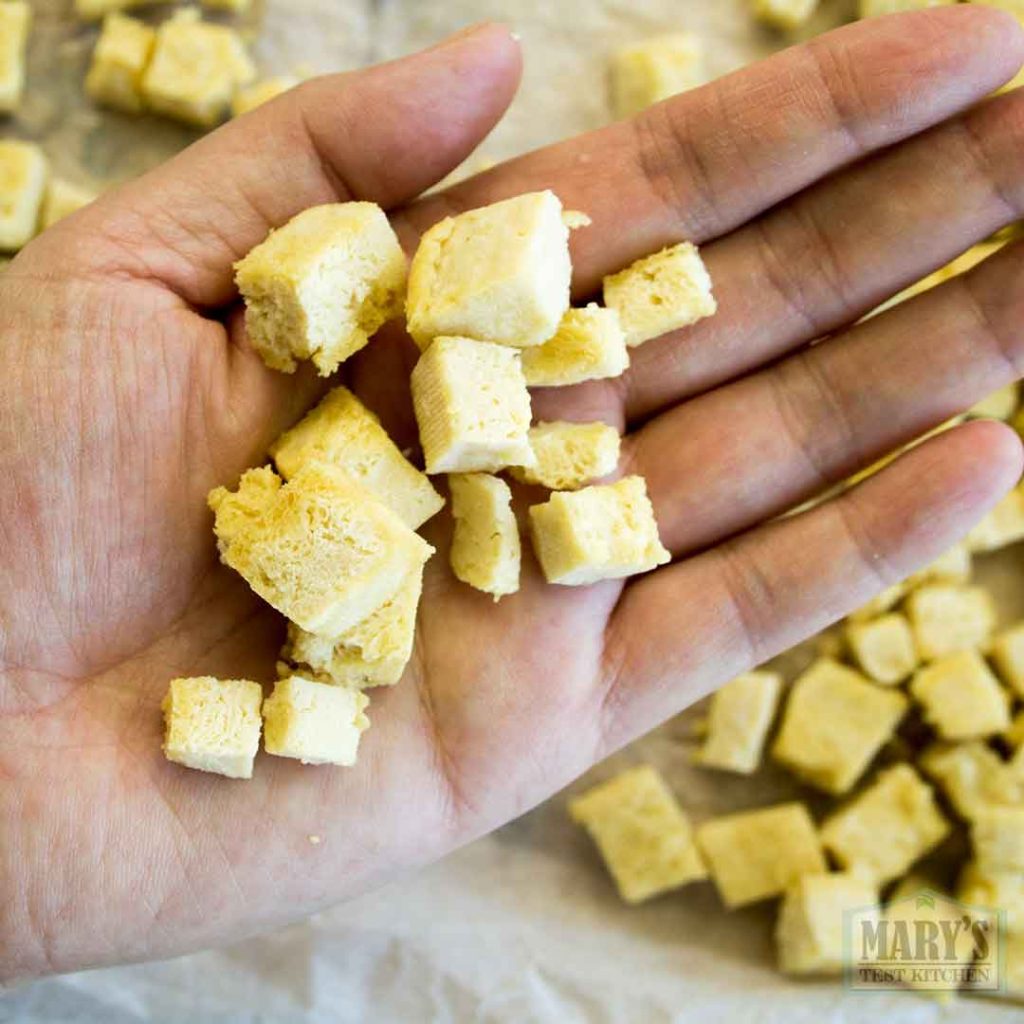
The tofu was still carrying a lot of moisture; damp to the touch. So I placed the little cubes on to a parchment-lined baking sheet, into the oven at 225°F for 90 minutes, stirring every 30. I didn’t want them to get too dry and crispy; just dry on the surfaces.
Inoculating and fermenting
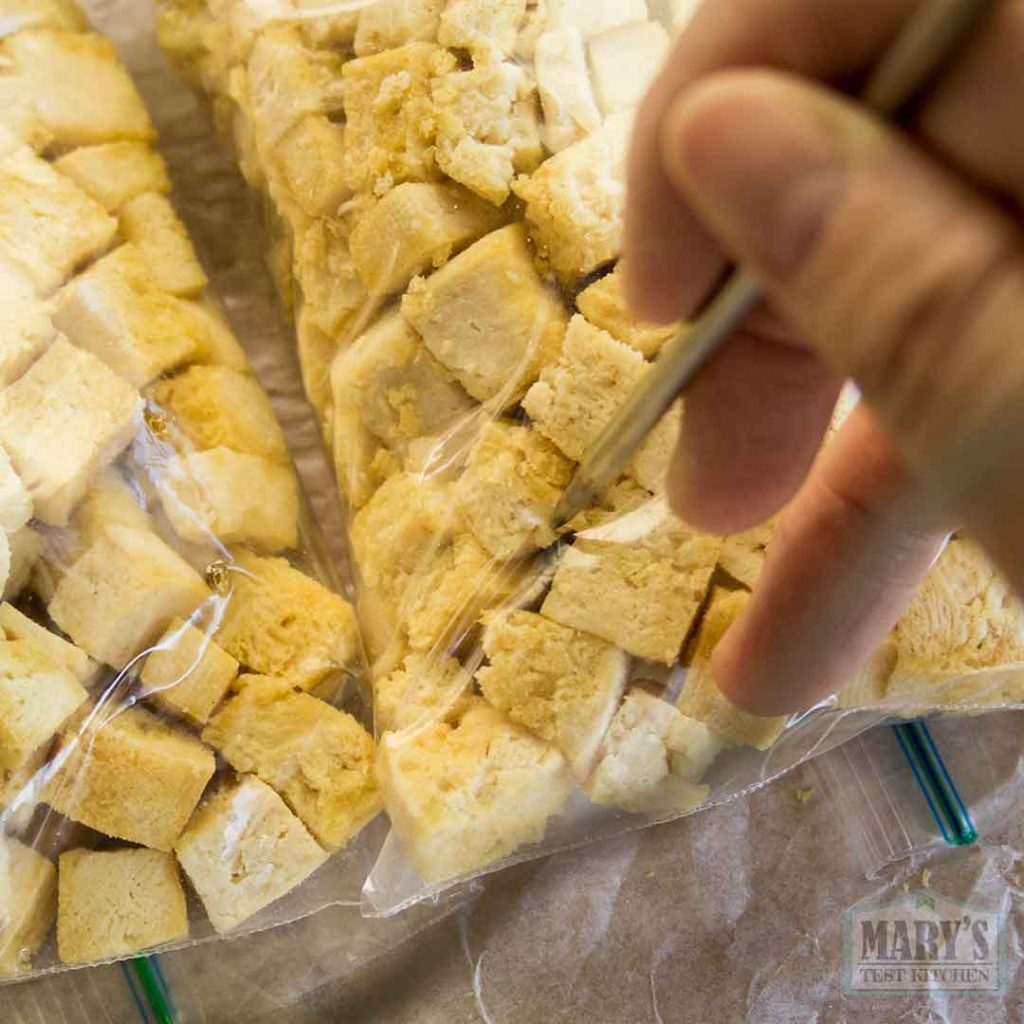
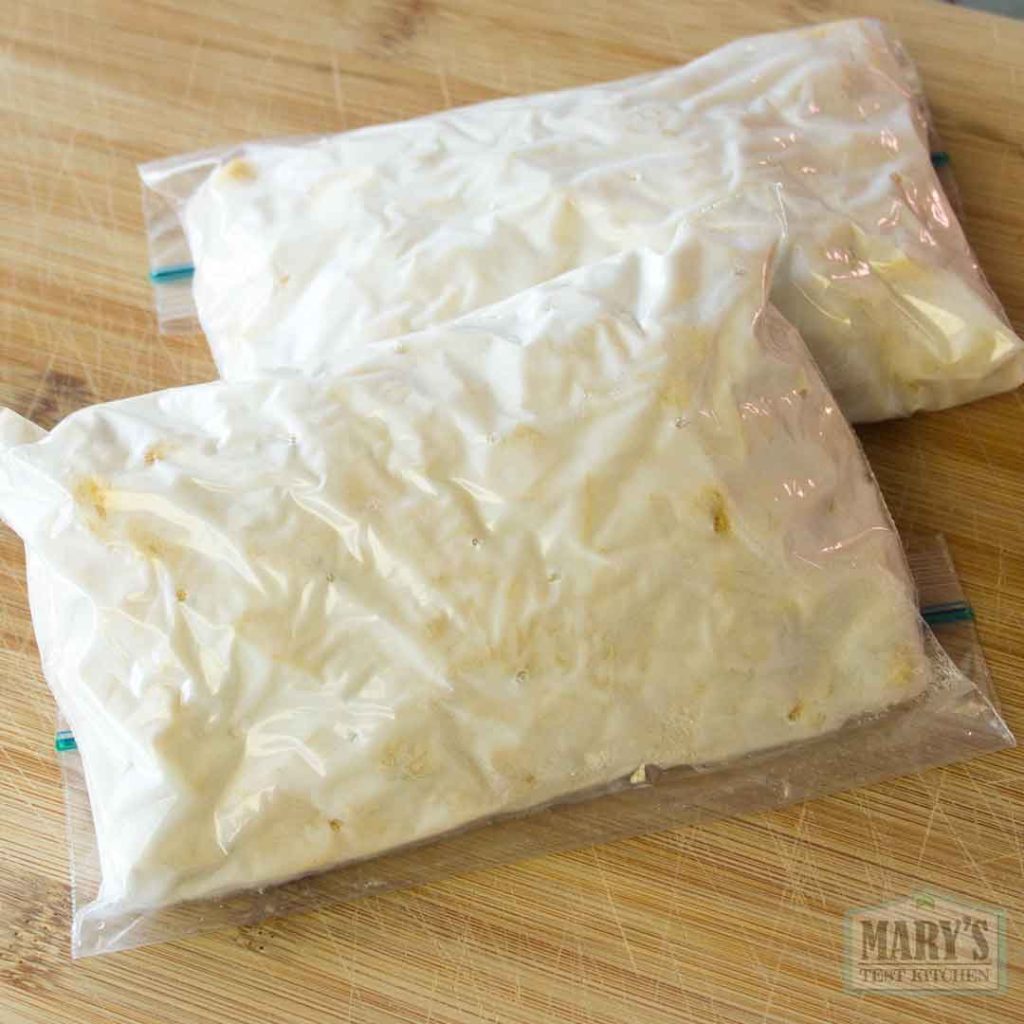
The cubes needed to cool for a while before I evenly sprinkled on ¼ teaspoon of tempeh starter and mixed it very well. Then packed the pieces into perforated bags with holes about an inch apart so the Rhizopus Oryzae (tempeh culture) could breathe. Too little oxygen and the helpful mycelium won’t grow; too much and it goes grey (sporulates) prematurely.
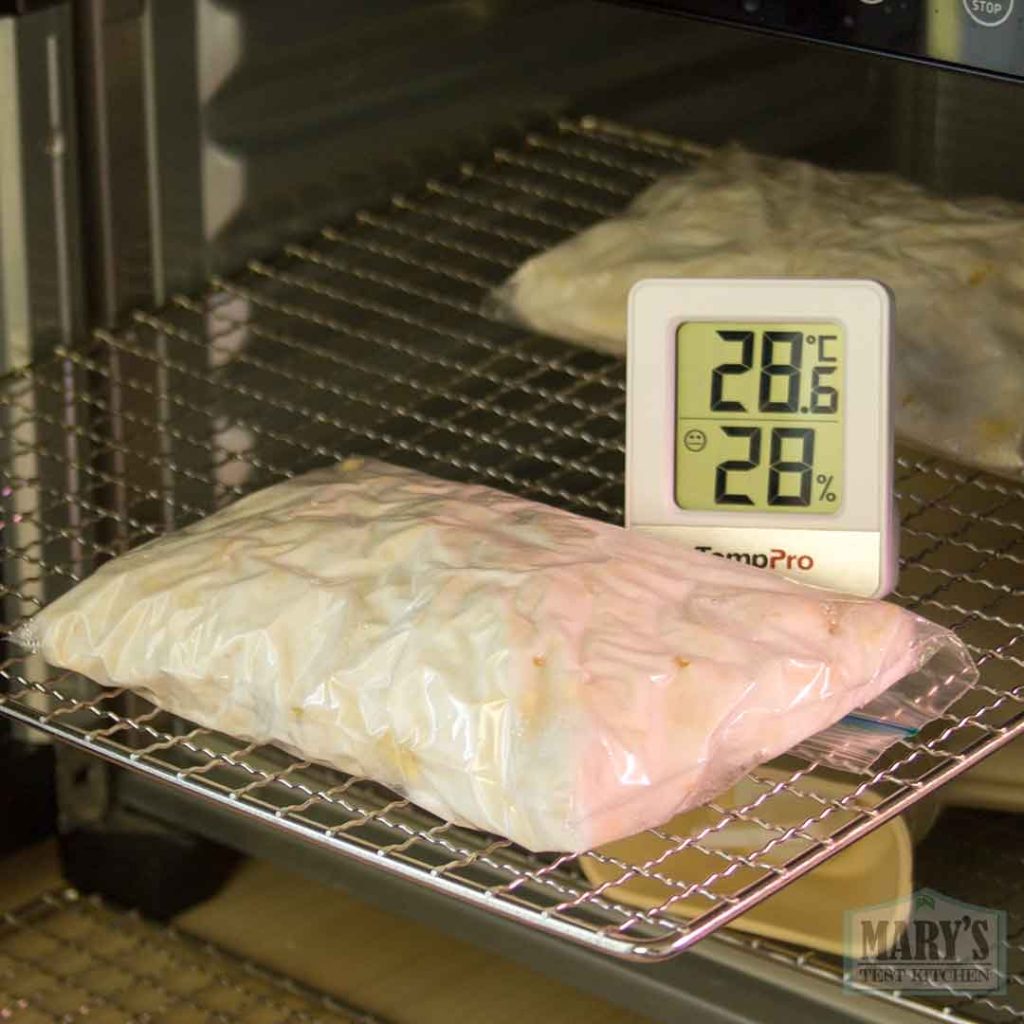
The spores also need heat; ideally the tropical climate of Indonesia, around 30°C. I’d planned to use my oven with just the light on, but the oven had other responsibilities that day. So after only an hour, I transferred everything to my dehydrator (fan off) warmed it with a hot water bottle.
Safety Concerns
I haven’t been able to find other accounts of people making tempeh from tofu yet. So since tofu is a novel ingredient for tempeh, we have to accept there maybe unknown risks.
That said, I picked tofu because I think it’s likely to be safe. This is because:
- traditional tempeh is made from soy and tofu is made from soy. This lets me know the substrate itself is not going to be a problem. It’s only contamination I would be concerned with. Which brings me to the next point.
- most commercial tofu is pastuerized in their packages as the last step to prolong shelf-life (this doesn’t apply to those fresh ones you buy in bulk or small manufacturers with expiry dates within the week)
Of course all these mitigating factors mean nothing if we won’t follow safe handling practices. That means washing hands properly and drying on clean cloths before touching the ingredient or starter every single time. Avoiding cross-contamination is a must. And tracking temperatures to make sure everything is going according to plan. Plus, using your best built-in sensors: your eyes and nose.
For novel ingredients, when in doubt, throw it out!
The reveal
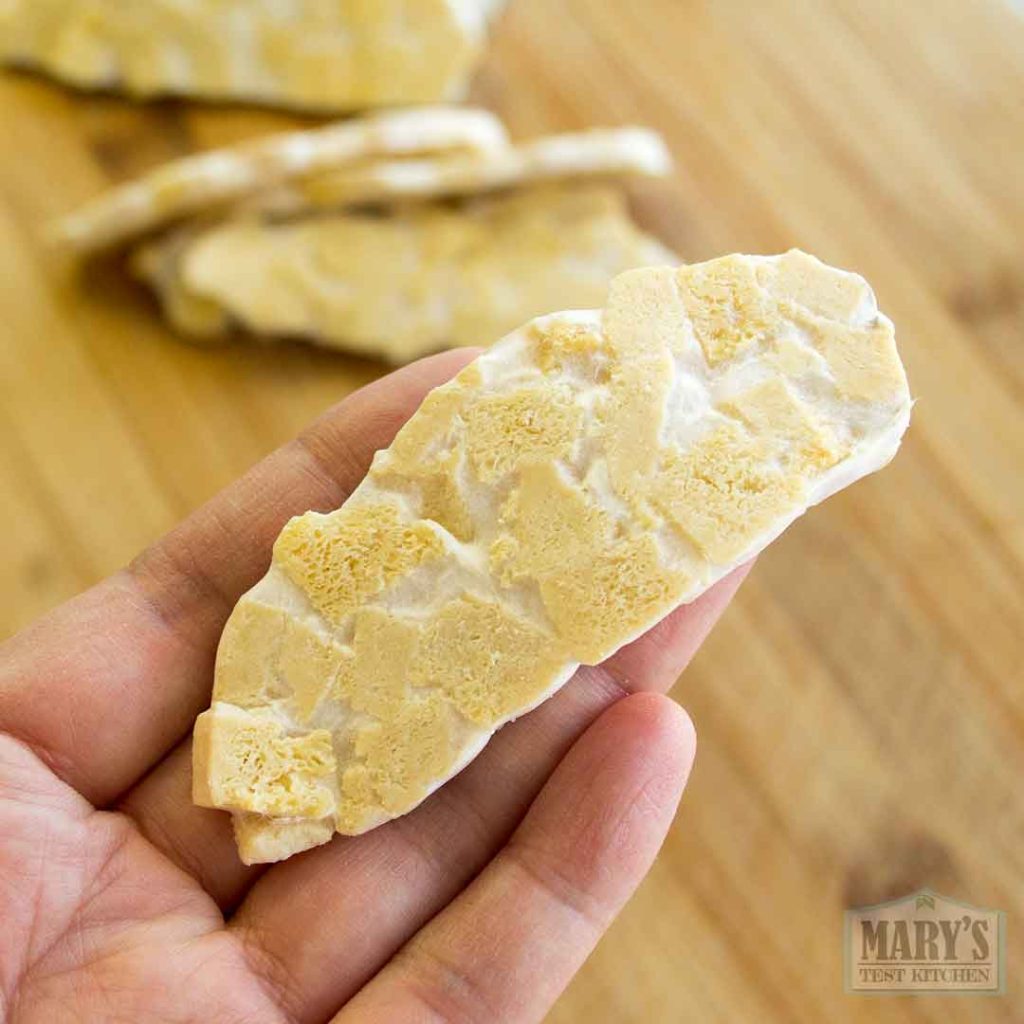
The next day: it worked! The blocks were warm to the touch, firm not floppy, spongy but dense. Coverage was mostly excellent, with a few bare patches and only the tiniest bit of grey here and there.
For tempeh mycellium to fully develop into this thick white blanket in 24 hours is on the fast side. So this bodes well for food safety as well.
At first sniff, I was a bit concerned. It was like fresh sweat. Like not quite stinky, but distinctive.
The taste tests
Although it’s not advised to eat tempeh raw, I always have the urge to taste test it that way. It was bland at first: ever so slightly sour (I think from the vinegar), ever so slightly mushroom-y, mostly just tofu.
But add a pinch of salt and the tastebuds were awakened to….
SWISS CHEESE!
I know, weird. But that clean sweat and tempeh mushroom-y character combined to give a very Swiss Cheese-like flavor. Even the chew of the tasting slice was reminicent of hard, waxy Swiss Cheese.
While I can’t officially recommend eating raw tempeh, I was amazed!
Cooking Tests
First, I did the easiest thing to come to mind: pan-fry. However, low effort yielded low results. Dry and choky. But the Swiss flavor persisted! Then I added some soy sauce and maple syrup, inspired by tempeh bacon. But those flavors over-powered the Swiss cheese flavors and then it became really subpar tempeh bacon. I tried to save it by sandwich. But truthfully, it sucked.
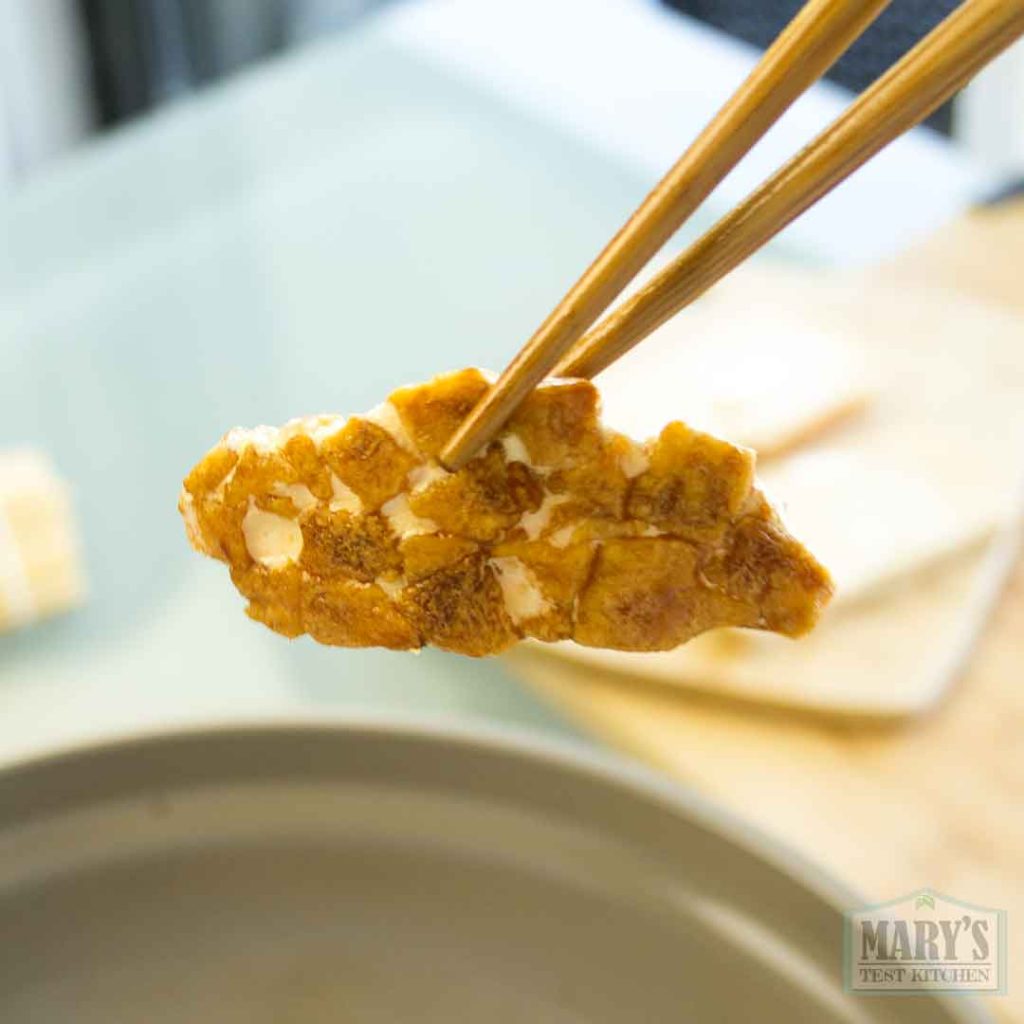
Directly pan-cooking from dry with a little brushed on sauce clearly the wrong approach for this highly porous tempeh.
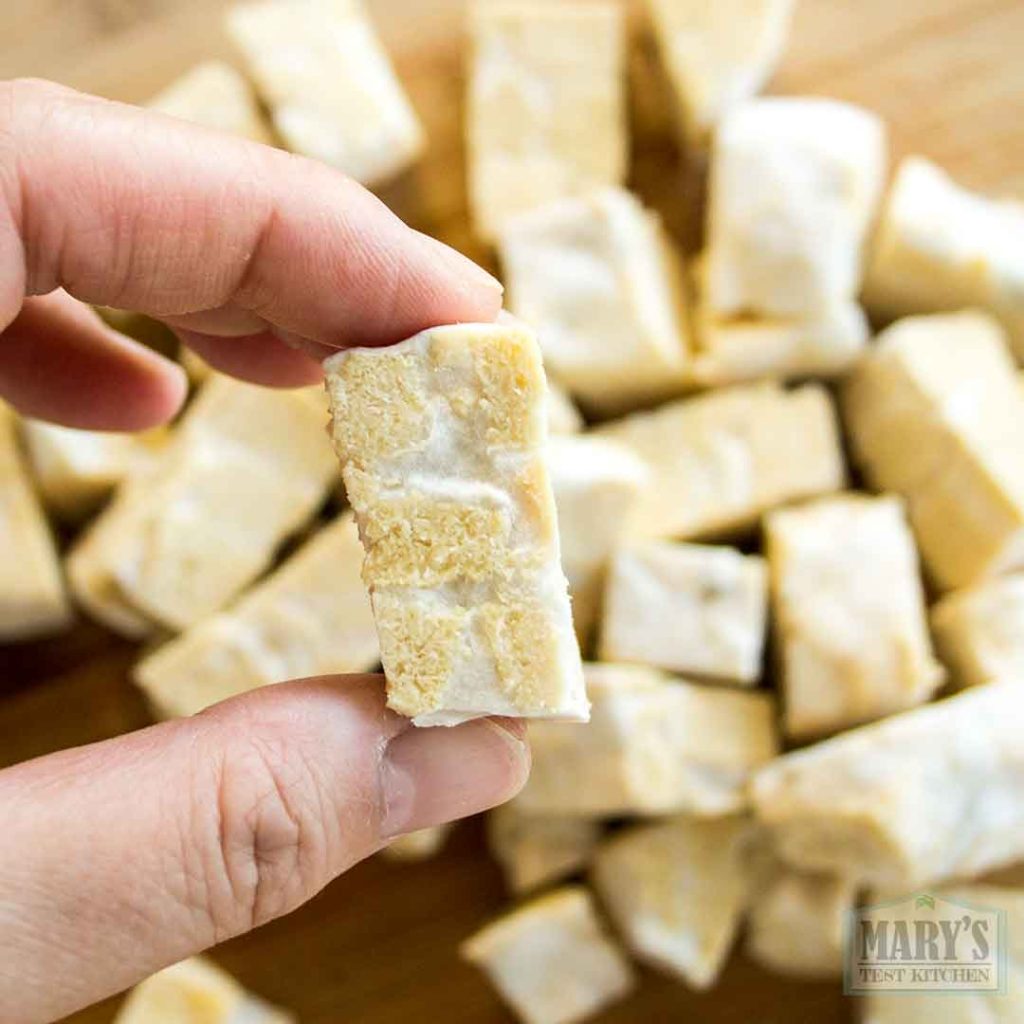
So I went the opposite direction! With Taiwanese braised pork in mind, I started anew. For the braising liquid, I first sautéed onion, grated garlic and ginger sautéed in peanut oil. Then added dark soy sauce, China Lily soy sauce, mushroom seasoning, brown sugar, chili and about a cup of water to simmer until the onions were quite soft. Finally, I added the tempeh.
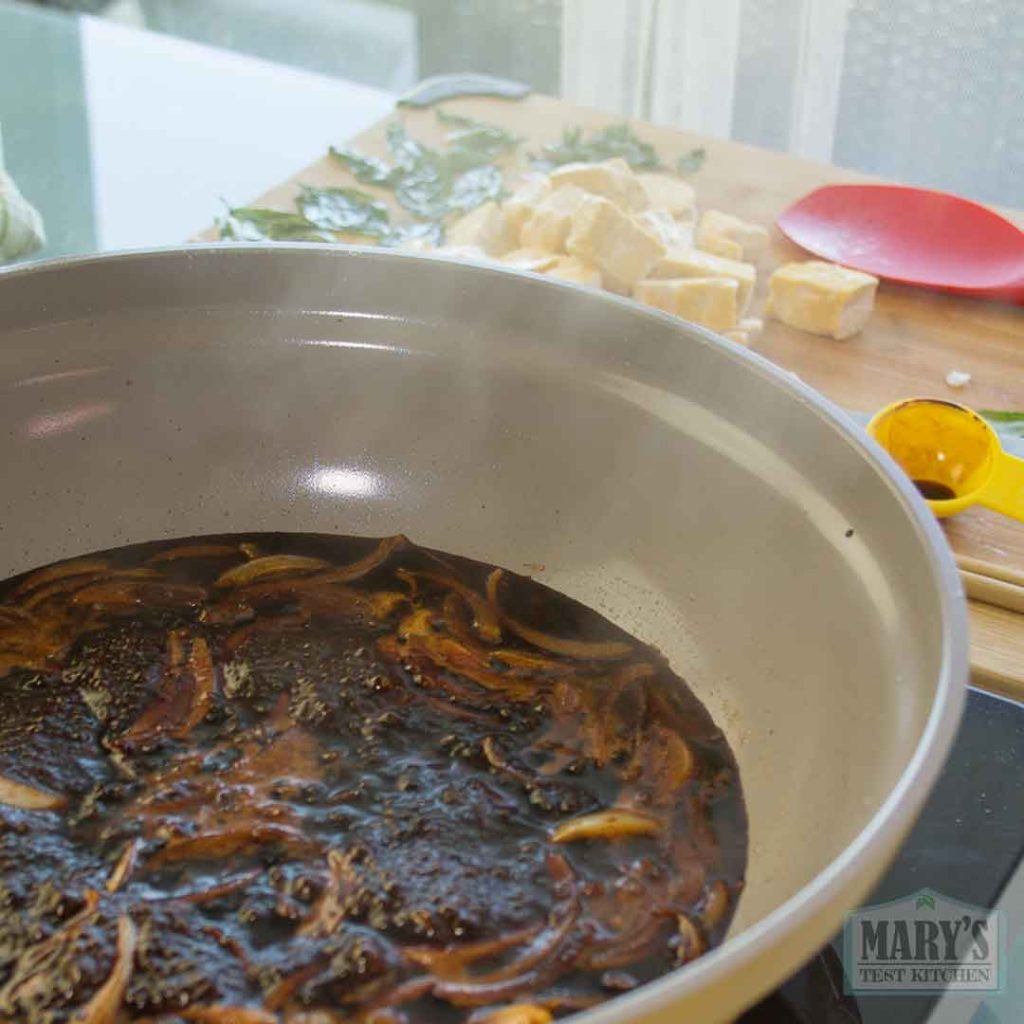
I expected the tempeh to soak up the sauce like a sponge. But it did need a little encouragement; I spooned the sauce over the tempeh, manipulating the pieces to get full coverage. Then let it simmer for a few minutes for maximal absorption.
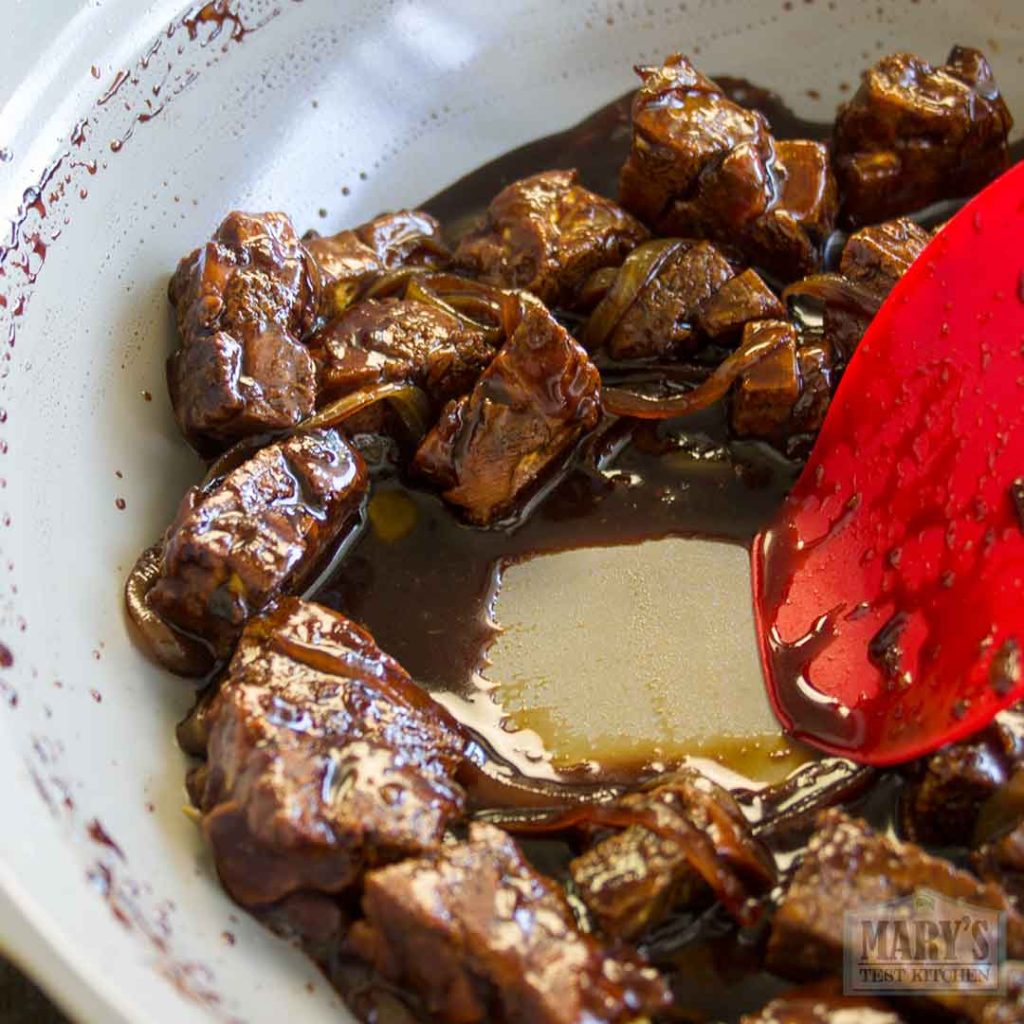
There was quite a bit of thin sauce in the pan which I I thickened cornstarch slurry and finished with a tablespoon of toasted sesame oil.
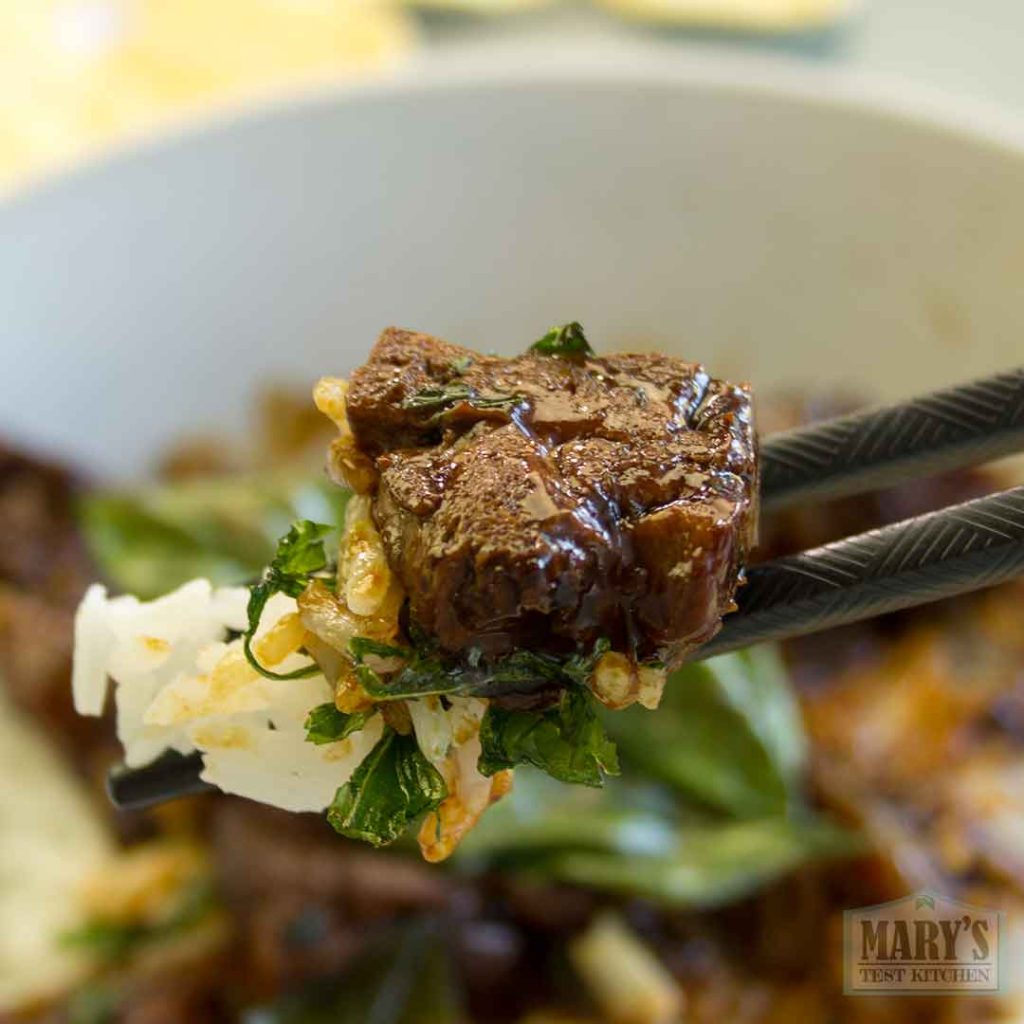
For the final plate, I had steamed white rice, topped with the rich braised tofu tempeh and finished with crispy fried Thai basil from my LetPot indoor garden.
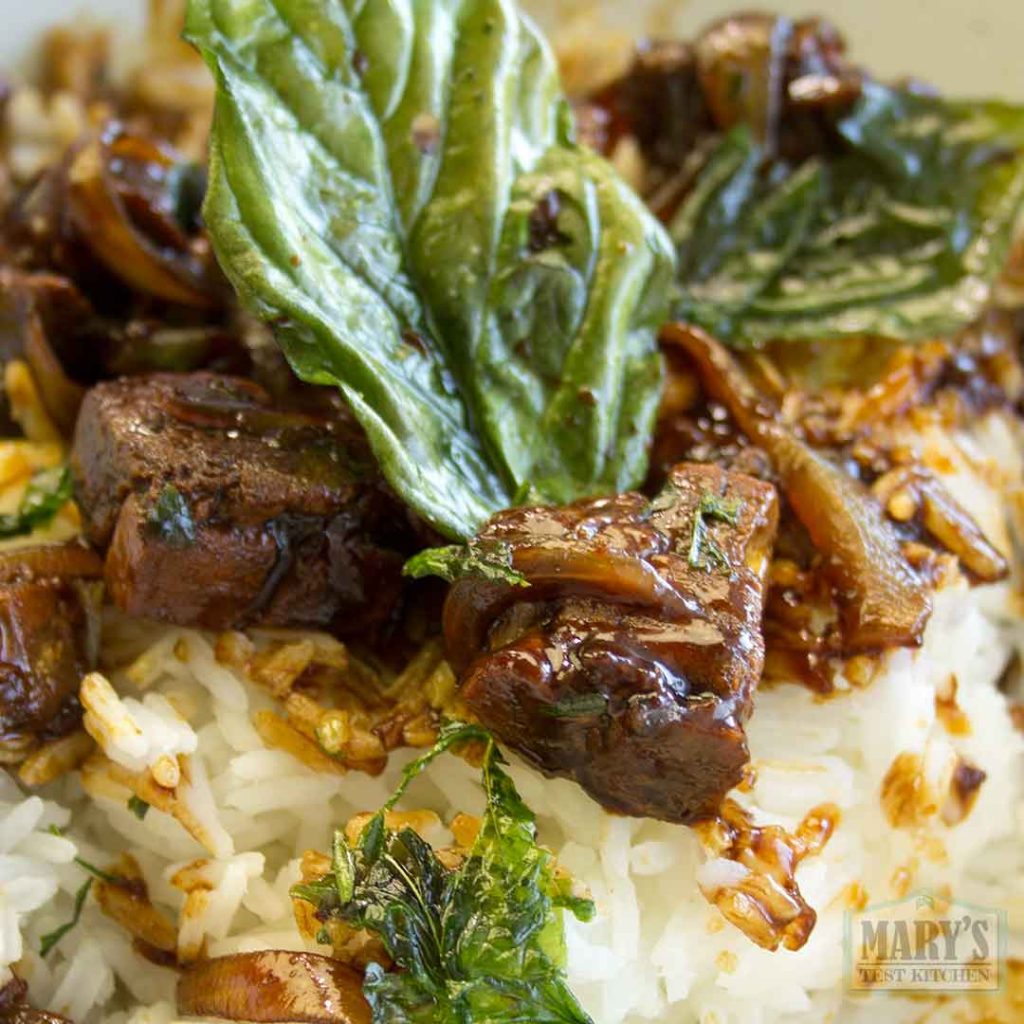
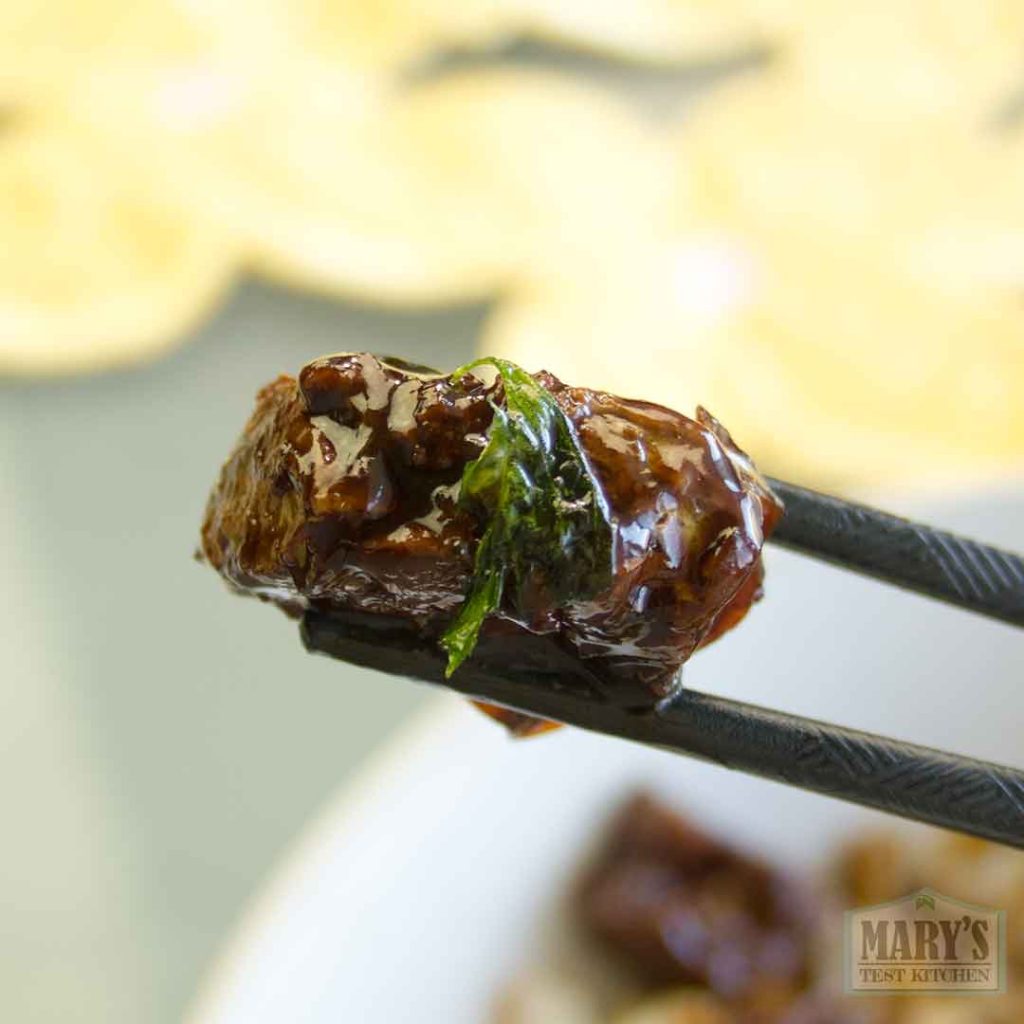
The result was well-flavoured tofu tempeh inside and out. The bite was firm and meaty but not tough. I think it’s one of the best textures for a great meat alternative. I would definitely make this again!
Lingering Questions
Now that we know that tofu will tempeh, should I try again with tofu that hasn’t been pre-frozen? Perhaps I was being overly paranoid about moisture. And what should we tempeh next?
Personally, I’m really enjoying this tempeh over others so I’ll be testing it further for repeatability and to discover the best dishes to use it in. So please let me know your questions and suggestions too!