Can you make tempeh from canned beans? Conventional tempeh wisdom says no. Or at least, not reliably. Canned beans are already cooked, often quite soft, and can contain more moisture than tempeh starter likes. Many also contain salt or preservatives that may interfere with the growth of Rhizopus mold, the fungus responsible for turning cooked beans into tempeh. But I wanted to find out for myself.
Watch the experiment
So I tested two kinds of canned beans: chickpeas and navy beans. The goal was to see whether I could get them to ferment into a solid, sliceable block of tempeh.
Why shouldn’t you use canned beans for tempeh?
There are a couple of problems with starting with canned beans.
First, they’re generally very soft and wet. Successful tempeh fermentation requires beans that are cooked but relatively dry on the surface. Excess moisture can encourage unwanted microorganisms and make it harder for the tempeh mycelium to grow evenly.
Second, canned beans can contain salt or preservatives. Salt may slow the growth of tempeh mycelium, while preservatives can potentially make fermentation more difficult.
Still, “difficult” isn’t the same as “impossible.”
And sometimes I need to find out for myself.
The canned beans
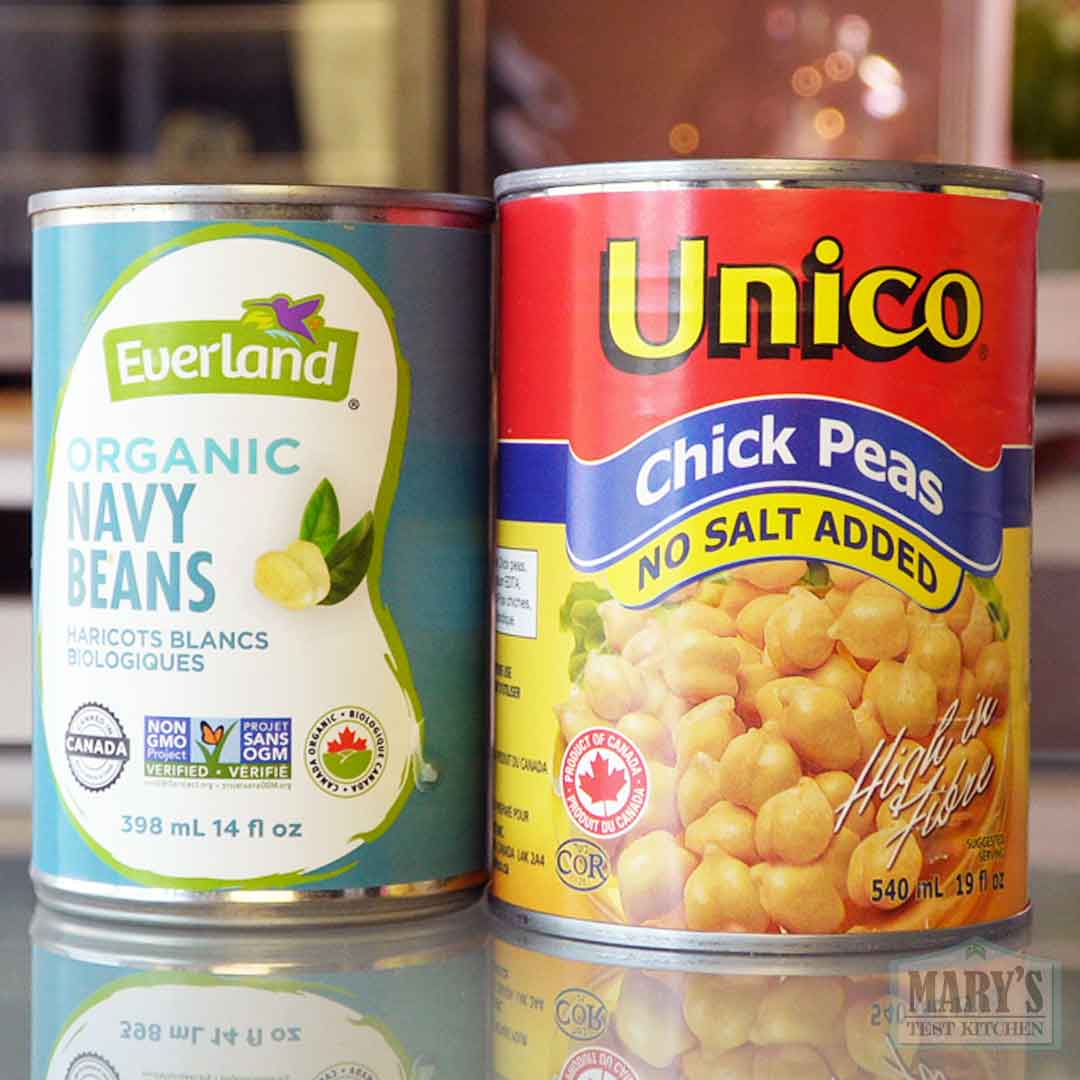
I was originally trying to find canned beans without salt or preservatives but there just weren’t any like that on the shelf. So I ended up bringing home two cans:
- Chickpeas a salt-free variety
- Organic navy beans containing only beans, water, and sea salt
The salt-free chickpeas turned out to contain disodium EDTA, a preservative used to help maintain the beans’ appearance.
The navy beans contained just organic navy beans, water, and sea salt.
I was originally trying to find canned beans without salt or preservatives but there just weren’t any like that on the shelf.
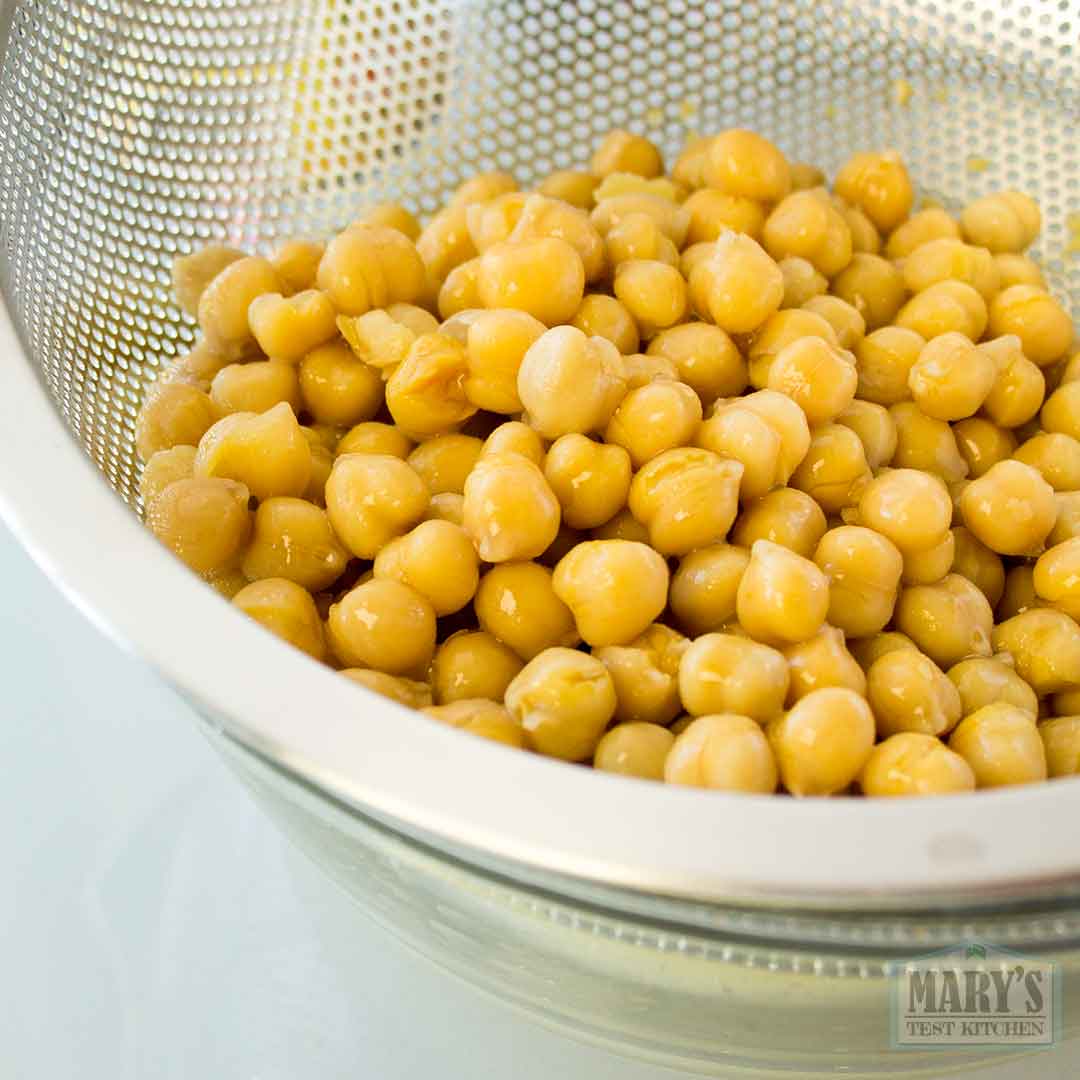
The chickpeas were especially concerning because some beans were noticeably mushier than others. Uneven moisture can mean uneven fungal growth; exactly what I didn’t want.
I drained and rinsed both types of beans thoroughly to remove the canning liquid and any surface slime.
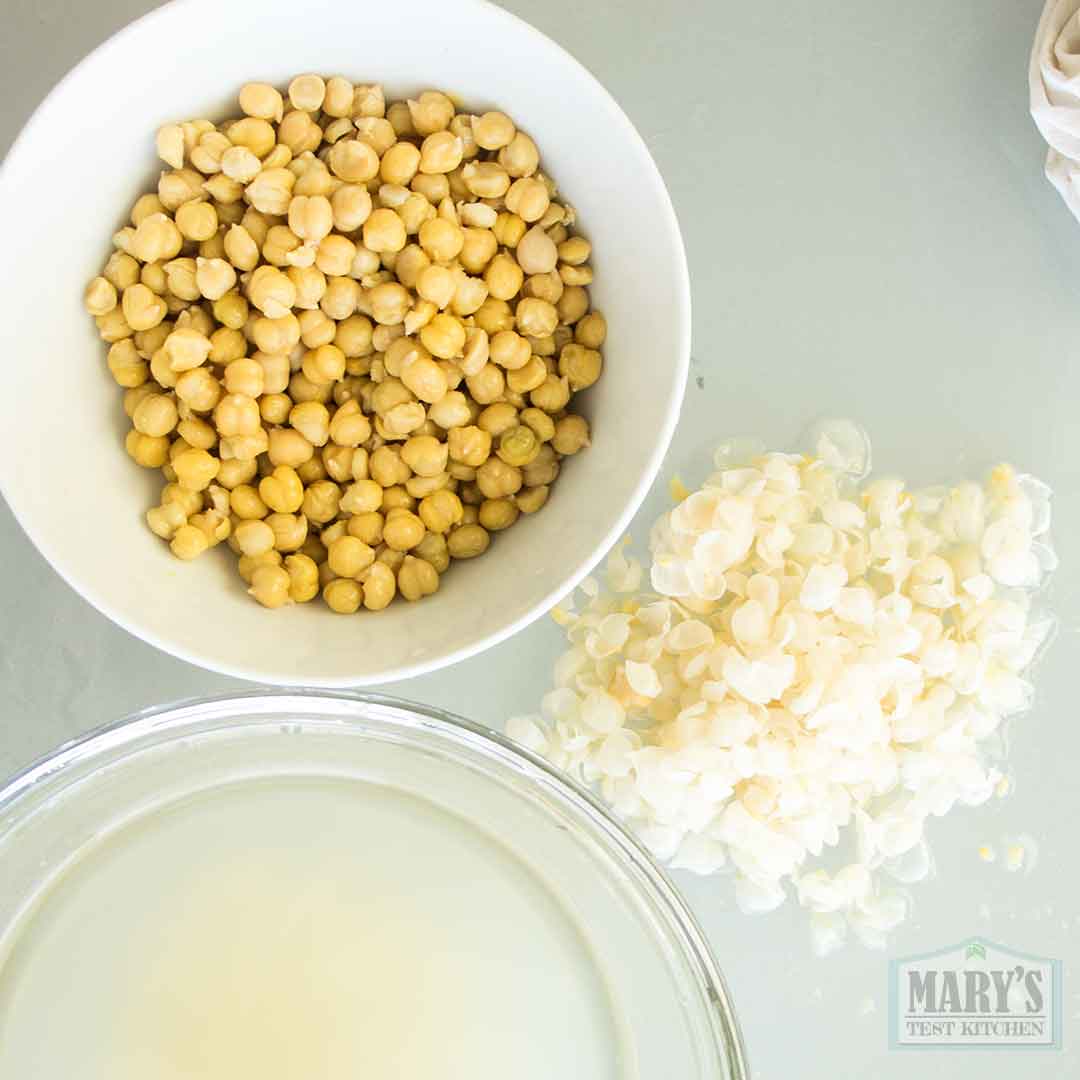
I also removed the chickpea hulls. Because these chickpeas were unusually large and many of them were still intact, I figured removing the hulls might give the tempeh starter a better chance of colonizing the beans.
Drying the beans
This was probably the most important part of the experiment.
When I make tempeh from beans cooked from scratch, I always make sure they’re dry to the touch before adding the starter. I’ve previously used traditional soybeans as well as less conventional ingredients like split peas and fava beans.
So I tried to get the canned chickpeas and navy beans as dry as possible by heating them in a pan over medium heat.
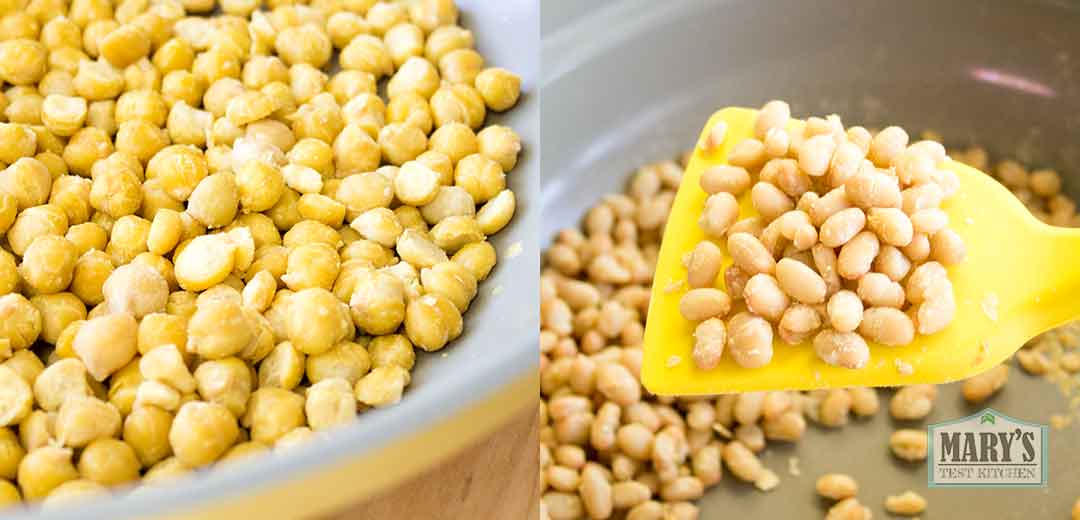
Unfortunately, the canned beans weren’t particularly cooperative.
They were already so soft that some of them broke apart as I dried them.
That’s not ideal for tempeh. I wanted dry beans that would remain relatively intact, not a pan full of partially mashed beans.
Still, I managed to get them reasonably dry on the surface.
Adding the tempeh starter
Once the beans had cooled to around 32°C / 90°F, I added vinegar to help create a more favorable environment for the tempeh fungus and discourage unwanted microorganisms.
Then I added ¼ teaspoon of tempeh starter to each batch and mixed it in.
The inoculated beans went into perforated bags so the growing fungus could get the oxygen it needed.
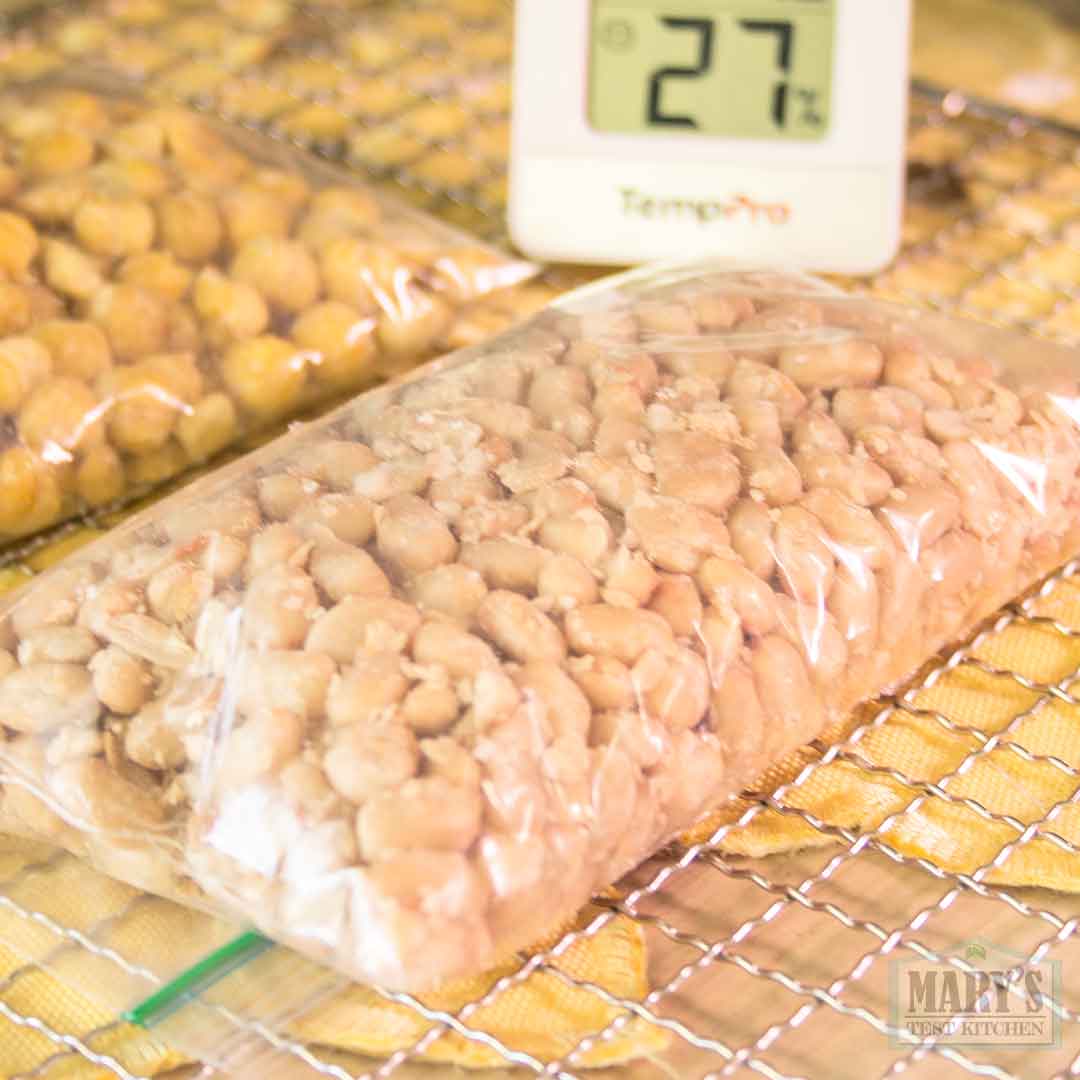
For incubation, I aimed for around 30°C / 86°F, similar to the warm conditions where traditional tempeh fermentation takes place.
I used my dehydrator as an insulated incubation chamber, without turning on the heat, and added a hot water bottle to help maintain the temperature.
The plan was to keep the beans warm for about 12 hours and then let the growing tempeh generate its own heat.
24 hours: Something is happening!
After about 24 hours, both batches were producing their own heat as expected. There was also visible mycelium. The problem?
It was very patchy.
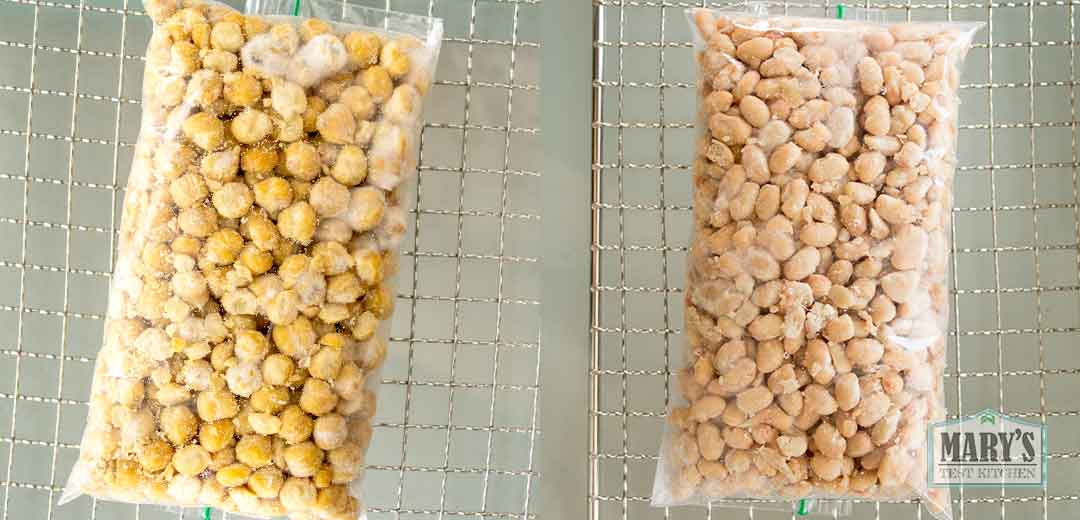
The chickpeas had some obvious areas of white mycelium, but large areas remained bare.
The navy beans were even less impressive.
At this point, I wasn’t optimistic, but I decided to keep going.
30 hours: Still very patchy
Six hours later, the mycelium had grown thicker in the areas it had colonized. But there were still huge bare sections.
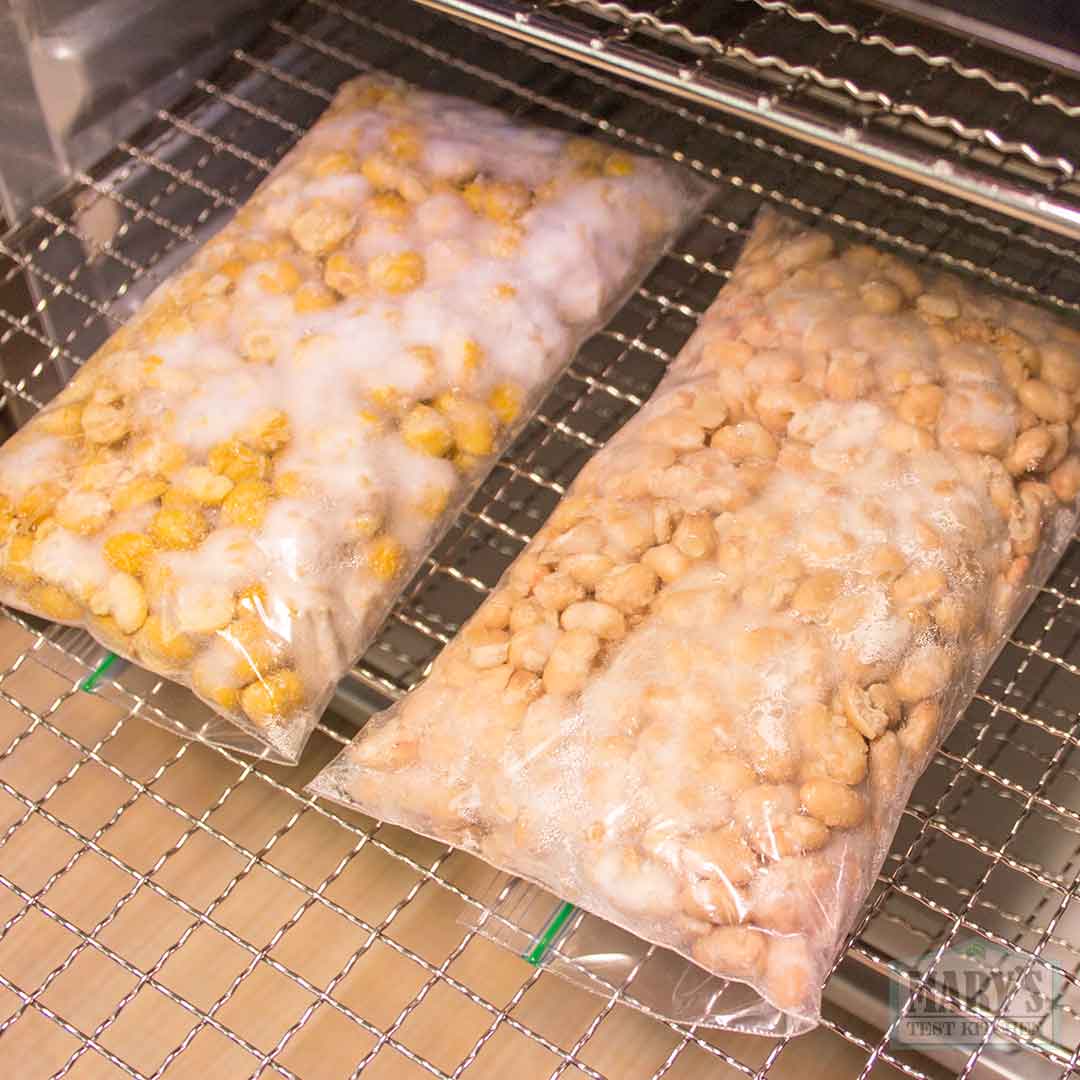
This was worrying because a healthy tempeh fermentation should eventually produce a dense network of white mycelium binding the beans together.
Instead, I had little islands of tempeh fungus surrounded by suspicious-looking bean territory.
I let them continue fermenting.
The next morning
By about 5:42 AM, things had changed dramatically.
Both batches were now covered in mycelium over roughly 90 – 95% of their surfaces, so I moved them into the refrigerator to stop the fermentation and make it easier to inspect the finished product.
Unfortunately, the final result wasn’t pretty.
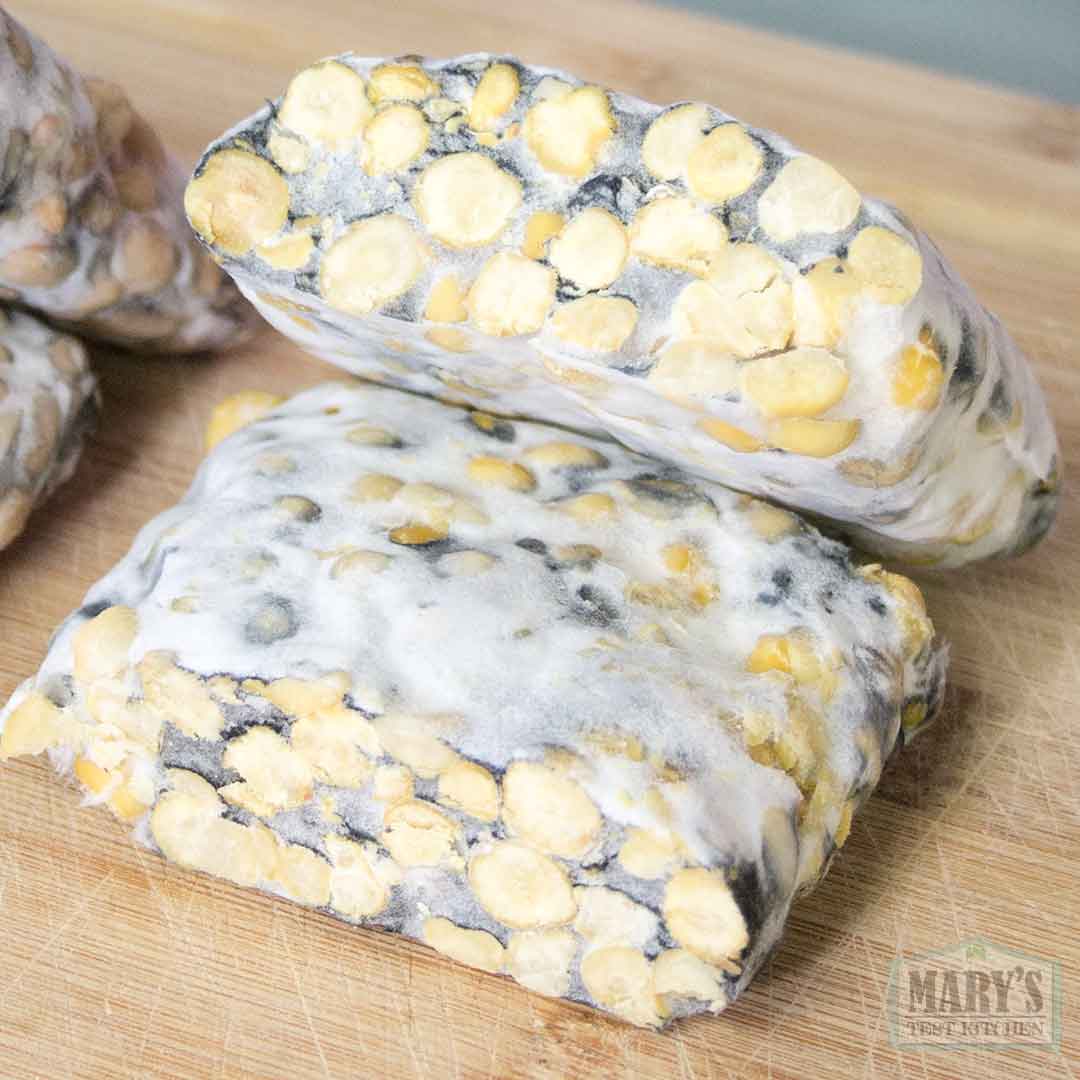
Chickpea tempeh
The chickpeas had formed a block and were covered in mycelium. But at least half of the surface had developed dark areas, and there were still bare patches.
Navy bean tempeh
The navy beans had a similar problem.
There was plenty of mycelium, but it was unevenly distributed, with significant areas remaining uncolonized.
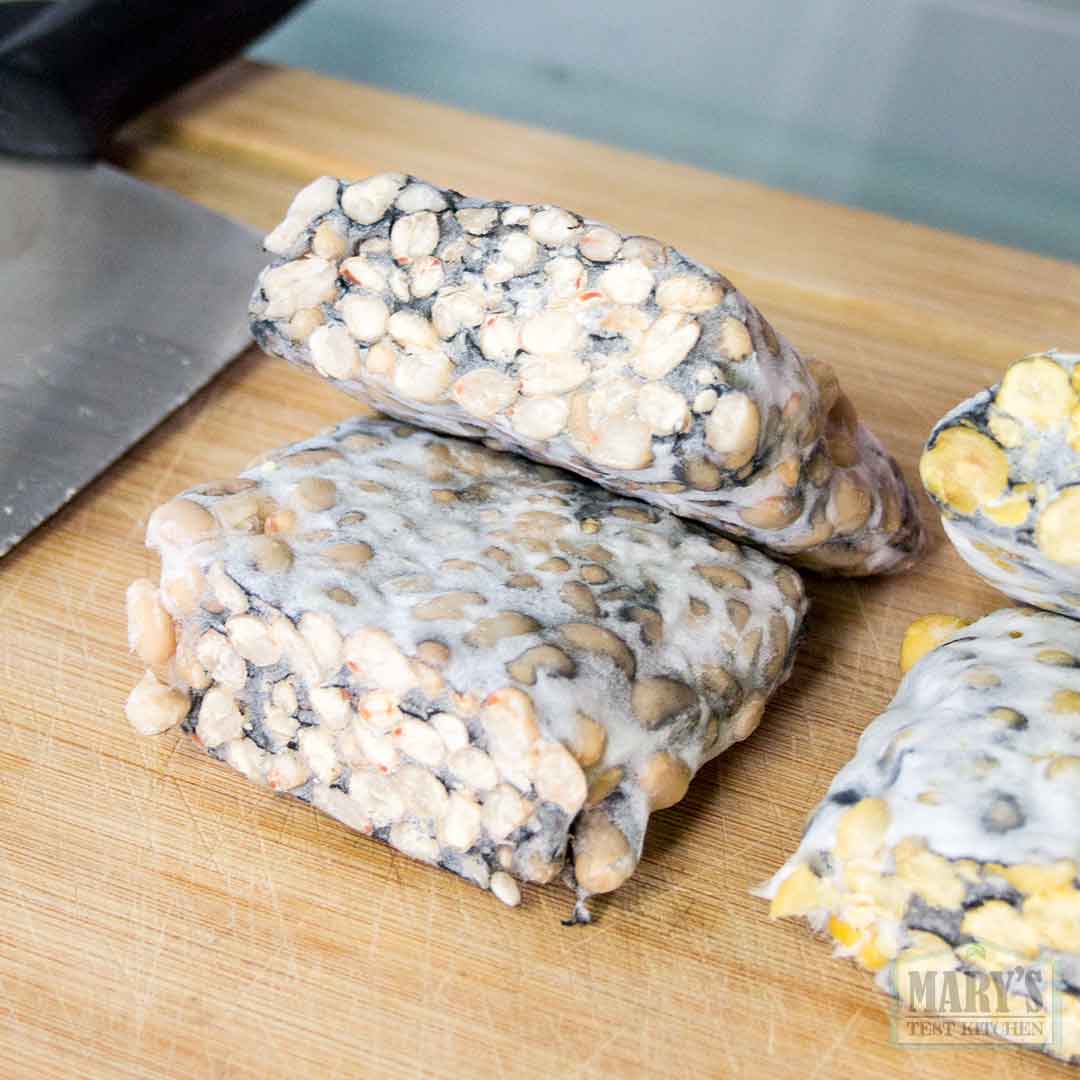
Despite the challenging appearance though, the black areas are not the problem.
Why was the tempeh turning black?
The black areas were where the Rhizopus mycelium had sporulated.
In other words, the fungus had matured enough to produce spores.
A little sporulation isn’t necessarily unusual in tempeh, especially if fermentation goes too long. But in this experiment, the bigger problem was the combination of sporulation and large areas of uncolonized beans.
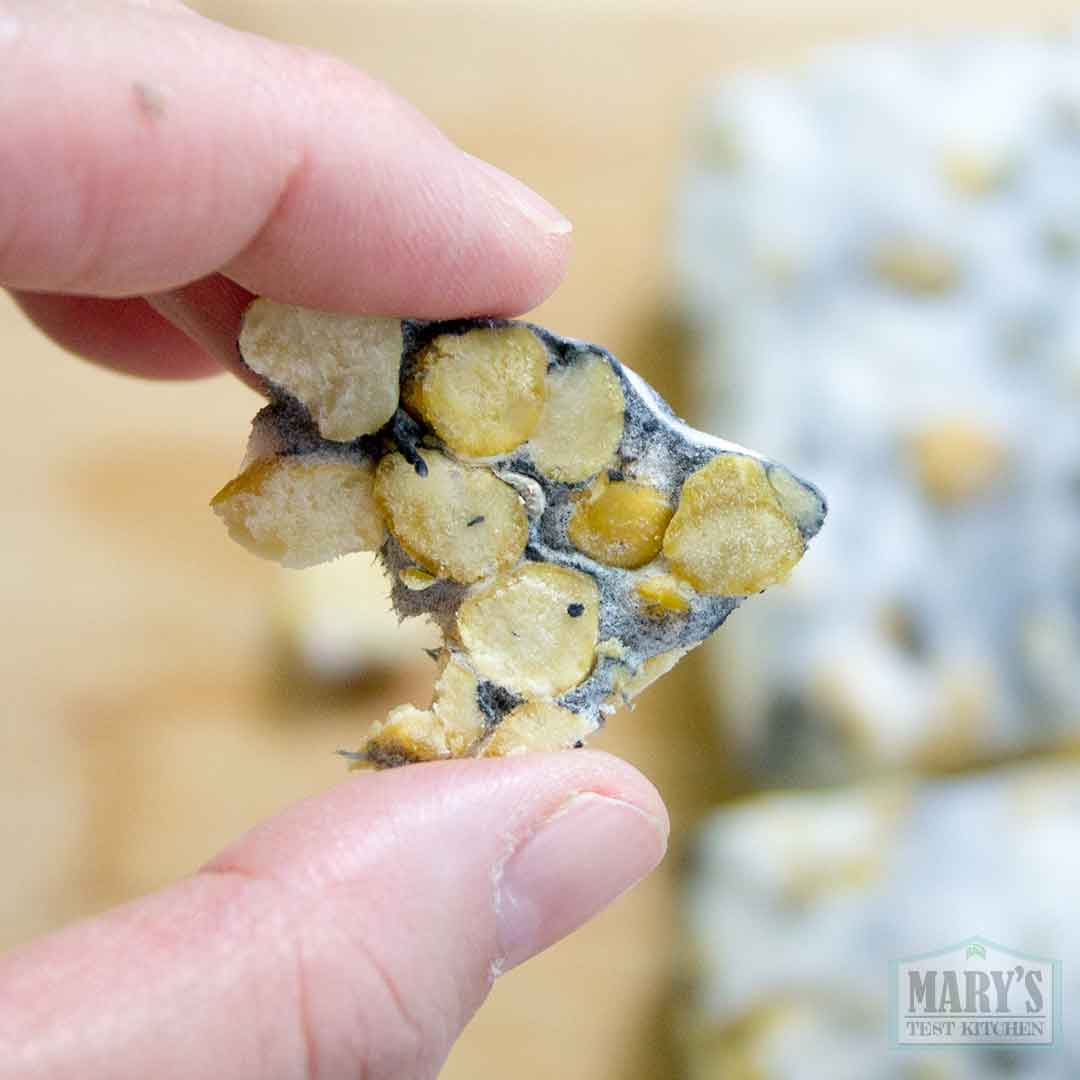
Good tempeh should be tightly bound by a dense network of white mycelium.
These blocks were not.
The bare areas meant there was an opportunity for microorganisms other than the intended tempeh fungus to grow.
And because this fermentation had taken considerably longer than I’d hoped, I wasn’t comfortable assuming everything was fine just because the tempeh smelled normal.
What did the canned bean tempeh smell and taste like?
Like I said, the smell was fine. Both batches smelled lightly mushroomy and fermented, like tempeh should. They also smelled distinctly like their original beans.
There were no obvious ammonia-like or unpleasant odors.
I did taste a tiny piece of each for the experiment.
Both actually tasted good.
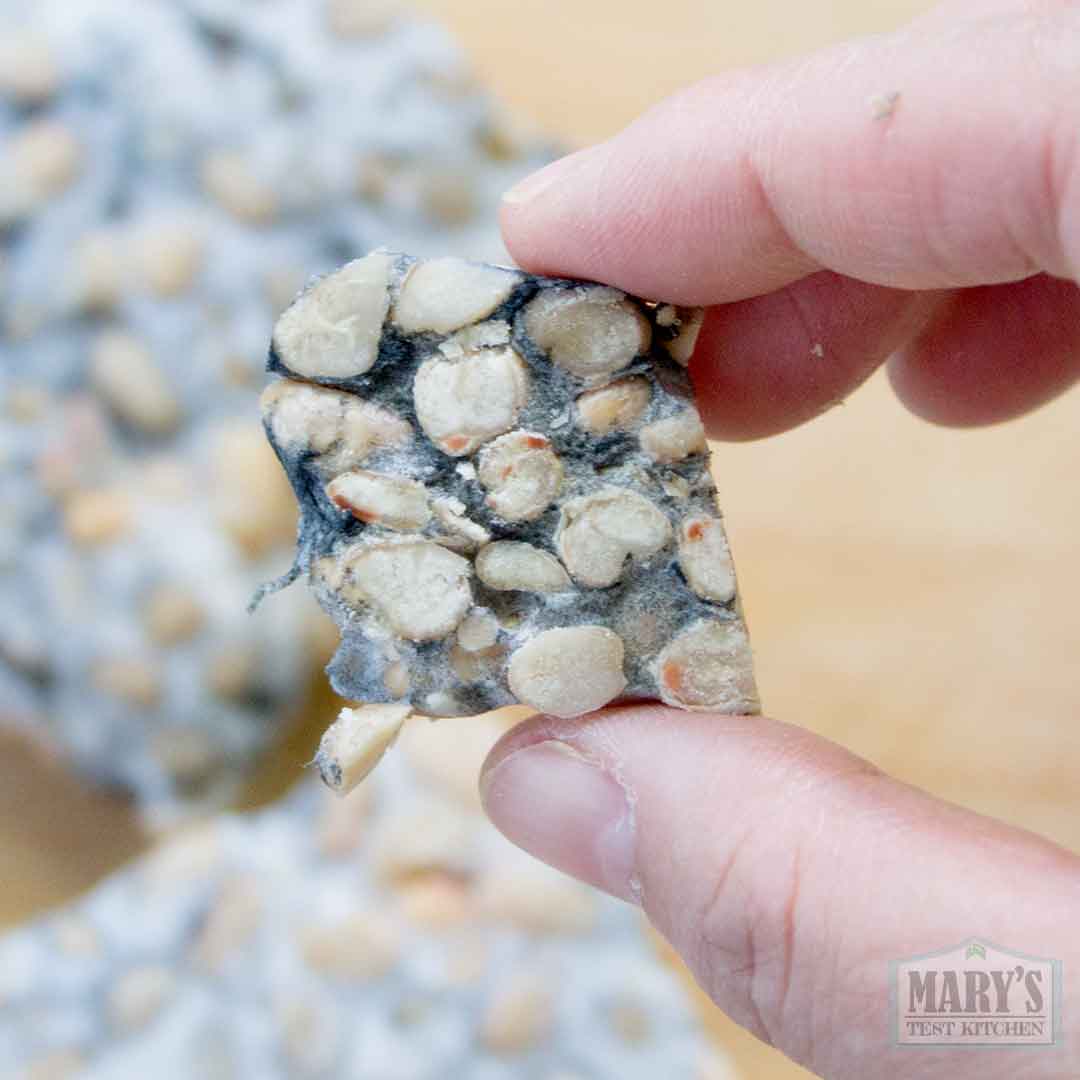
The chickpea tempeh had the creamy flavor of chickpeas combined with that characteristic mushroomy tempeh flavor. The navy bean tempeh tasted similarly like navy beans with a fermented, mushroomy quality.
But good flavor isn’t enough to make a fermentation safe. The problem was everything I couldn’t see.
With such large areas of bare beans and such a long fermentation time, I couldn’t confidently rule out unwanted microbial growth.
And when you’re experimenting with fermentation, “I think it’s probably fine” isn’t a good enough safety standard.
So, will canned beans tempeh?
Technically… yes.
Both the canned chickpeas and canned navy beans produced tempeh mycelium and eventually formed something resembling a tempeh block.
But did I get ideal, healthy, well-colonized tempeh?
No.
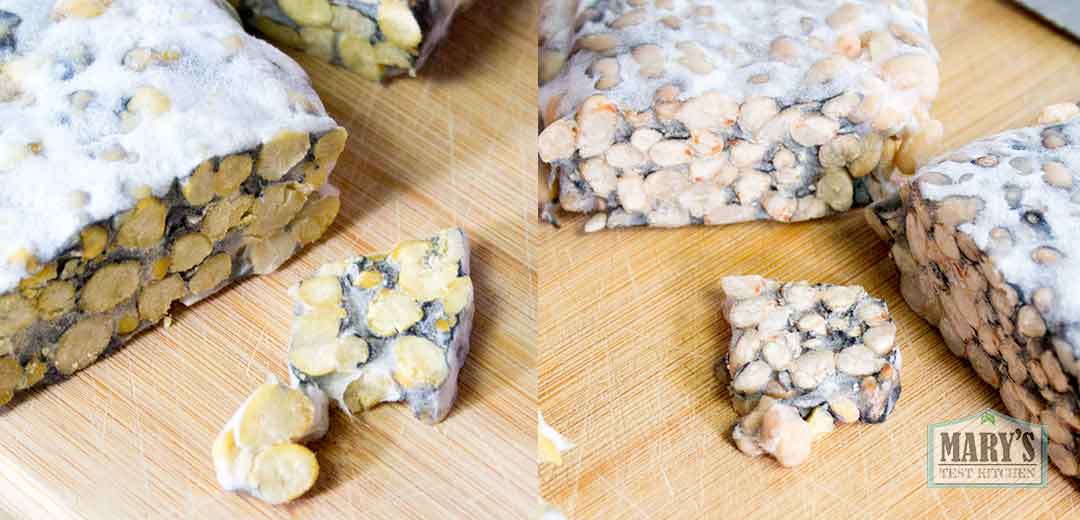
The fermentation was slow and uneven, and both batches developed significant bare areas and heavy sporulation.
So for this particular experiment, my verdict is:
❌ Canned beans did not tempeh successfully.
The biggest challenge seemed to be getting the canned beans into a condition where the tempeh fungus could colonize them evenly. Their softness, uneven moisture, and possible effects from salt or preservatives may all have contributed.
And while I was tempted to declare them “probably fine,” food safety won.
When in doubt, throw it out.
Especially when you’re fermenting food for thousands of people to watch on the internet.
What I’d do differently next time
I’m not giving up on canned beans yet.
I actually bought a couple more cans. This time, I have a new strategy! So subscribe if you want to see the next part!