Can we make LUXURIOUS vegan cheese that rivals dairy with PISTACHIOS? Let’s find out together on this 2nd installment of Will it Cheese?!, the series inspired by traditional methods of dairy cheese-making to push plant-based frontiers!
I’ll be:
- culturing whole pistachio milk AND strained pistachio milk
- fermenting the curds for more time before pressing (compared to the peanut episode)
- trying 3 different salting methods (salting curds, sprinkling vs salt crust)
All in an effort to find out if we can:
- skip the physical effort of pulp removal?
- shorten the pistachio seeds to cheese timeline? Or create a sharper/better flavor?
- discover the best salting method to prevent mold growth without making the cheese over-salted
And find out how cultured dairy-free Pistachio Cheese actually tastes and feels like. Plus, is it worth it?
VIDEO: Will Pistachios Cheese?!
Why (or why not) try to make pistachios into cheese?
Yes, it’s quite a departure from the affordable first installment of Will it Cheese?! which used peanuts. But after Will Pistachios Tofu?! was published on YouTube, the comment section was clamoring for a cultured sequel. Plus, a couple viewers very kindly sent Super Thanks to buy more pistachios. So of course, I had to do it!
Pistachio Flavor
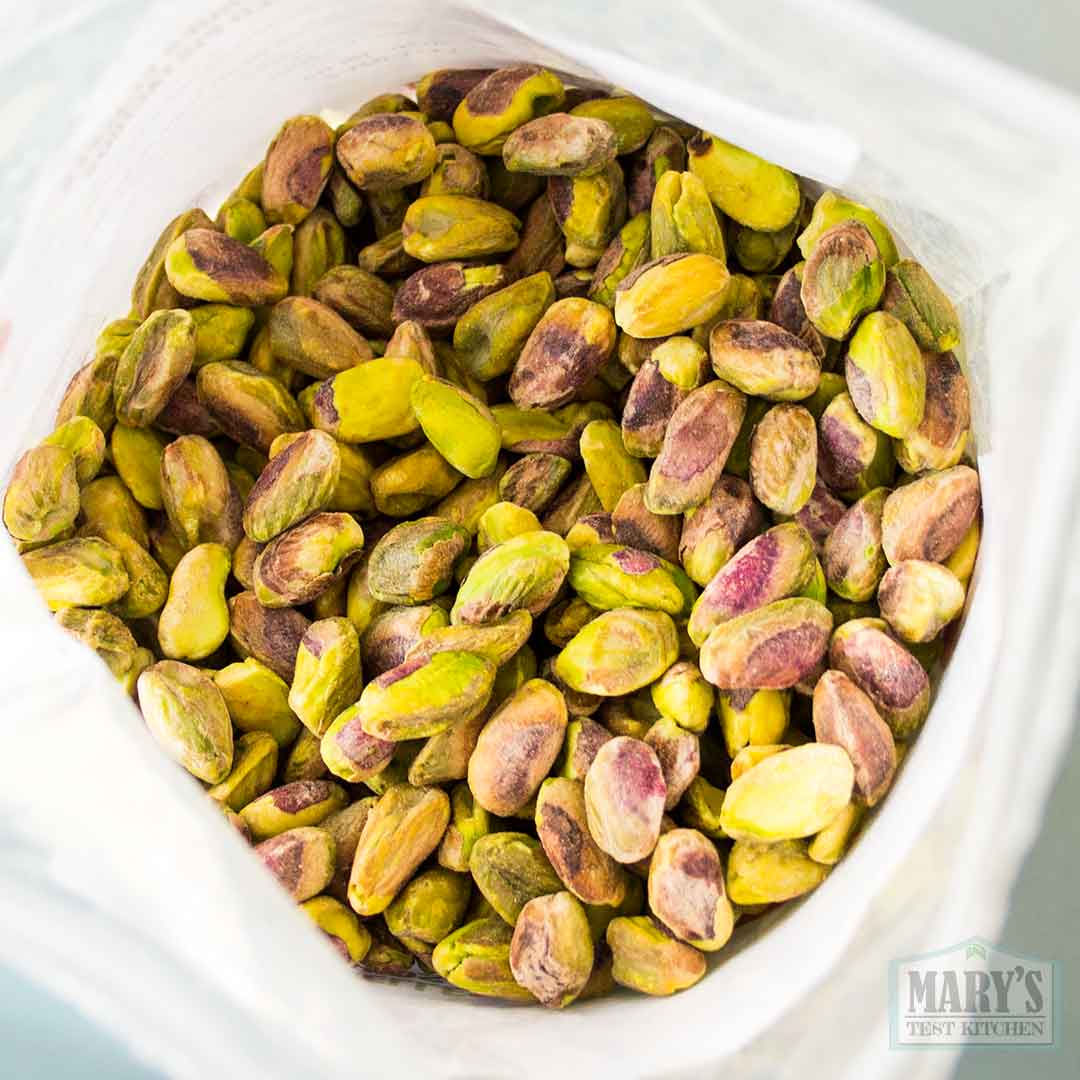
While roasted pistachios are undeniably amazing, raw pistachios are also delicious. They remind me a bit of pine nuts but milder and softer with a buttery, slightly sweet flavor.
The reason I use raw is to be sure the protein can coagulate, form curds, and become pressed into a cheese-like block. I’ve already made “tofu” from pistachios previously and made a decent soft tofu that resembled cream cheese already; just without fermentation.
When I’ve used roasted nuts in the past, the curds did not make a solid block but instead resembled peanut butter. Not to say I’m sure it can’t work to make cheese. But for this series and with an ingredient as expensive as pistachio, I’m going to play it safer.
Pistachio Nutrition
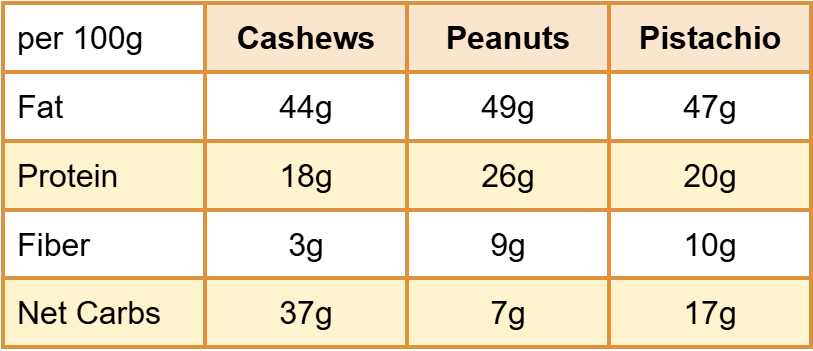
As you might guess from the sweet taste of pistachios, they are higher in carbs than our last contender, peanuts. But they have about the same amount of fat and just slightly less protein. See chart below comparing the macronutrients at 100g dry cashews, peanuts and pistachios.
 Price of Pistachios
That said, pistachios may not be your first choice to experiment with. For 1 kg (2.2 lbs) of raw, shelled pistachios, I paid $54.99 Canadian before sales taxes. That’s $25 a pound! Or $18.44 USD at today’s exchange rate.
Compare that to raw peanuts which are only about $5 per pound.
And the vegan cheese darling, unroasted cashews, which are typically $10 to $13 per pound.
Pistachio Recalls
Another reason to skip pistachios is that there’s a recall affecting pistachios and pistachio products imported from Iran into Canada due to Salmonella contamination. Since July when the first recall was announced, more brands have been added as recently as this month. Thankfully the ones I bought have not been on the recall list. I imagine that trying to make cheese from contaminated pistachios would make them even more dangerous so it’s really important to carefully check your source.
There was a separate recall for Pistachio cream in the US which is not related.
The Pistachio Cheese Experiment: All my best intentions
With the pistachios funded by viewers, I wanted to make the most of this $55 worth. The aim was to follow the first episode’s process for the most part as it successfully made delicious peanut cheeses. But with an extra variation: cheese made from the whole food ingredient; not just the milk.
Plus use the whey in a recipe. Lately, I’ve been marinating my tofu in leftover cashew yogurt whey, herbs and aromatics to delicious effect. (spoiler alert, this didn’t work out and it’s my own fault!)
Lastly, I wanted to use up the pulp ASAP. It’s only good for about 3 days in the fridge and my freeze is already overflowing with plant-based milk pulps. (another lovely intention)
Day Zero Prep
I prepared for this experiment by soaking 800 grams of pistachios overnight for the two planned batches of pistachio cheese. That would put each batch at $22 Canadian of ingredients so far.
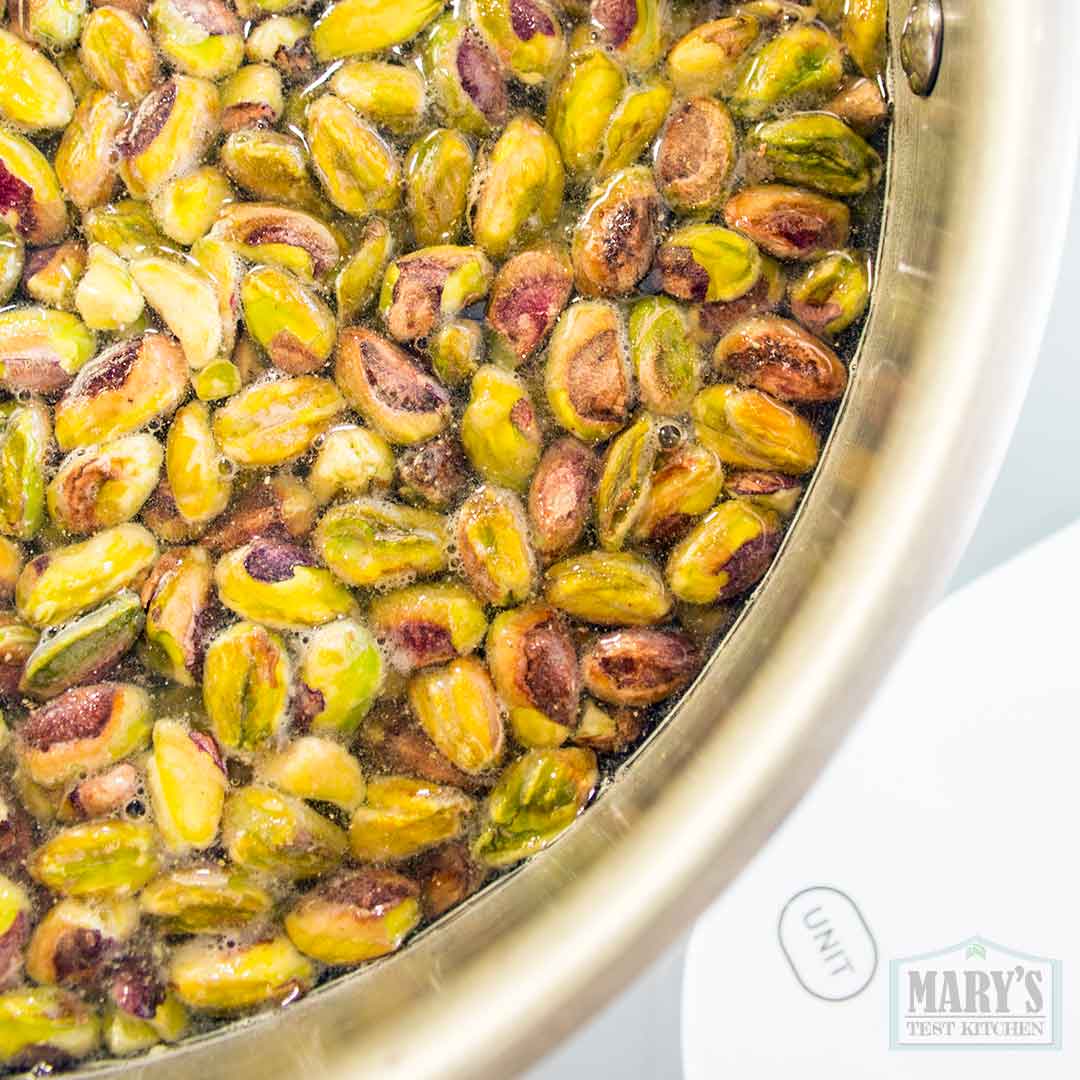
I also cleaned and sanitized the equipment by boiling: spoons, bowls, spatulas, cheesecloths.
My favorite tofu presses (affiliate link) are plastic so they can’t be boiled (or at least, I haven’t chanced it) so I cleaned them with soap and hot water, let them dry, then sprayed with white vinegar, before letting them air-dry again.
I cleaned my blender as normal but didn’t bother to sanitize. I figured that I would pasteurize the milks and purees after the blending step anyways.
Day 1: From Seeds to Milks to Inoculation
After the overnight soak (about 14 hours), the drained pistachios weighed 1380 grams; they soaked up 580 mL or 72.5% of their original weight.
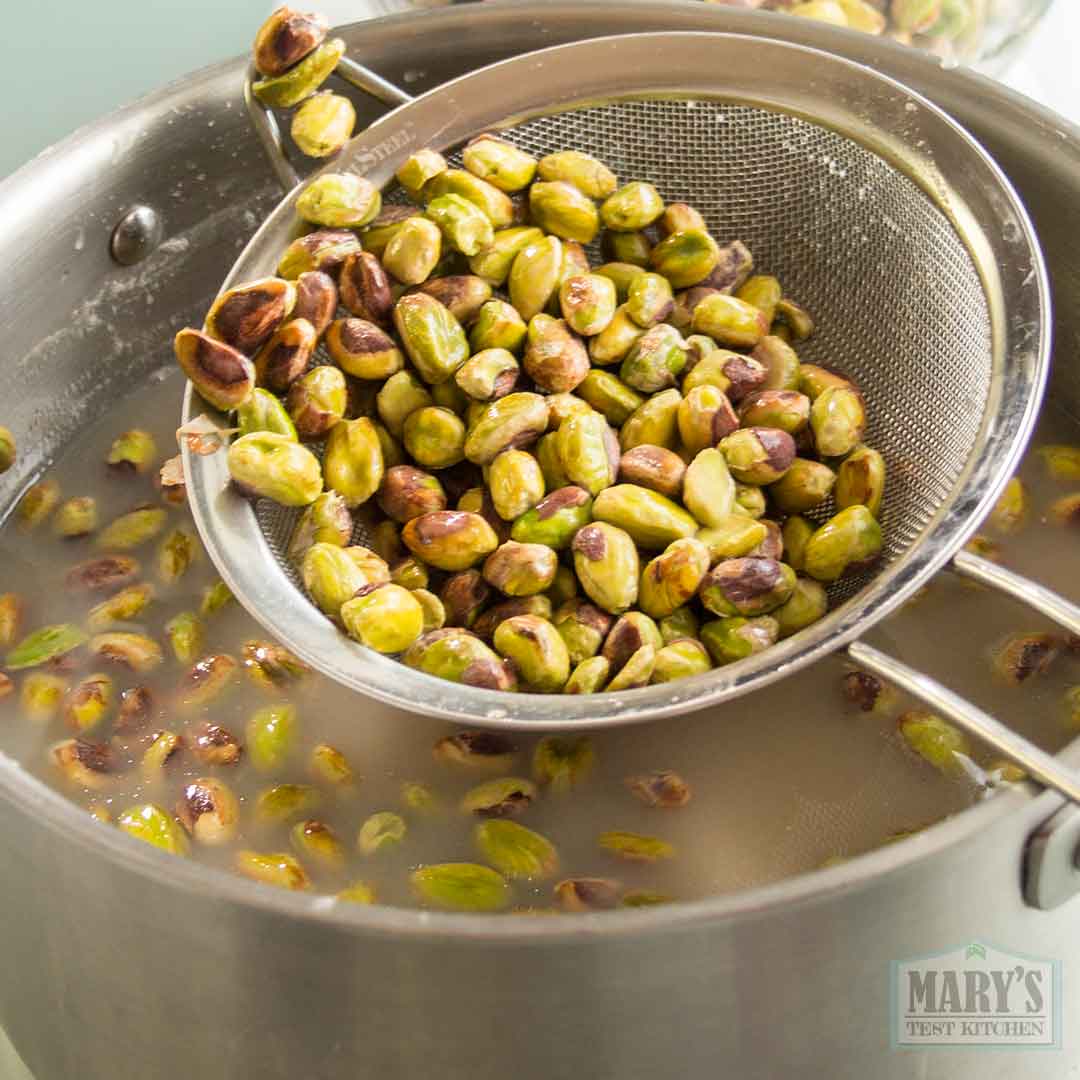
I divided them into 2 portions; 690g for whole pistachio milk and 690g for silkier, pulp-free pistachio milk.
Working in half batches of about 345g hydrated pistachios and adding 690ml of fresh tap water each time, I blended them in my Vitamix at high speed.
For whole pistachio milk, I blended for 60 seconds per half batch and then poured the result directly into a large cooking pot, filling it up to the 2.5 liter mark (about ⅔ gallon).
The whole pistachio milk was so smooth and creamy. I could barely see any grit from the pistachio fiber. This was giving me hope that maybe we could skip the straining step for future episodes!🤞
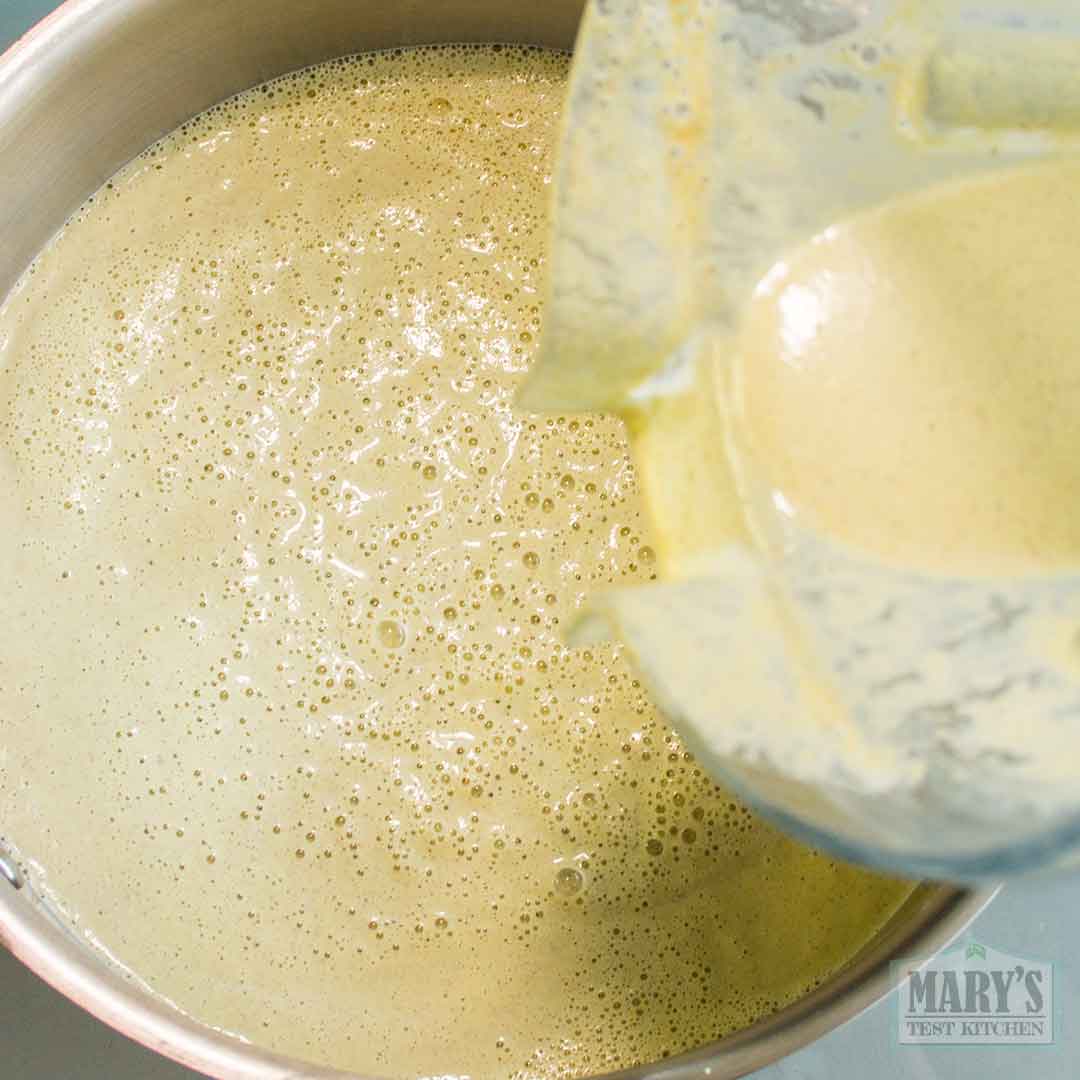
As for the taste test, the raw whole pistachio milk was
- foamy and thick
- strong raw pistachio flavor
- not feeling like a good drinking plant-based milk but not entirely unpleasant either
Just for fun, I calculated the price of this raw whole pistachio milk: $2.09 per cup (237ml or 8 oz)
For the pulp-free milk, I blended for only 25 seconds per half batch and poured those through my soymilk filter bag to strain out the pulp.
It was not nearly as easy to strain compared to raw peanut milk. So after 5 minutes of steady effort, my hands were shaking but the jade-green milk was smooth and beautiful.
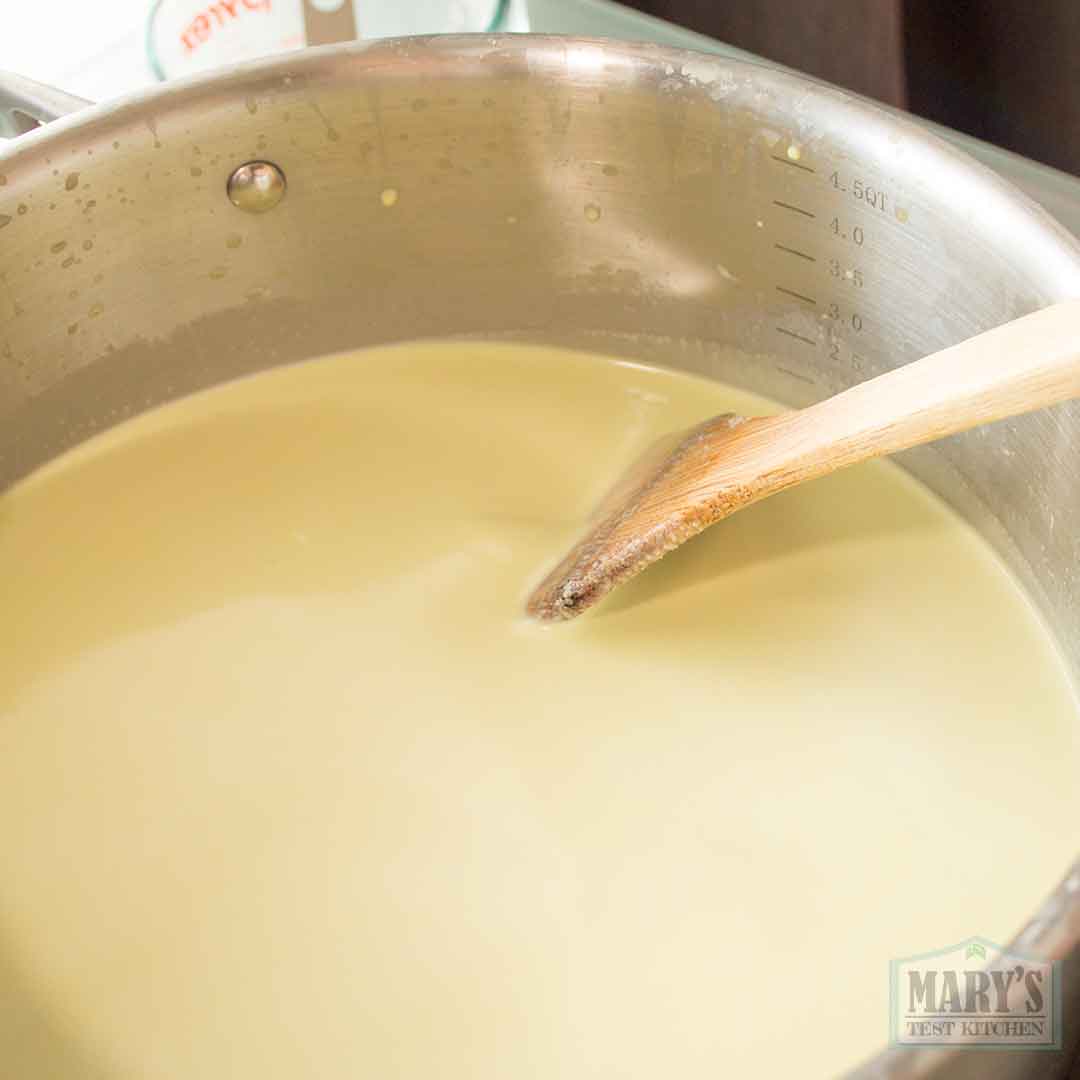
The volume of pulp-free milk was much less than the whole (about 2 liters or a ½ gallon). Makes sense when we got about 2 cups of pulp out. The pulp was saved in the freezer for later use.
Upon tasting the pulp-free pistachio milk, my taste buds were treated to
- silky and creamy milk without foaminess,
- lightly sweet-tasting raw pistachio flavor
- clean-feeling finish
Ignoring any value from pulp, the cost of ingredients for pulp-free pistachio milk would be $2.60 per cup (237ml of 8oz).
Dang! No wonder I loved it so much; I have expensive taste. It was very refreshing and I would’ve loved to keep it that way for drinking. But the cheese must go on!
Cooking the pistachio milks
Separately, both versions of pistachio milk were heated to a simmer. The differences between the two were immediate and obvious.
As they warmed up and the starch in the pistachio milk started to gel, both milks became thicker.
But the whole pistachio milk was much thicker. As it approached the simmering stage, it was so thick that it began spitting violently; like simmering thick tomato sauce. I tried using the pot lid as a shield while continuing to stir, scraping the bottom with my flat ended spatula to avoid the milk getting burnt at the bottom.
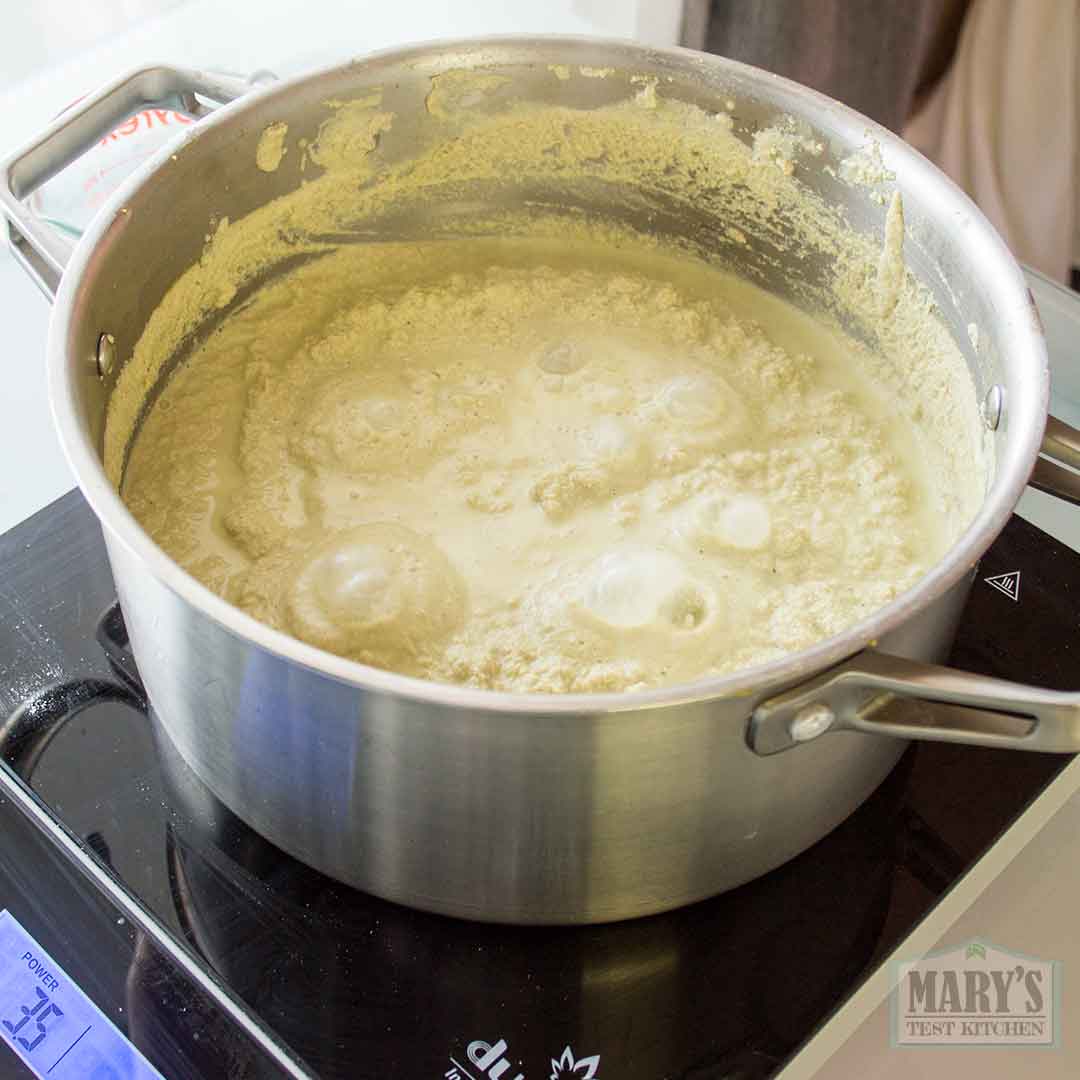
As with many other seed milks that you’ve seen in Will it Tofu?!, pistachio milk self-coagulates. I noticed the visual separation of curds from whey at 180°F or 82°C. The heat in combination with something innate in the pistachio milks allowed the proteins to change and clump together.
Eventually, the flying hot burps of thick pistachio milk became too dangerous for me to stir through so I lowered the heat and covered the pot with the lid, and let it simmer for a few minutes while hoping for the best. AKA no burning.
A few minutes later, I turned off the heat to reveal the coagulated mass. The texture was like over-scrambled eggs from a hotel breakfast buffet. Very thick, very little separated whey.
Upon tasting the whole pistachio curds, it had the slight graininess of extra yolky over-scrambled eggs. Or rather like the chickpea scrambled egg experiment I did last year. Though the flavor was pistachio; mild and nutty.
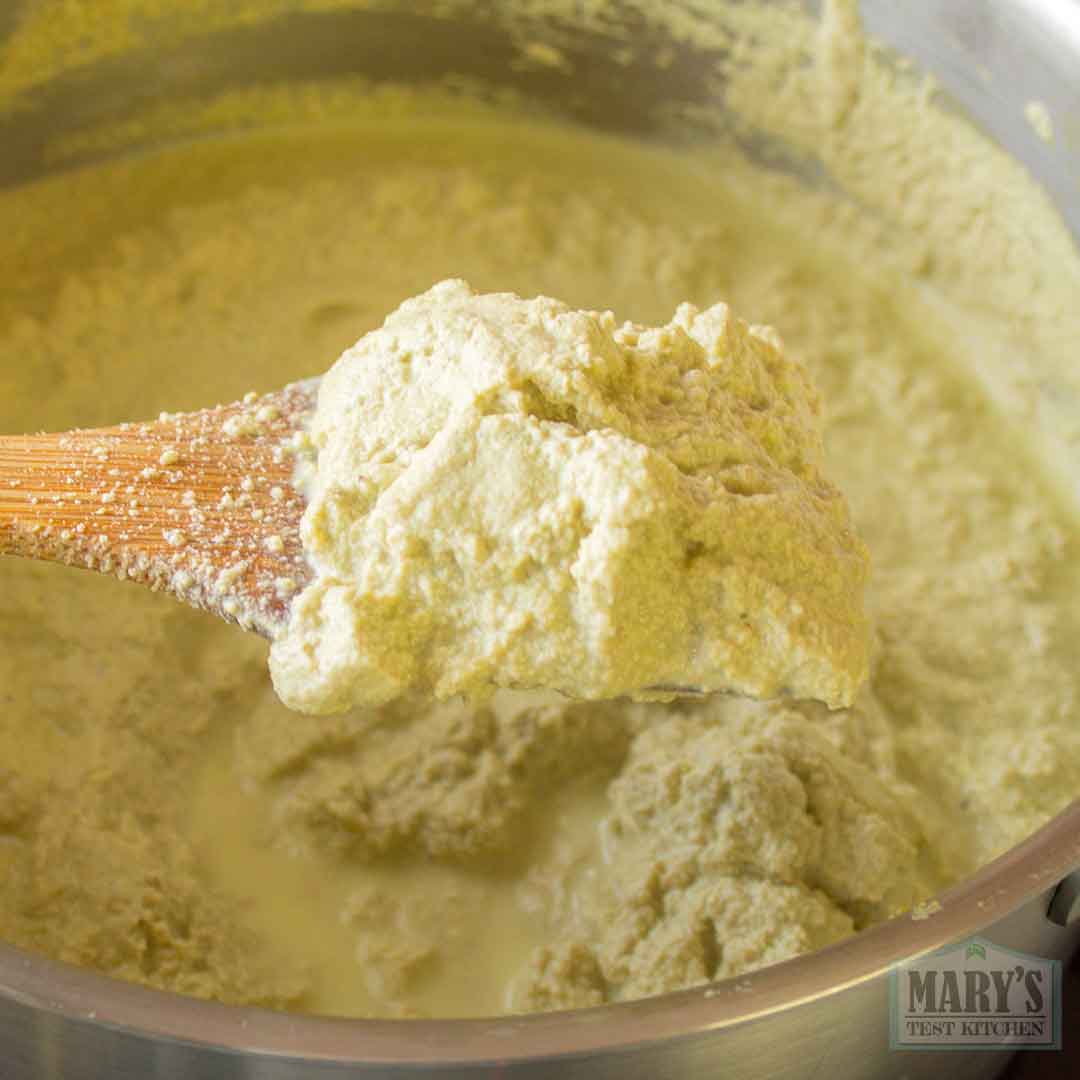
I set the coagulated whole pistachio milk aside to cool. While the other milk got the same treatment.
The pulp-free pistachio milk thickened but not nearly as much as the previous version. It was just thick enough to coat the spatula.
As it crossed 180°F (82°C), it started to separate into tiny curds floating in creamy whey.
After it came to a boil, I adjusted the heat to let the pulp-free milk vigorously simmer for 5 minutes in hopes of getting the maximum amount of curds to form. Previously on Will Pistachios Tofu?!, I had tried using calcium sulphate and vinegar to extract more curds from the milk. Unfortunately neither helped to increase the yield.
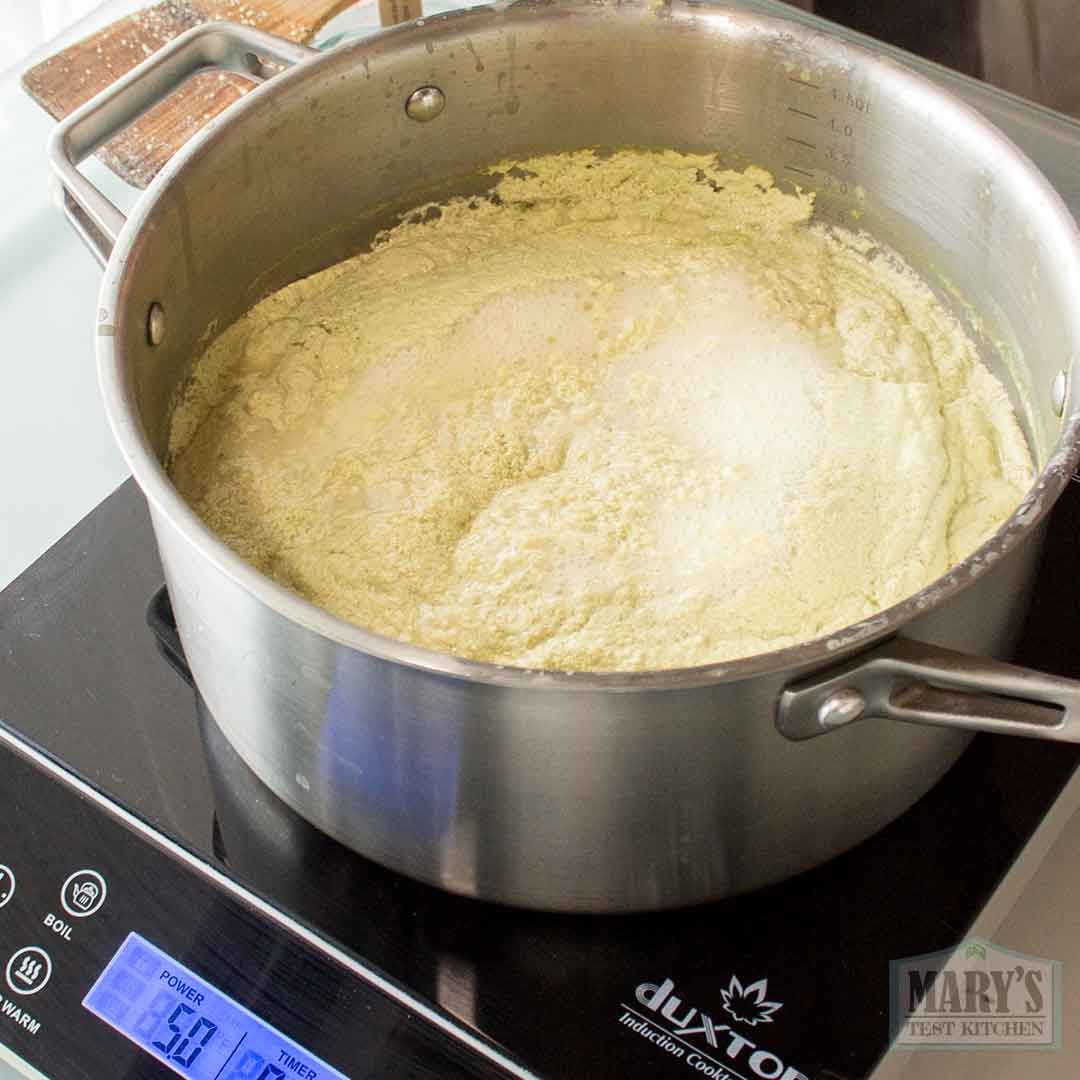
Afterwards, we have a pot full of small curds and the whey was still translucent much closer to clear.
The pulp-free curds had a stronger unroasted pistachio flavor with a smooth and rich mouthfeel. Delightful!
Both pots of curds were too hot. I wanted them below 110°F but still warm before adding probiotics. So I let them cool outside in the Calgary winter air for about 40 minutes. I also stirred them every so often so they could cool down evenly.
Inoculation: Adding Probiotics
For this experiment, I decided on using probiotic capsules that I already had in my fridge. To be specific, I used Genuine Health brand Advanced Gut Health Probiotic with 15 billion CFU’s per capsule. I didn’t buy them specifically for cheese-making; just had them on hand.
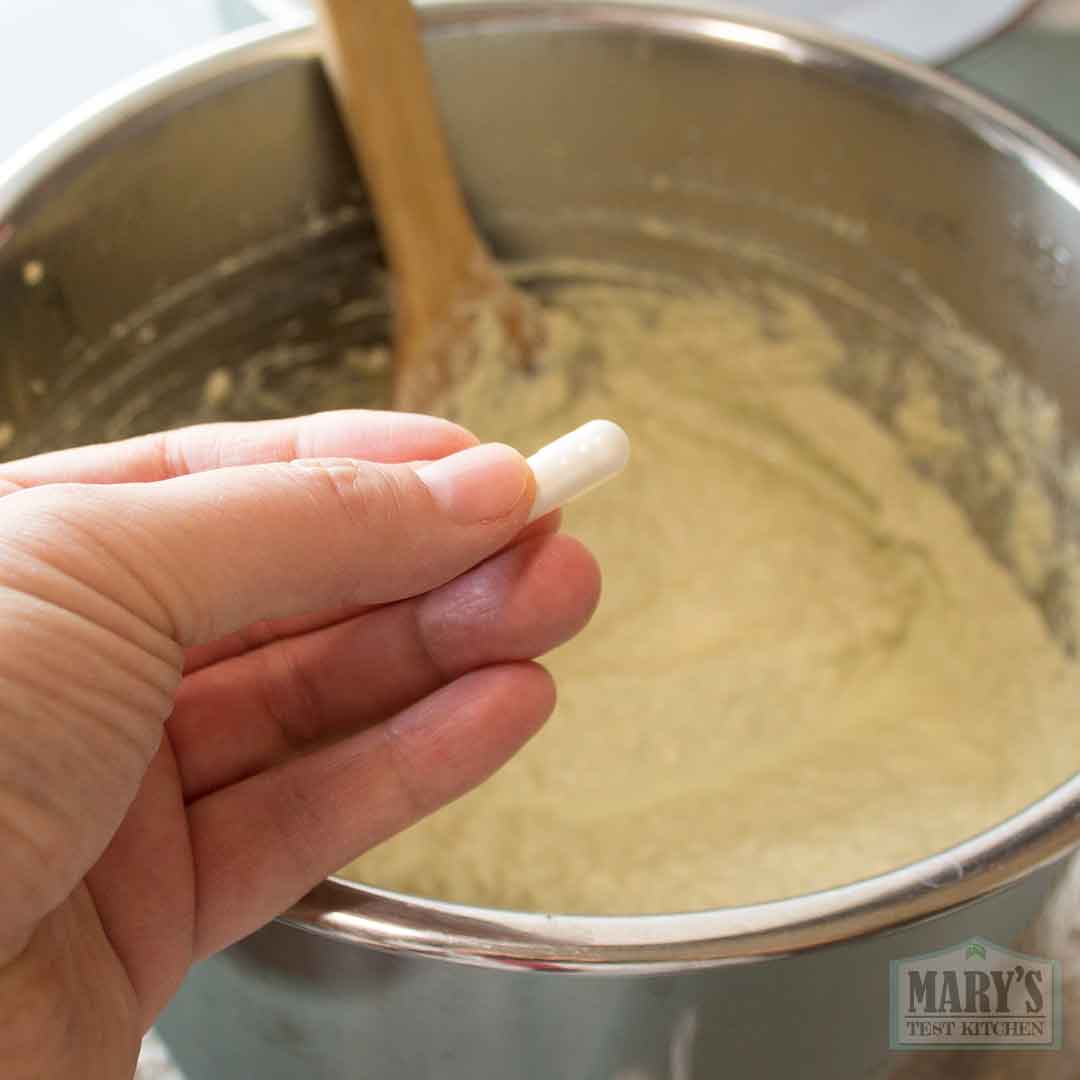
Previously in Will Peanuts Cheese?! I used the same probiotic brand but that variation had 50 billion CFU’s per capsule. So this time, I used four capsules per batch (15 x 4 = 60).
When I brought the Whole Pistachio Curds inside, they were 109°F. I opened the gel capsules and sprinkled in the contents, stirring well between additions.
I waited a while longer for the Pulp-Free Pistachio Curds and they were 98°F (37°C) by the time I got them indoors. I added the same number of capsules, stirring very well.
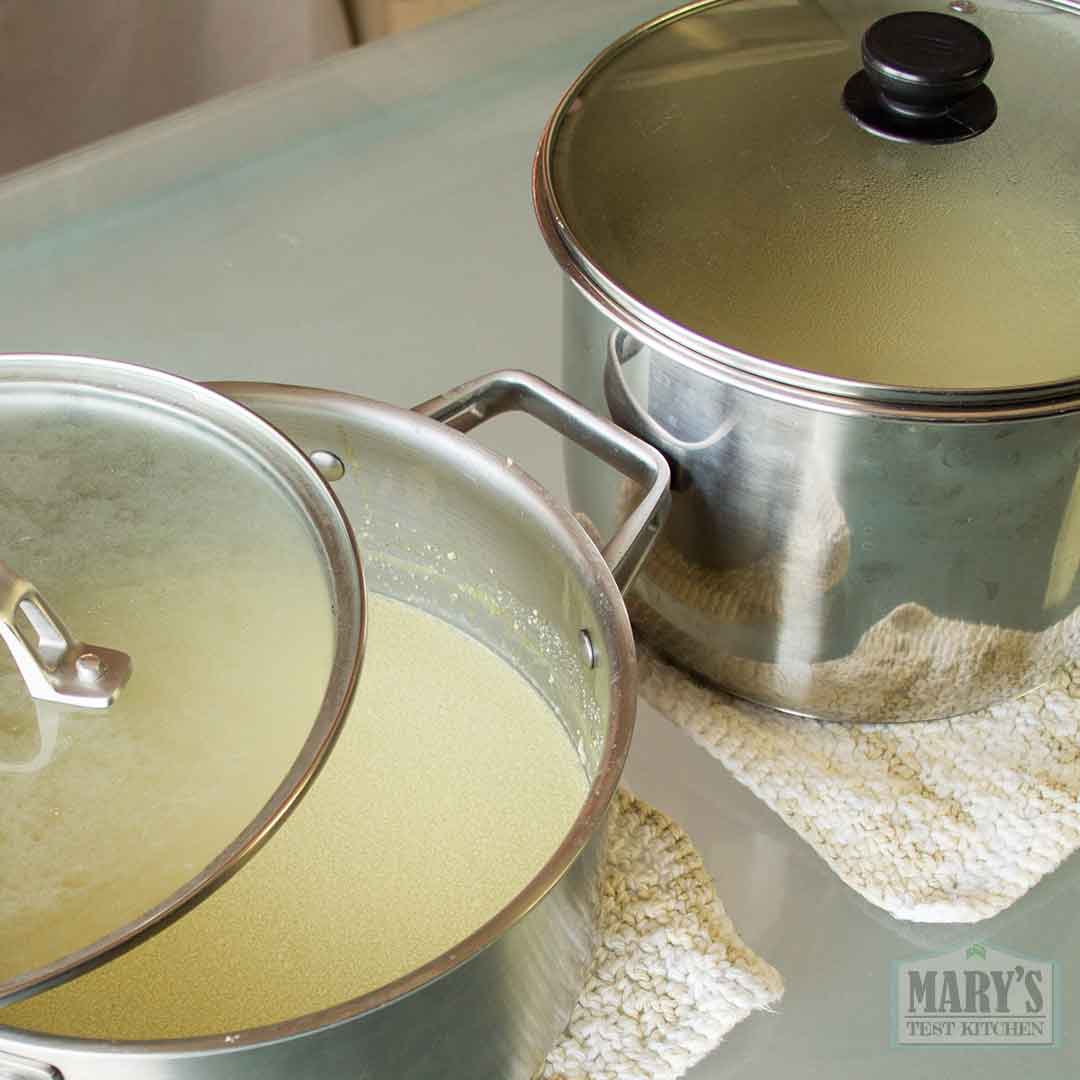
Then it was time to wait. The pots sat
- with lids on,
- at room temperature 71°-75°F (22°-24°C)
- without any insulation nor added heat source
Day 2: First Fermentation
18 ½ hours later at 8:45 AM, I gave them both a taste test. They were both noticeably tangy. If I was making a yummy Greek yogurt for mixing with berries and snacking, the tang level was good enough. That is, sour but not overly so.
Perhaps because I used more capsules (and an estimated 5 billion more CFU’s per batch) It was already very sour. I would compare it to the sourness of the fermented peanut curds just before I transferred the curds to the press in the previous episode of Will it Cheese?! That batch was fermented at room temperature for about 32 hours and refrigerated for about 10 hours.
But this time, I wanted to see if I could speed up the cheese aging process by extending the first fermentation of curds before pressing.
So I replaced the lids and waited one more day.
Day 3: Taste and Press
The next day at 11 AM, at 44 ½ hours after the initial inoculation, I gave them another test. This time the curds had the cheek-puckering sourness I was hoping for.
The whole pistachio curds were a lot firmer than before with more visual whey separation. Still had a mild but distinct pistachio flavor and ever-so-slight grainy but still creamy mouthfeel.
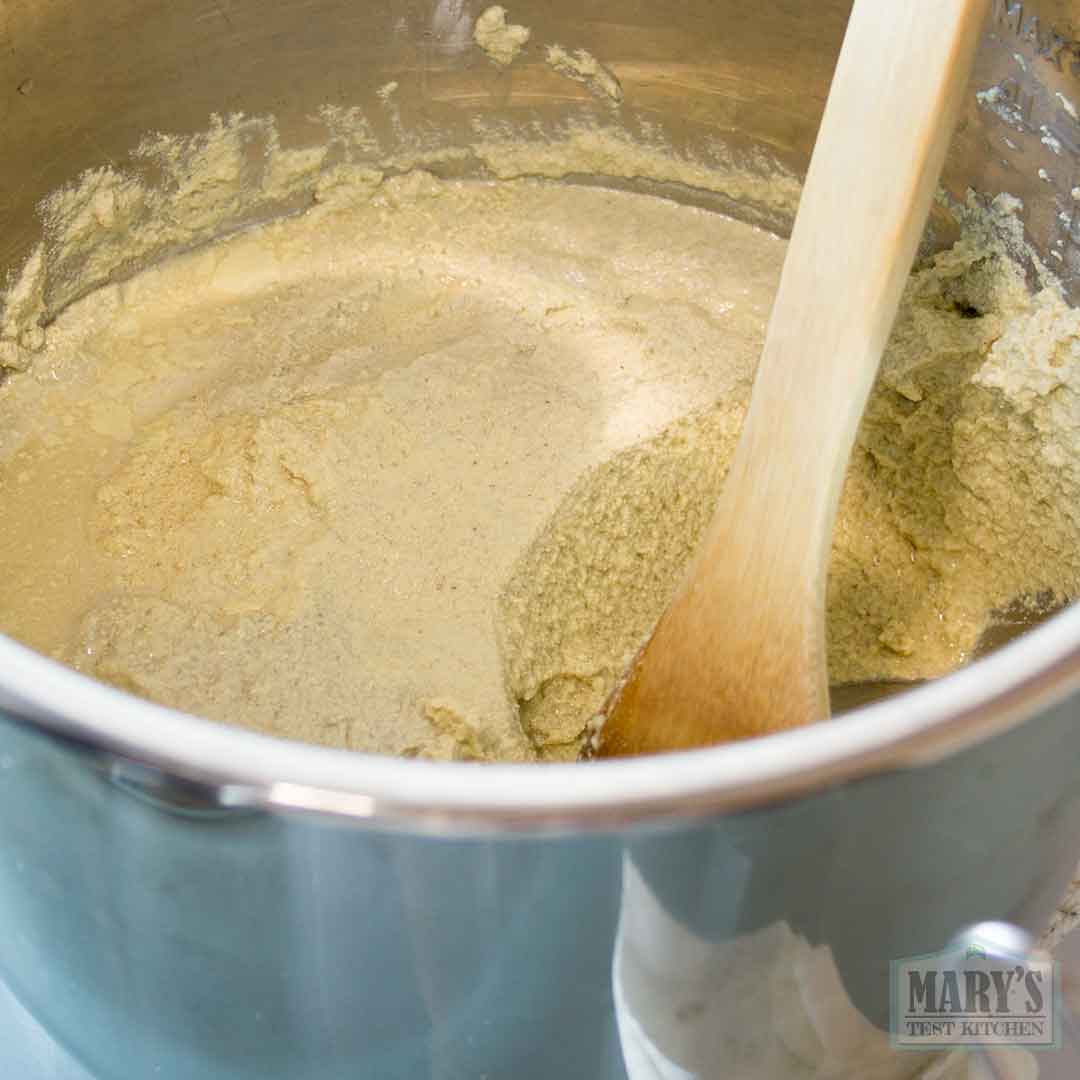
The pulp-free pistachio curds tasted even more sour with that tang overwhelming the palate so the pistachio flavor was well hidden. The texture didn’t seem to change.
With the fermented curd taste tests out of the way, it was time to press!
Pressing Fermented Pistachio Curds
I used my favorite tofu presses lined with cheesecloths that I had sanitized by boiling, then hung to dry.
Pressing Fermented Pulp-free Pistachio Curds
The drained pulp-free curds filled up the first press to a height of about 2 inches before pressing. Then I added the spring-loaded lid and twisted the dial to add more pressure.
The excess whey was poured out and I was able to save about 900ml (nearly a quart) of probiotic-filled whey. The flavor was bright with mouth-puckering sourness and a hint of nuttiness.
Pressing Fermented Whole Pistachio Curds
I filled up the second tofu press with the fermented whole pistachio curds but there was still a lot left. Meanwhile, very little whey was extracted compared to the pulp-free curds
Fermented Whole Pistachio Curds with 2% Salt
With the remaining 780g of whole pistachio curds, I wanted to add 2% salt. But to ensure the salt would be well distributed, I dissolved the 15 grams of salt into 85 ml of warm water first.
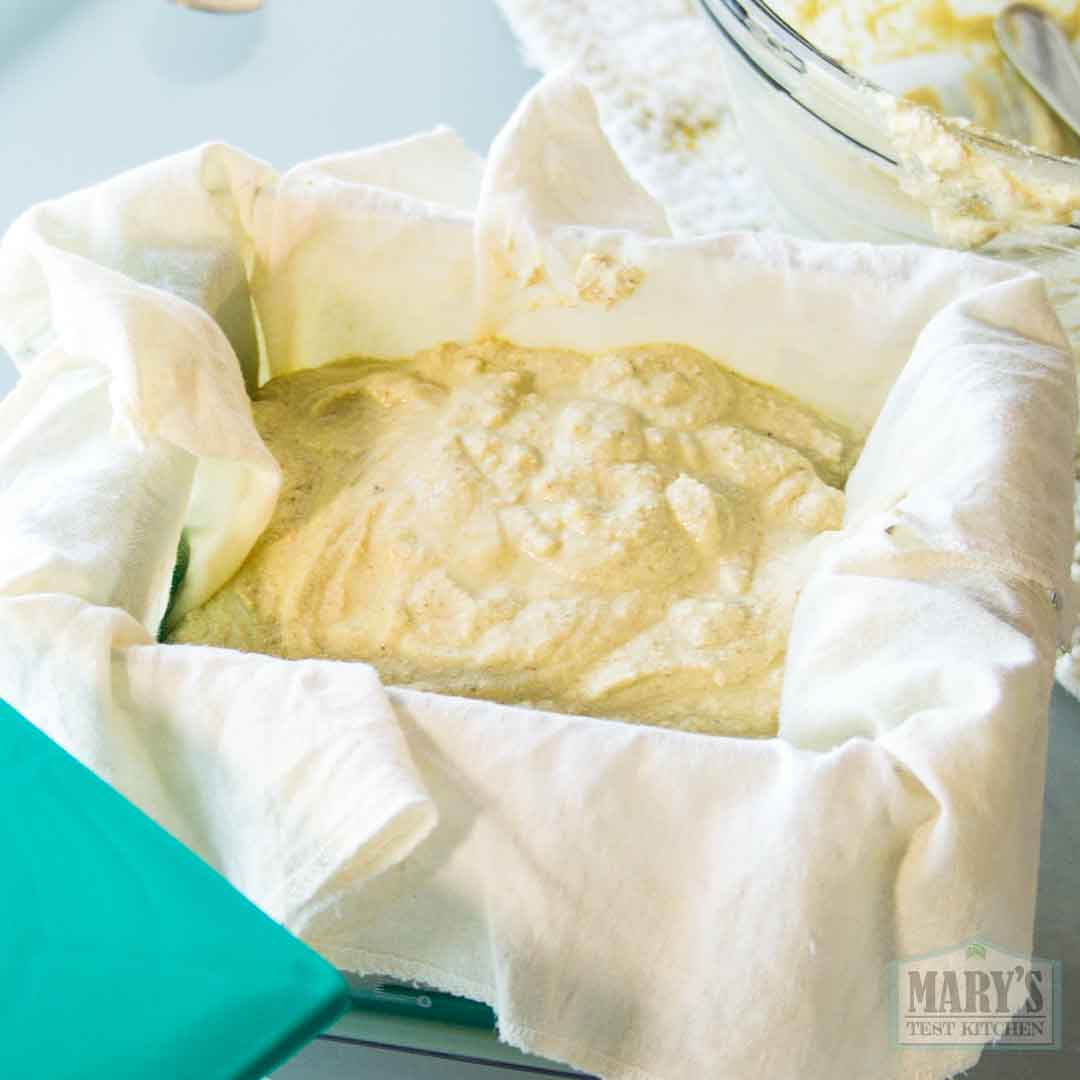
After stirring in the salt solution very well, I filled up the third and last tofu press.
I added the pressing lid but this time, I didn’t drain off the salty whey.
Then all three tofu presses (now cheese presses by function) went into the fridge (now Thursday 12:30 PM). I wanted the curds to firm up and it just made sense to me that they do that in a cold environment. But looking back, I’m not sure that was the right decision.
Day 7: Unwrapping Fresh Cultured Pistachio Cheeses
I meant to unwrap the cheese on day 4. But life got in the way as it does sometimes and I figured the cheeses were probably safe and sound in the fridge.
That following Monday, I realized I was wrong.
There was more whey to pour out from the presses so I added to each corresponding container and tasted to see how the flavors evolved.
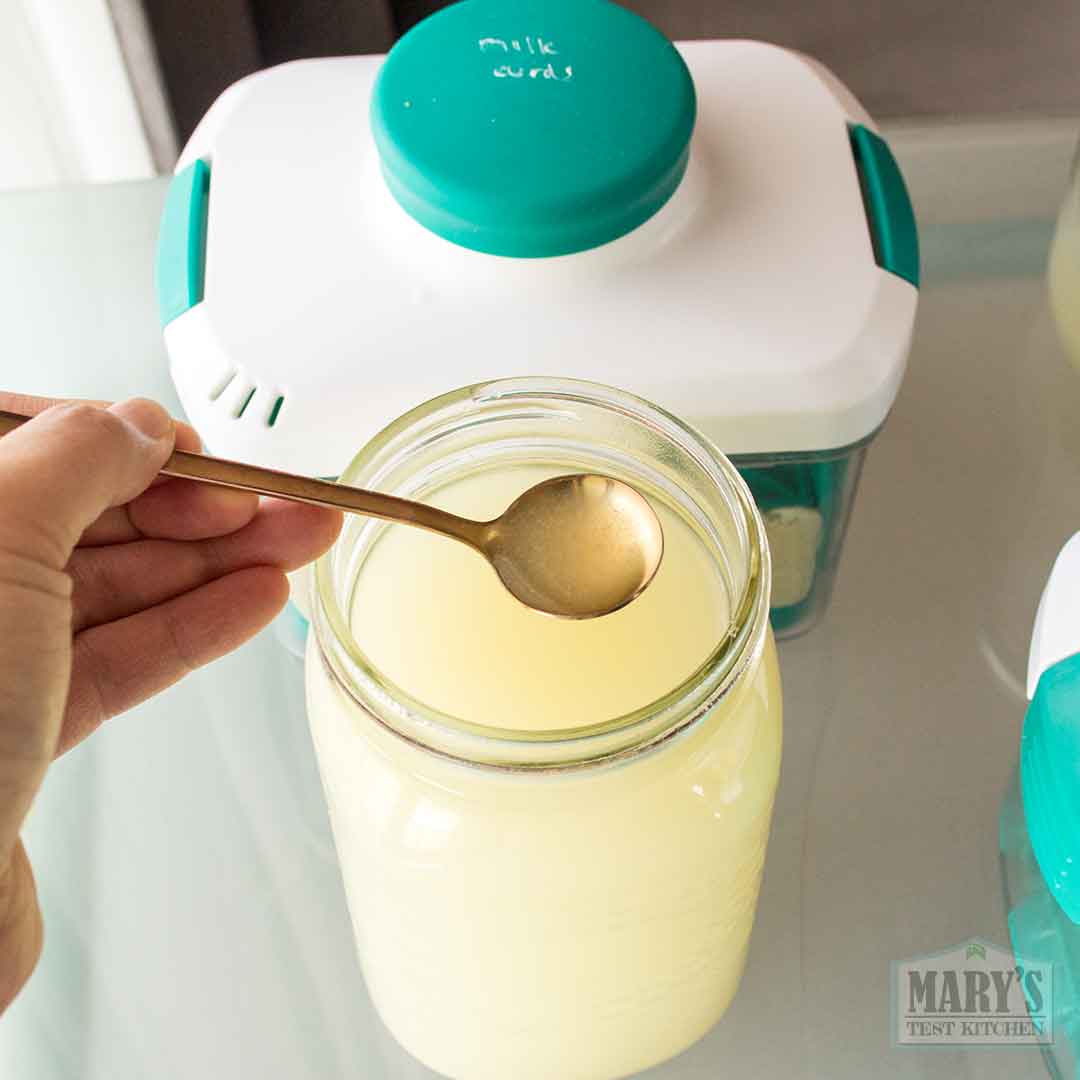
Whey Taste Tests
Pulp-Free Pistachio Whey: bright, sour with citrus, guava, pineapple and melon notes.
Whole Pistachio Whey (unsalted): even more sour with funky cheesy undertones, only slight fruity notes
Whole Pistachio Whey with salt: overwhelmingly salty with cheek-puckering tang; no fruit detected
Interestingly, none reminded me of pistachio at all. The fruity whey tasted like it would make a great drink blended with some tea or fruit juice. I felt the unsalted whole pistachio whey could be saved for inoculating future batches of plant-based milk to make yogurt or cheese. And the salted whey could make a terrific tofu marinade.
However those dreams were dashed when I unwrapped the pistachio cheese blocks one at a time and saw dark discoloration on every block.
Fresh Cultured Pistachio Cheeses Revealed!
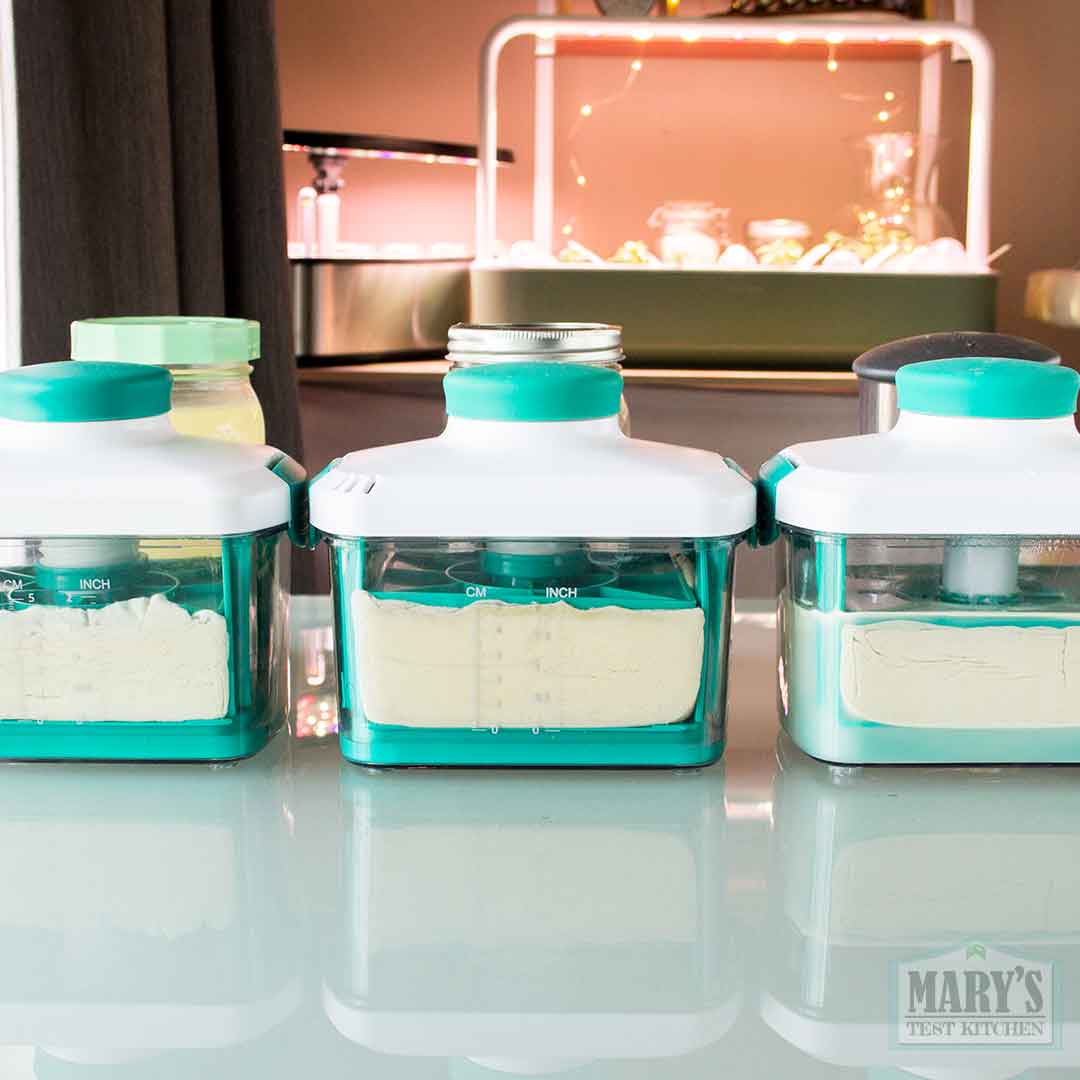
The pulp-free version had a bit of discoloration upon the first reveal. And it was present on all sides too.
The salted whole pistachio version had a little more.
And the unsalted whole pistachio cheese had the most.
It seemed to me that:
- 3 days in the fridge was too long
- cleaning the tofu presses with soap and water then sanitizing with vinegar spray was not effective enough. Perhaps I’ll try my metal press next time which can be sanitized with boiling water.
- Or if I want to continue with the plastics then press for much less time in the fridge because:
- cold temperature inhibited this blend of probiotics (selected for human use, not cold fermenting cheese) which may have allowed for unwanted microbe growth
- Or try pressing for a shorter time at room temperature (I would use a much more affordable ingredient to try this variation)
adding salt at 2% does inhibit unwanted microbe growth but not enough
I think I can safely assume the discoloration was due to unwanted microbe growth. So having contaminated all the clean whey with whey from the presses, I no longer felt safe to use the whey again.
Fresh Pistachio (Cream) Cheese Results
I trimmed a thin layer from all sides of each block to remove all the discoloration. Luckily it was only on the surface; the cheese underneath was still good!
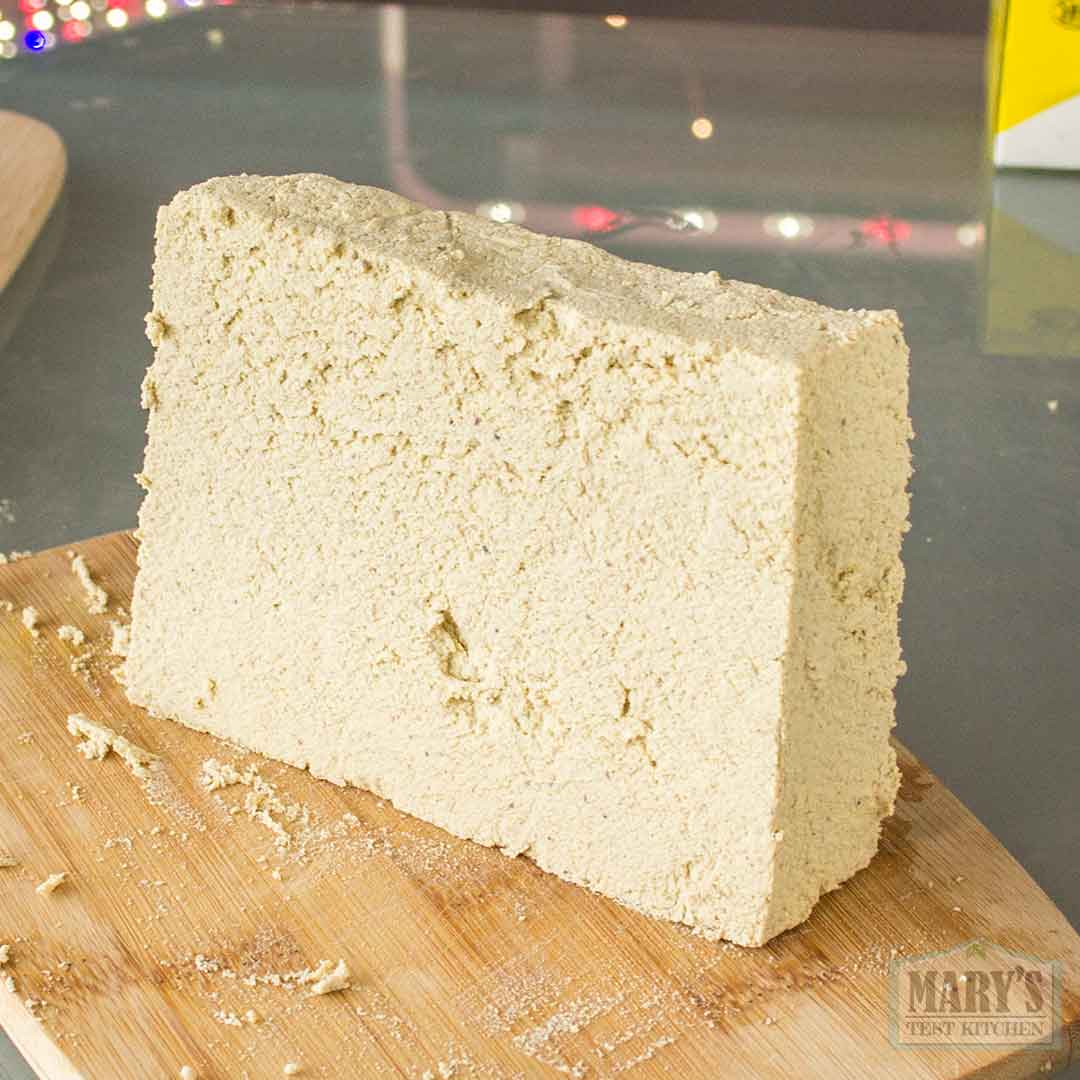
Pulp-Free Fresh Pistachio Cheese: Sharp and cheesy with a background of mild pistachio nuttiness. Very delicious and smooth; I would love this on a toasted bagel!
I’d also love to see how this would do in a cheesecake BUT I haven’t experimented with cultured cheese in vegan cheesecake yet. So I want to get a working recipe down with a less expensive ingredient first, then circle back to it. Perhaps for a holiday special? Let me know if you’d be down for that.
The only thing not cheese-like is there’s a second texture in the cheese. Like pumpkin seeds and hemp seeds, the protein coagulated into two textures. The main texture is smooth and creamy. But the second texture is meaty, chewy and stringy. It’s a tiny percentage of the block but it is there. I wonder if that will smooth out after aging for a longer time.
After trimming, it was 316 grams.
Whole Fresh Pistachio Cheese (unsalted): Tangy and with mild but distinct pistachio flavor. A bit of a grainy or paste-like quality; not as smooth as dairy cheese. After trimming, it was 362 grams.
Whole Fresh 2% Salted Pistachio Cheese: Well seasoned but not overly salty with the same tang as before it went into the fridge and a bit more funky flavor. Like the other whole pistachio cheese, it has a slightly grainy or paste-like mouthfeel to it but not unpleasant. Having started with a smaller volume of curds going into the press, after trimming, it was 284 grams.
The fresh pistachio cheeses had the consistency of very thick cream cheese but the pulp-free was smooth on another level. Despite wanting to eliminate the step of straining milk, I have to admit, it’s better included. Going forward, I will continue removing the pulps in future installments of Will it Cheese?!
As good as these cultured cream cheeses tasted, I wanted to see how they could change with drying and aging.
Salting Cheeses for Drying & Aging
I only had coarse kosher salt so I ran it through my spice grinder to make it finer. Then sprinkled it on all sides of the Whole Cultured Pistachio Cheese with 2% salt.
Then I had the brilliant idea of putting down a layer of salt onto a plate, then pressing the sides of the remaining cheeses to get a more even layer.
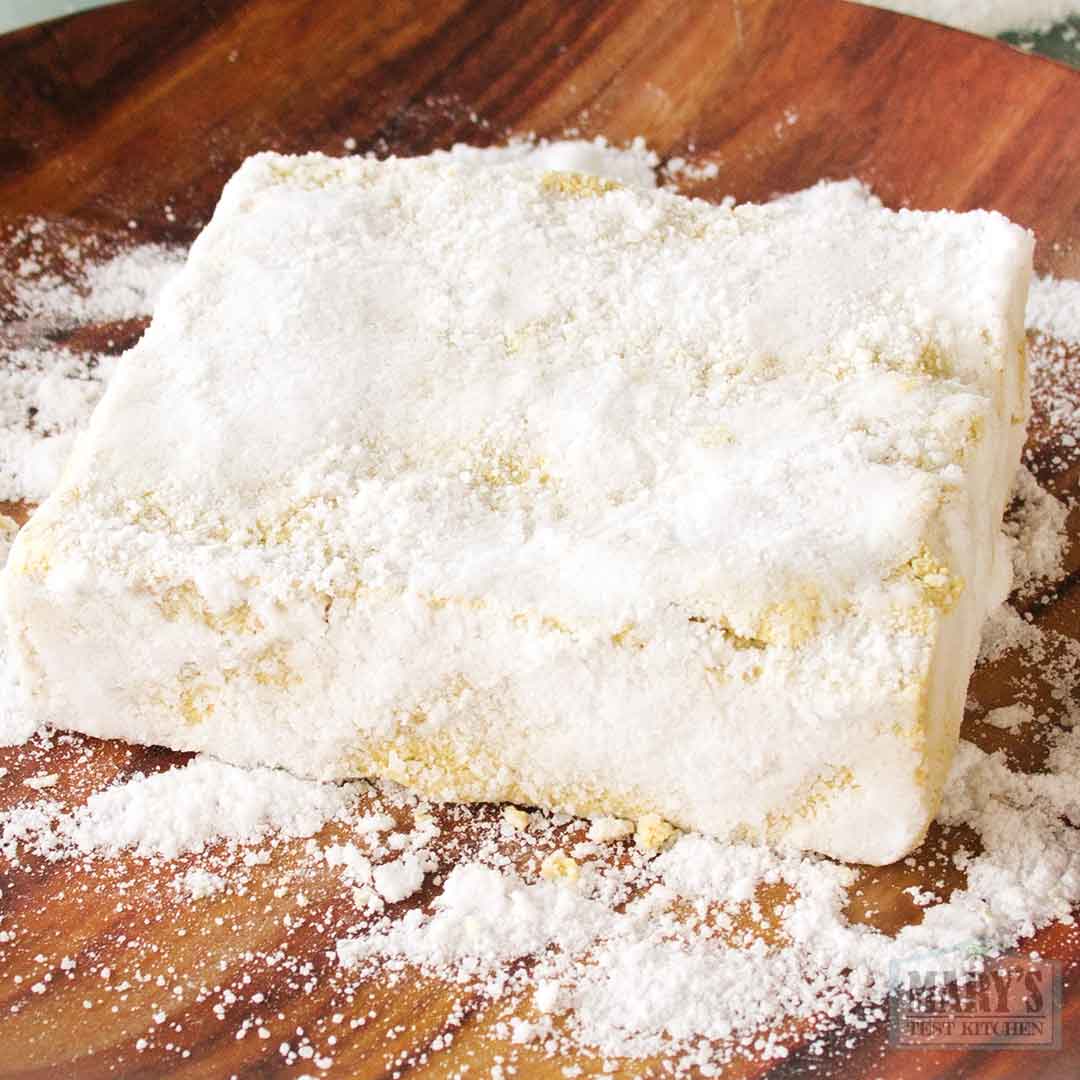
Was it too much salt? After my previous “sporific” events, I didn’t want to take chances. Too much salt is better than a little unwanted mold in my mind.
After salting, I laid them on sterilized bamboo sushi rolling mats. I have read that bamboo has anti-bacterial properties which is why I chose them in particular.
Dehydrating VS Air-drying at room temperature
In Will Peanuts Cheese?!, I dried one half at room temperature and the other in the dehydrator set to 100°F (38°C). As you can imagine, the dehydrator version had great advantages. The flavor developed much faster, the texture was more firm, and it made managing the timeline of cheese-making so much easier.
The differences were enough to convince me the dehydrator is an essential part of the vegan cheese-maker’s kitchen. This (below) is the second dehydrator I’ve owned and I really love it.
So for this expensive experiment, I decided to take less chances and put all three in the machine.
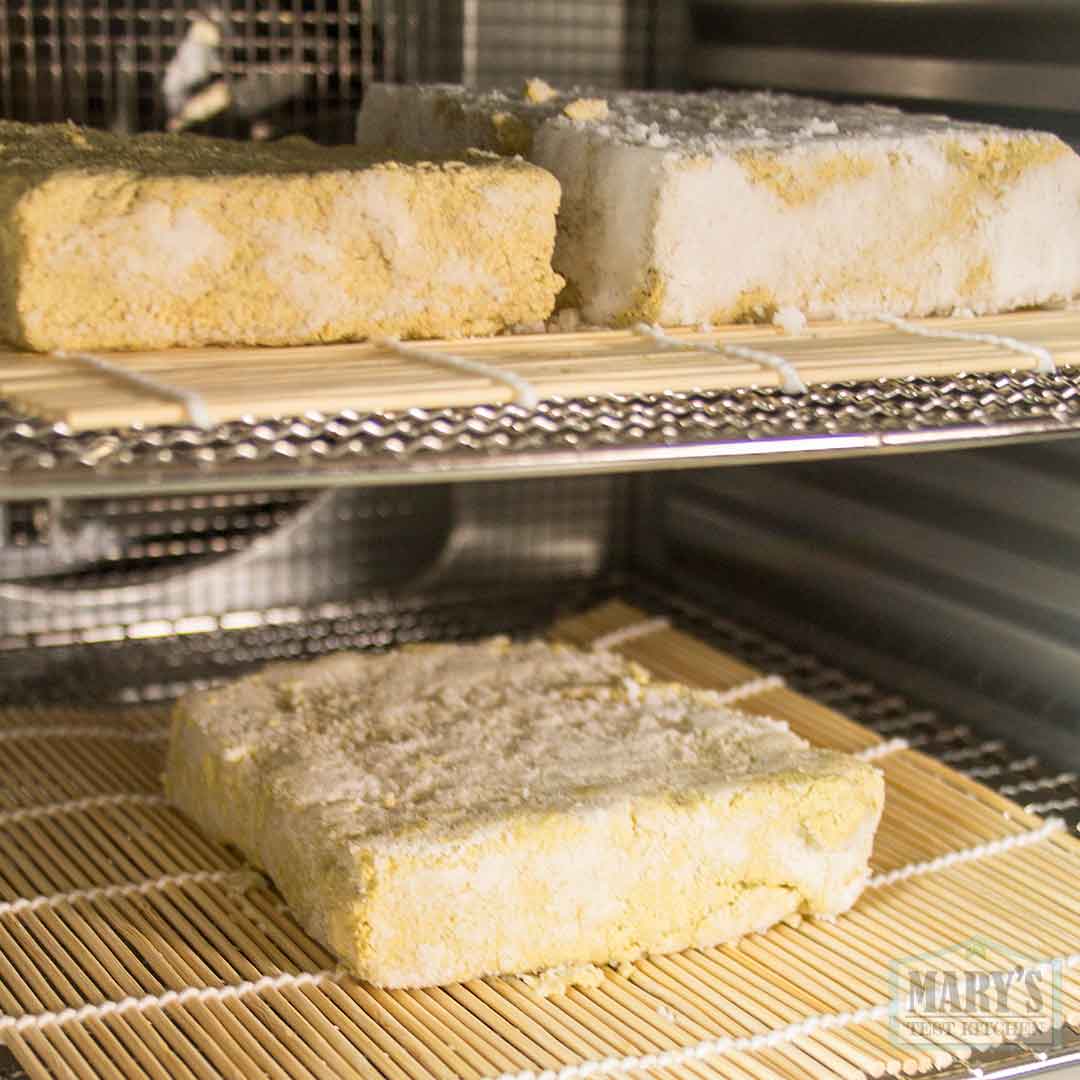
Given that the probiotics I used were designed to go inside humans, I set the temperature to 98°F (36.7°C); the typical normal body temperature.
Day 8: After One Day Dehydrating
It was 22 hours later that I checked on the pistachio cheeses. They had visually shrunk, were much firmer to the touch and smelled lightly cheesy!
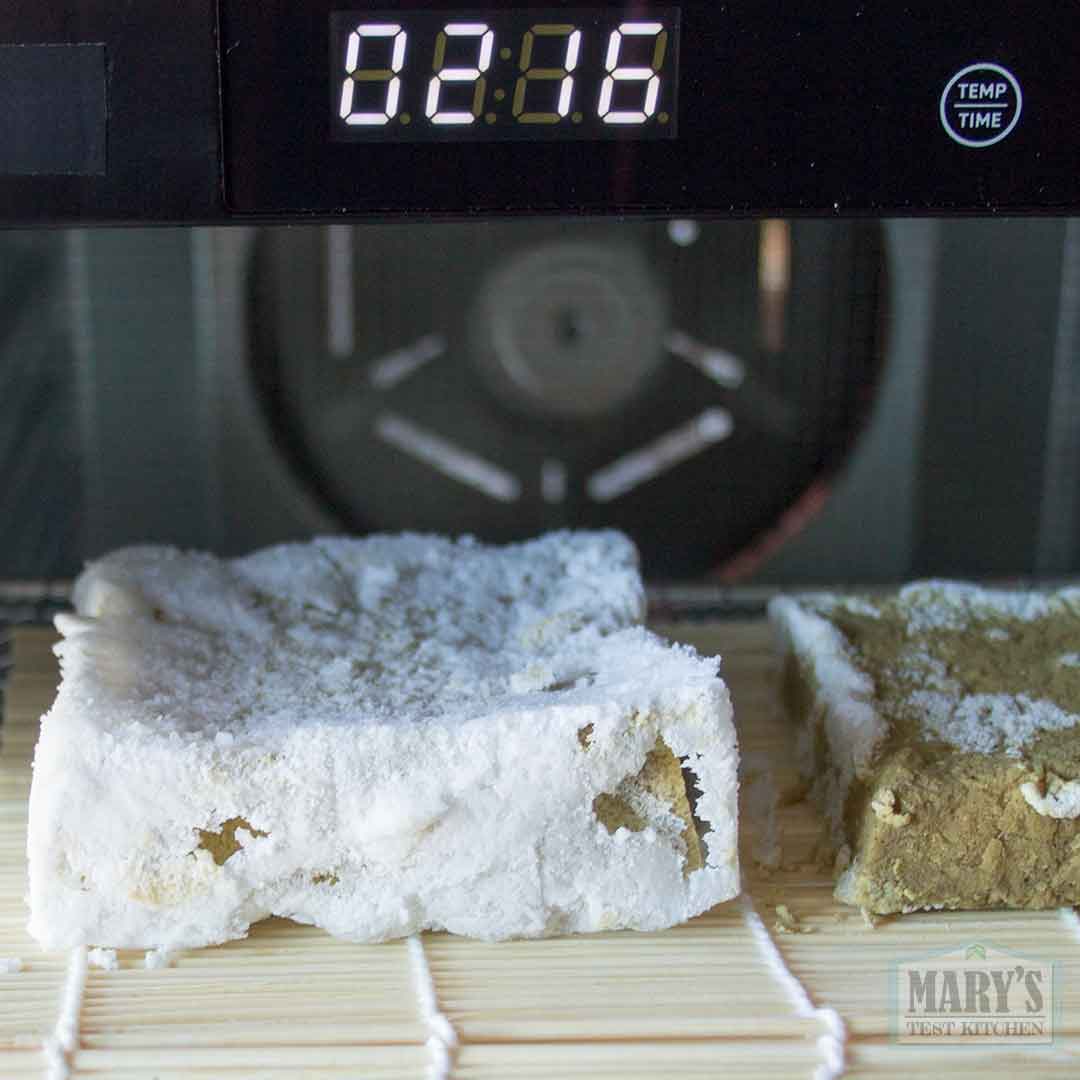
I brushed off the salt as best as I could. Under the cheeses with thick salt crusts, the larger faces were a little moist. Surprisingly, it seemed that the salt crust actually slowed down the drying process.
Whole One-Day Dehydrated 2% Salted Pistachio Cheese – firmest out of all the cheeses. It was too salty at first taste but after the initial salty shock, I could taste the pistachio nuttiness and tangy cheesiness. The texture was less creamy and smooth; more crumbly and brittle.
I think it’s dry enough but I would like to see how the flavor changes after one more day in the dehydrator. Cold aging can also result in different flavors so I put half in a container, not quite air-tight, to check on the next day as well.
Whole One-Day Dehydrated Pistachio Cheese (plain) – Not as firm. I don’t know if that’s because the previous cheese was salted throughout. Or if the salt crust was really slowing down the moisture evaporation.
It definitely absorbed a lot of salt because the cheese was well-seasoned throughout. Beyond the saltiness, it was sharp and funky with a slight floral note. The pistachio flavor was actually less noticeable in this one. And it had a similar crumbly texture as the other Whole Pistachio Cheese.
For the half going back into the dehydrator, I salted only half of the cut side to see how the unsalted side would fair. I wondered, ‘Could I skip this re-salting step next time?’
Pulp-Free One-Day Dehydrated Pistachio Cheese – The firmness was a bit between the other two with a bouncier quality. The texture was smooth and creamy, comparable to cheddar cheese. The flavor had developed a lot from the day before. At this stage, it was more pistachio-forward while brightened with cheesy sharpness. As the bite melted in my mouth, the finishing notes of milk, butter and cheddar emerged. Incredible; worthy of an exotic plant-based cheese party!
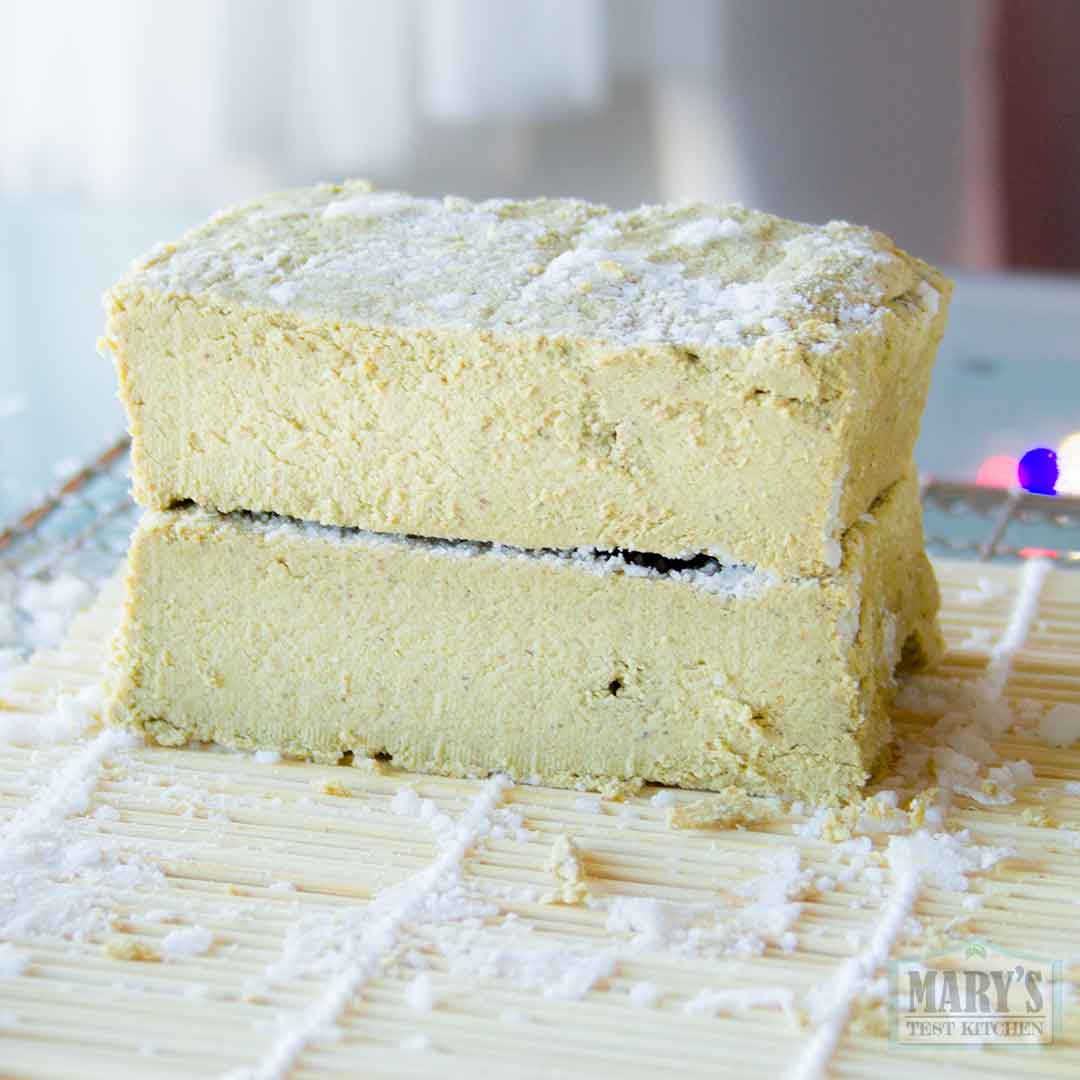
As with the others, I placed half the cheese in a container for the fridge and half went back in the dehydrator.
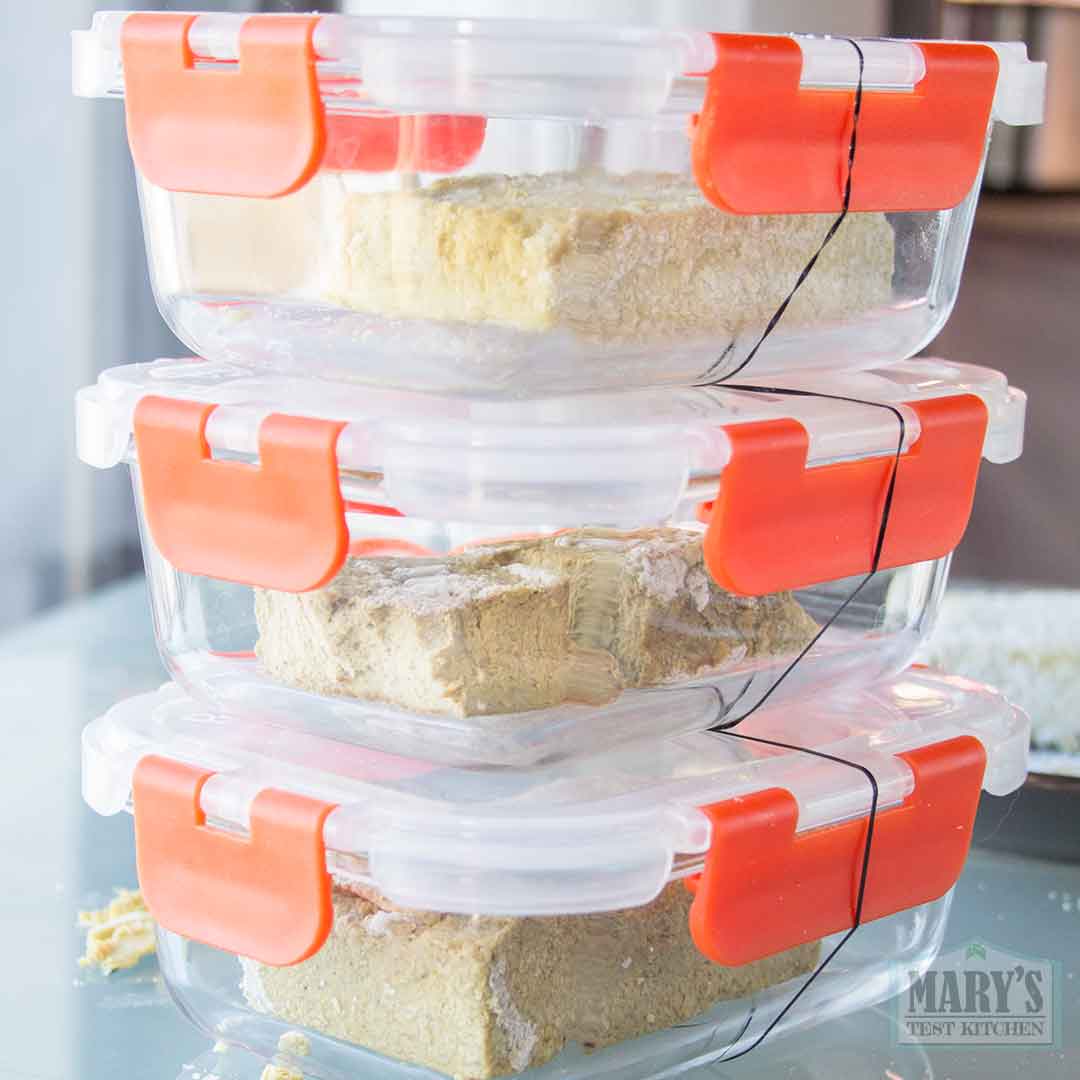
I would consider all of them “Cheese Board Ready” at this point! The Whole Pistachio and Pulp-Free Cheese have subtle differences in flavor so I feel all are worth trying out. But if you could only choose one, I would recommend the Pulp-Free Pistachio Cheese.
Day 9: Two-Day Dehydrator Cheeses VS Chilled Cheeses
The next day, 22 ½ hours after the cheeses went into the dehydrator for the 2nd time, it was time for the final taste test! I cut the edges from all the tasting slices to remove some of the salt and really taste the interior.
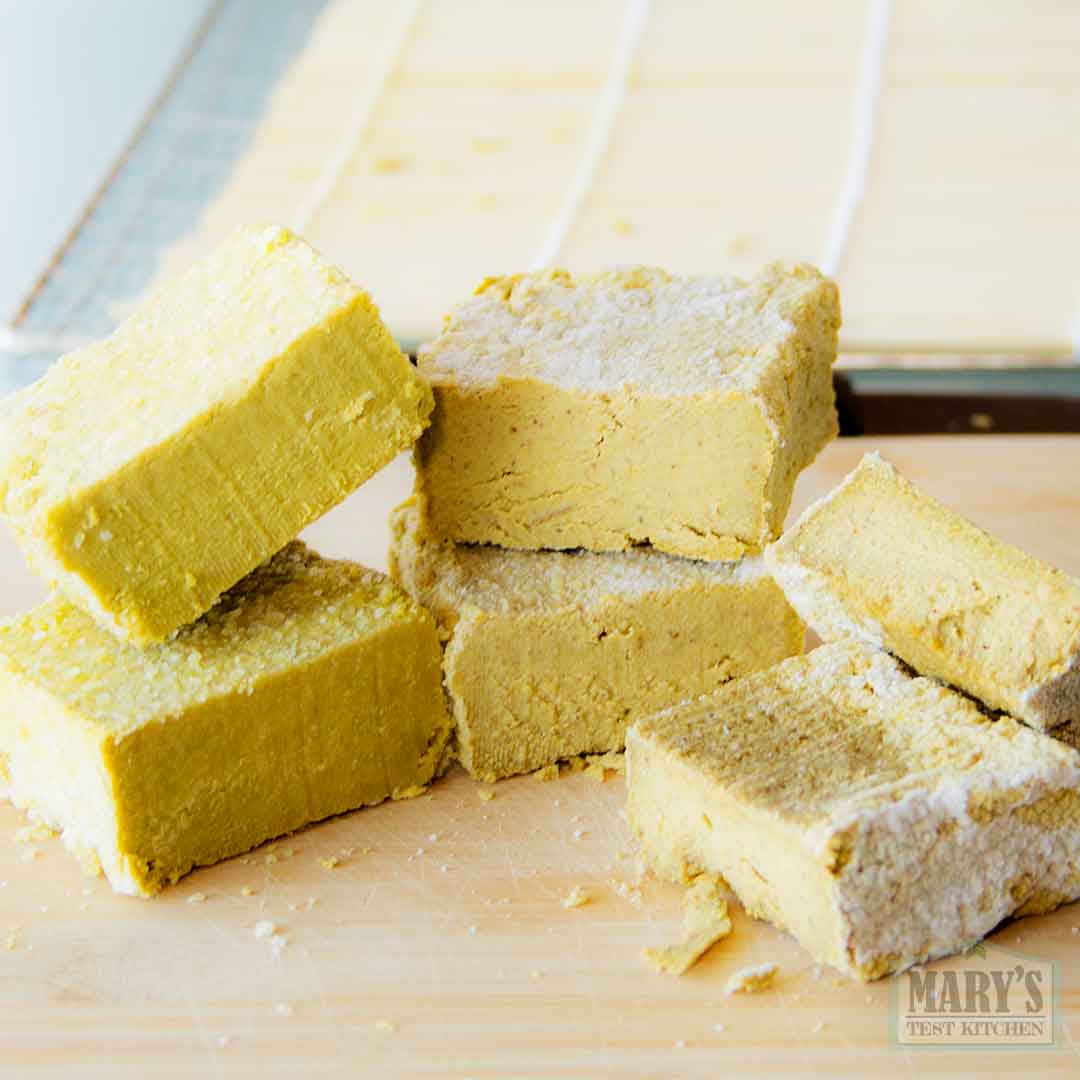
2 day Aged Cheeses Flavour Table
| Flavour Notes for: | 2 day dehydrated | 1 day dehydrated, 1 day refrigerated |
| Pulp-Free Cheese | Smooth, creamy, that somewhat melts in the mouth. Sharper than the day before, very umami. Buttery and cheddar finish but no floral this time. A bit too salty. | Mild pistachio nuttiness, mellow sharpness and buttery, cheddar-like finish. Hint of rosewater aftertaste. Not too salty. Smooth and creamy. |
| Whole Pistachio Cheese | Top note is floral/rose and prominent amongst the sharp funk and tanginess. | Funkier flavor with a pepper note. No buttery/cheddar finish but has the hint of floral too. Rich but can detect the fine pulp. |
| Whole Pistachio Cheese w/ 2% salt at curds + whey stage | Salt has mellowed a bit, tang has changed to be more fruity. Finish is no longer floral but has a very subtle Chen Pi (Chinese dried orange peel) aroma. | Very salty but the funk still shines through. Pepper and floral notes present. |
Firmness & Saltiness
All three cheeses from the dehydrator got even firmer. That made them all taste a bit saltier too. In fact, there was no visual difference on the cut end that had one half salted and one half plain so I think next time, I will not re-salt the cheeses for day 2.
The Pulp-Free was still the winner with more buttery notes expressing themselves. Each one was just subtly better! The sharp and funky flavors seemed to meld together more harmoniously.
Afterwards, I stored all the cheeses in air-tight containers in the fridge. It’s been about 6 days since the shoot and they’ve all maintained the flavor from the final taste test. The moisture has equalized; all of them became slightly moist at the touch on the outsides. So I wrapped them in parchment paper a couple days ago. If there are more updates to share as they change, I will update here.
Conclusion
I really hate to say it. The most expensive vegan cheese I’ve ever made has turned out to be the best. Particularly the pulp-free Pistachio Cheese aged in the dehydrator for 2 days and which only took a total of 10 days to make and age from soak to finish. The combination of creamy smooth texture, distinct pistachio nuttiness, notes of butter and cheddar set off by the mellow tang is a must-try! It’s worth it!
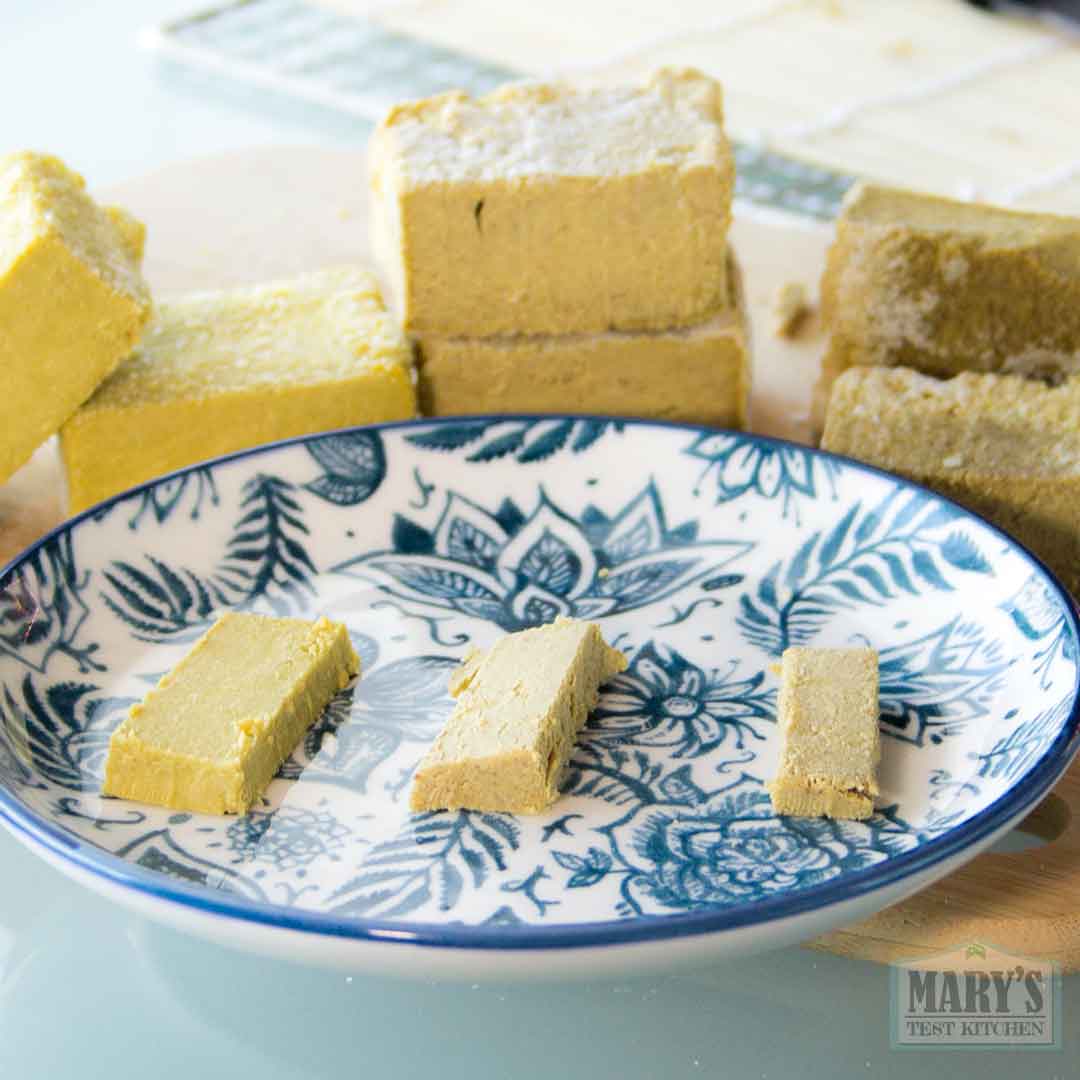
When I compare it to dairy cheese, aren’t the best-tasting funky cheeses just as expensive? That’s what I’ll keep telling myself as I add more pistachios to my shopping cart.
As for salting, the best method was to keep the curds plain before pressing, then pressing all sides into salt for even coverage. However, next time, I might take extra care to brush off the excess.
Lastly, a great big THANK YOU to the viewers who donated Super Thanks in the previous Will Pistachios Tofu?! video. My cheap butt would’ve never committed to buying and using $55 worth of Pistachios for this cheesy experiment.
Also thank YOU for reading this to the end. Your interest in these experiments motivate me to keep going!
What ingredients should I try in future episodes of Will it Cheese?! And what other cheese-making techniques would you like me to try?

Please try hulled watermelon kernel seed hearts, hulled pumpkin seeds, and macadamia nuts.
Thanks the suggestions, Suzanne! I have at least one of those on my to-do list already 😉
Cheers,
Mary