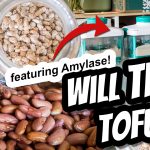
Maybe we’ll get lucky with Black Eyed Peas! In this episode of ‘Will it Tofu?!’ I put them through the traditional tofu-making method to see if we can get bouncy, high protein, low carb tofu out these cowpeas.
Will Black Eyed Peas Tofu?! Video
Spring Time Offer
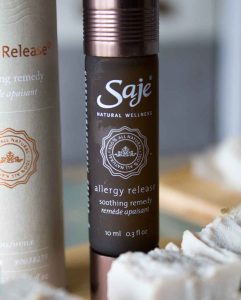 Thanks to the video sponsorship of Saje, I finally had the push to take on this high carb pea/bean! And while this blog post isn’t sponsored, I know a lot of you will love this discount!
I have been a fan of Saje for two decades and their high natural standard and quality EO’s never let me down. The link to shop in Canada is here. If you live in the US, you can also get the same offer here. Just use my coupon code “TESTKITCHEN” to get 20% off sitewide plus free shipping.
Why Black-Eyed Peas?
Peas have a great track record in “Will It Tofu?” territory. Past peas have done surprisingly well—some even came out as bouncy as traditional soy tofu. So hopes were high…until I realized that Black-Eyed Peas are technically beans. What’s the difference? According to what I’ve read, it comes down to the shape. Beans are oblong while peas are round. Does that really affect anything though? Or is it a coincidence?
As always, the mission here is to commandeer the traditional tofu-making process—which was designed for soybeans—and see if we can apply it to other legumes. For science. For fun. And for all my non-soy-eating friends.
Step 1: Soak + Blend
As is tradition, the beans got a long overnight soak.
In the morning, they were drained and blended with double their volume of fresh water. This high-speed blend breaks down the fiber and releases the protein, fat, starch, and sugars into the water—creating what we call “milk.”
There’s 104 grams of protein in the beans and 91 grams of dietary fiber. I expect the protein to end up in the milk and hope all the fiber will end up in the pulp. There’s also 181 grams of starch that may gum up the tofu-making process but I hope I can separate that out easily.
Step 2: Strain + Assess
Straining was pretty easy—not quite as easy as raw peanut milk, but up there. The leftover pulp was fine-textured and already relatively dry. Good extraction! Usually, I’d keep the pulp for experiments, but fridge space was tight, so into the dehydrator it went.
Step 3: Dealing with Starch
Black-eyed pea milk had a lot of starch. Within minutes, it settled into thick layers that were disturbingly solid but would melt without pressure. After trying (and failing) to use an auto-siphon without disturbing the starch, I reverted to the old-fashioned method: let it settle, then scoop slowly.
But just in case that wasn’t enough, I turned to our enzyme bestie—amylase—which breaks starch into sugar. I added it to the milk at around 60°C (the ideal range is 65–75°C) and gave it 10 minutes to do its thing.
Taste Test: Black-Eyed Pea Milk
It tasted savory. A little vegetal. Not too distinct—definitely not as black-eyed-pea-ish as I expected. Honestly? It would make a decent vegetable broth on its own.
Step 4: Tofu Time
As usual, I used gypsum (calcium sulfate) to coagulate the milk. After simmering for 10 minutes, I added the coagulant, covered it, and let it rest.
And yes, the curds formed! Though they were looser and less clumped than soy or even chickpea curds, they did separate from the whey. It was time to commit and press.
Step 5: Press + Wait
I had to break out one of my old-school tofu presses (plus a can of soup for weight). Into the fridge it went… and ended up staying there for two full days. I was planning to film over the weekend, but the sun came out, and well—you can’t.
Pulp Check-In
Meanwhile, the pulp in the dehydrator transformed into 191g of “black-eyed pea flour.” For reference, a pound of black-eyed peas only has 91g of fiber, so clearly, there’s more going on here—some protein, fat, sugars, and starch too. Pantry-ready.
The Reveal: Black-Eyed Pea Tofu
After two days in the press, we finally had black-eyed pea tofu. The texture? Soft, creamy, and crumbly. Not bouncy like soy tofu—closer to mashed potatoes. It tasted like luxurious black-eyed peas. Yum.
But of course, the experiments didn’t stop there.
How It Cooks: Air Frying VS Boiling
1. Air Fry
I divided the test into 4 parts: plain with salt, plain with salt and oil, seasoned (black-eyed pea fiber flour with nutritional yeast and spices) with and without oil.
-
Salted and plain: Dry and I wouldn’t serve it like that.
- Salted with Oil: The outside is a little crispy but it still tastes too dry on the inside. It needs richness.
-
Seasoned with oil: Better! Moist, soft inside, edges lightly crisp.
-
Seasoned without oil: Still soft, not crispy. Likely the seasoning (not the oil) locked in the moisture.
Overall, the seasoned air-fried Black-Eyed Pea Tofu was delicious! I really did enjoy it that way with or without the oil.
2. Boiled
Traditional tofu can be boiled or braised for tasty warming dishes. However, many of our soy-free tofu experiments did not pass this test. How did Black-Eyed PeaFu do?
-
A lot of the edges crumbled off but the tofu stayed intact for the most part in the pot
- I was able to pick them up with my chopsticks but it was a delicate job
-
Taste-wise? Surprisingly paneer-like. The way it clung to teeth reminded me of soft cheese.
I wish I had spinach on hand to try making palak paneer with this tofu. Maybe next time.
Final Thoughts
This batch was tasty, but I suspect there was still some unconverted starch in the mix, judging by how much volume the tofu had. Next time, I’ll try more rounds of amylase to really dial it in.
But the important question: Was it worth it?
Yes. Here’s why:
-
Soy-Free Tofu! Great for folks with allergies.
-
It’s a different way to enjoy Black-Eyed Peas!
- Pure curiosity. I just need to know. And I think you do too.
Stay tuned for more beans coming soon to Will It Tofu. Thanks for reading, and until next time—
Happy experimenting!